Knee Deep in Leatherwood Creek

A wet argument with a couple of dead Greeks:

Around the World and Home

I believe I’ve spent two 4ths of July off of American shores. One was punctuated by an early morning run with the Bulls of Pamplona and another was spent in Koh Lanta, Thailand, wherein a very guttural screed was written as a frustrated American.

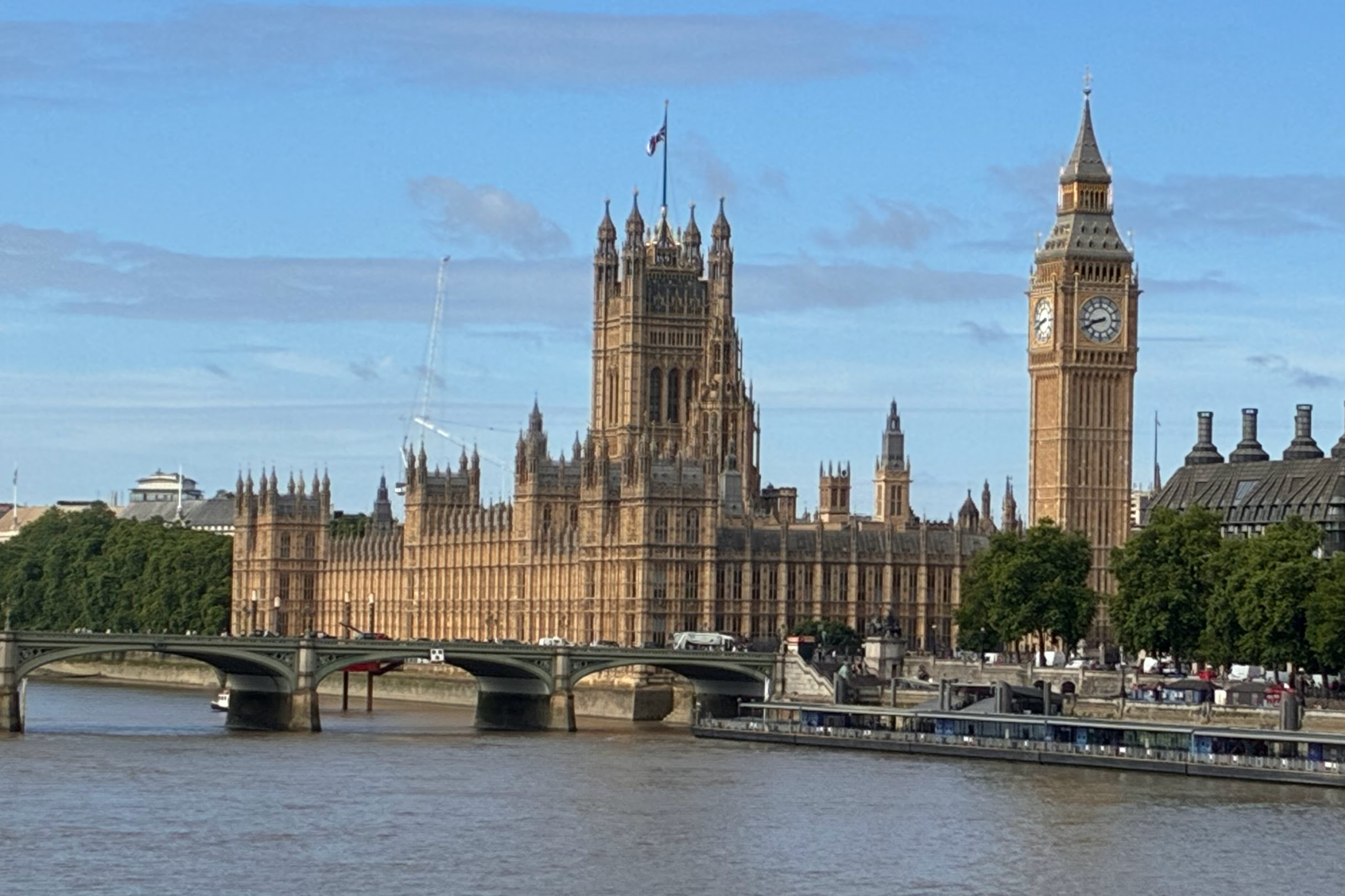
This particular 4th was spent back home again in Indiana on the heels of a trip back from London. While there is 70% of an essay about that trip and the British Museum sitting currently unfinished, the contrast between London (which is still the center of the universe) and the stretch where the glacier stopped that I call my hometown could not have been greater.

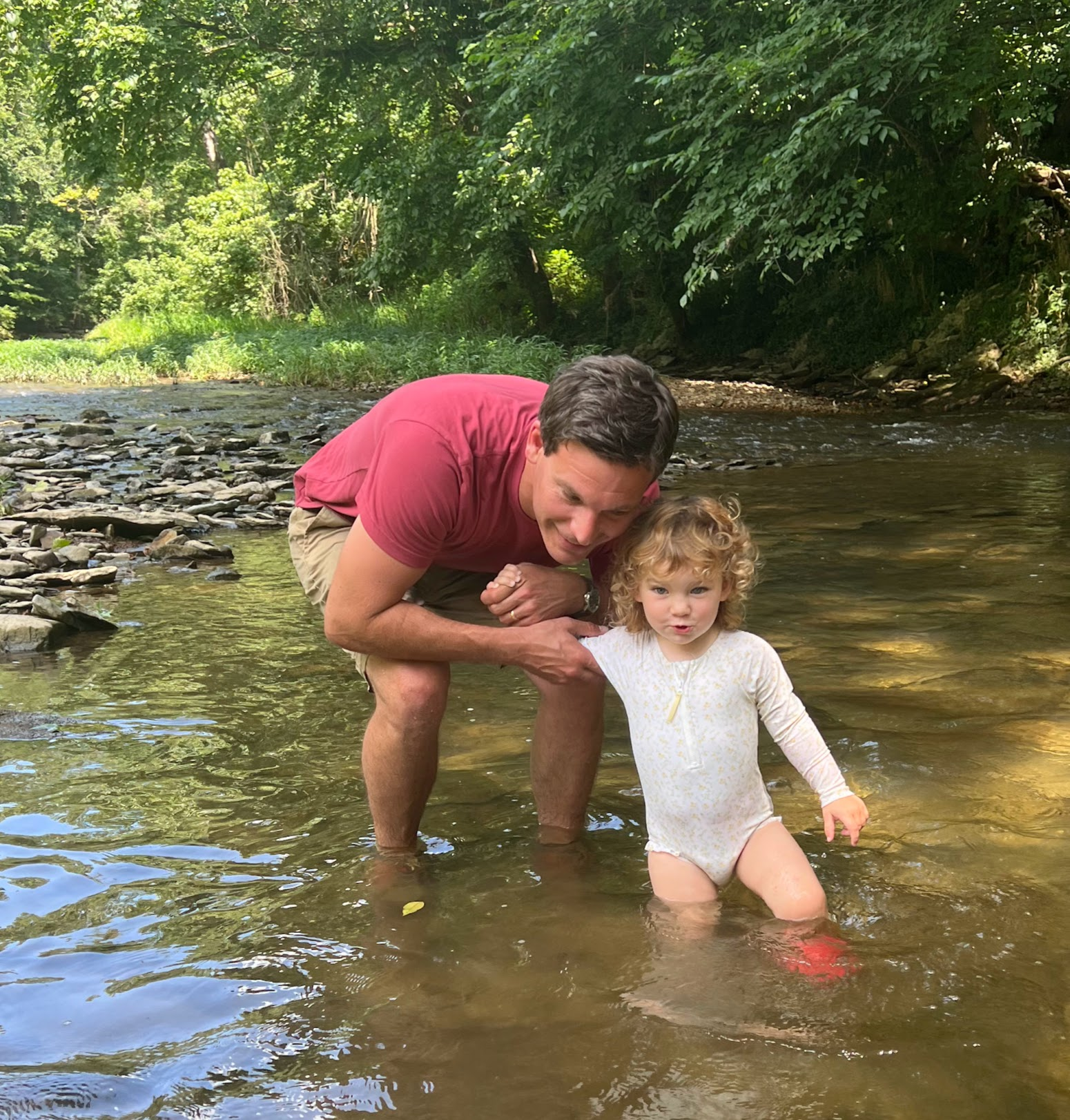
This weekend I took my two year old Betsy down to visit my surrogate grandmother Mickey Martin. Given that there are 99.5 years in between Mickey and Betsy and no genetic predisposition, there’s an obvious but inexplicable link between the two of them.

At Mickey’s were also my “cousins” her two oldest grandsons Chad and Andrew, with whom I’ve shared the vast majority of Thanksgivings and at least a bit of time in summers stamping down the cliff from Mickey’s house in Leatherwood Creek.

Leatherwood creek is between 12-30 feet wide, and rarely deeper than two feet. It winds around Bedford, through Otis Park Golf Course (which makes some bends quite nice for finding golf balls) past the valley where I grew up and eventually dumps unceremoniously into White River south of town.

It is objectively an unextraordinary creek in every way but one…it was mine as a boy.

This was the first time that I’d taken Betsy to properly play in the creek. Little different than when we were 5 or 8 or 24, Chad and Andrew and I were knee deep in that little creek, trying to catch crawdads and skipping the flattest rocks we could find.

Betsy, far from any reservations about these two relatively strange men or the creek, charged her little red knockoff Crocs into the reflected gold off that limestone bottom.

I’ve always been big on place. That place, without breathtaking vistas or world class fishing or any unique differentiator between it and a thousand small creeks running through rural topographies, is about as important as any other to me.

Heraclitus said that “a man never steps in the same river twice.”

(Heraclitus probably gets a little too much play on The Moorman Conquest, partially for my lack of witty Ancient Greek phrases to be pulled on command, and partially because I really love moving water.)

This aphorism can be applied to anything from hydrological flow constantly evolving a river to “generals always fighting the last war”.

Leatherwood Creek is different than I was when I was a kid, whether the fallen sycamores that have accumulated on the piling of the humpback bridge or the channel that cut an island next to what used to be the only flow strong enough to knock over a 10 year old. Compared to the differences found in all those other places where my feet have trod over the last 33 years, it is almost identical.

Being able to take Betsy there and seeing her joy in those humble ancestral waters that I once called mine, gave a sense of an uncertain trajectory that eventually orbited back towards home. Orbits don’t stop moving, but eventually one will come back to see the same perspective again, but with all of the knowledge gained in the interim.

This revolution around a woman whose characteristics I’d always thought of as with the raw, enduring and unstoppable power of a glacier, feels different. This is a woman for whom a Great Depression, a World War, six kids and a husband whose first heart attack was before 40, and unavoidable losses of 102 years of loved ones has yet to break.

As I showed Betsy, through the eyes of an eager audience for whom this was all VERY EXCITING, where cucumbers grew and where we got our worms from the compost pile and cooked crawdads over the fire on a flat rock, I realized how much of my life was formed between two acres and a creek at the bottom of Slaughter House Hill.

The worm bin in our back yard that Betsy loves to check on, the canoe leaning uneasily out of the bed of my truck, no less than the conversation with the Zimbabwean Minister of Mines in a London Four Seasons or a connection with the CEO of a 100 year old business in Germany in a town that globalization made redundant.

That place, and very specifically that 101 year old woman with a sweating blue Hamms Beer on the table always knew that no matter what aphelion that I managed to make it out to, gravity would always bring me back.  

Heraclitus might think that Betsy didn’t step in the same river as her papa, but I’ll just have to agree to disagree with him on that small point. I reckon his thoughts and mine on the concepts of logos and the necessity of counterbalancing forces for dynamic harmony.

That Parmenides of Elea was a piker anyway.

From West Baden to Baden-Baden

Baden Baden, Germany 10.5.24

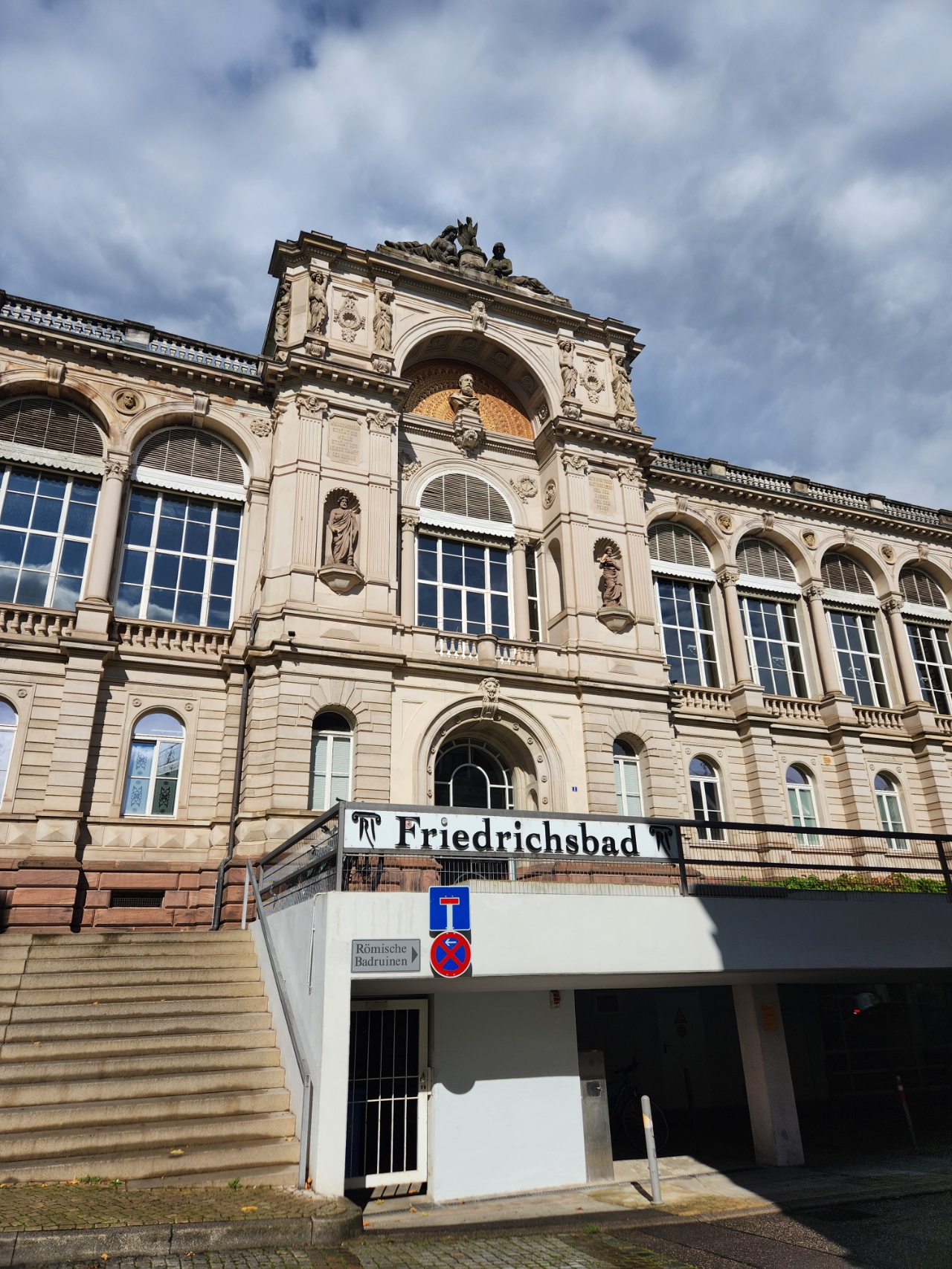
Guten morgen from the famed springs of Baden Baden in the misty hills of the Black Forest. Being a sucker for UNESCO World Heritage sites and natural hot springs, when I needed a place to escape the city for the weekend before re-entering the working world, I immediately thought, “Boy wouldn’t Baden-Baden be amazing?” Turns out it is not only amazing, but remarkably cost effective (author’s note: this is all on a curve and this is still the EU, not 2014 Vietnam)

As Kit and I walked, slightly struggling from a few too many beers at Oktoberfest the night before, through the Residenz Museum in Munich there were a few random intellectual pursuits in my life that came neatly together. The incredible former seat of the Wittelsbach dynasty, the Residenz satisfied the peaceable goal of castle builders, to show in stone and gilt the immense power of a dynasty. Walking past the Bavarian equivalent of the Field of Mars in Ancient Rome, there was a feeling of comprehension when I felt like I’d seen it before. I had, festooned in Nazi paraphernalia from the black and white newsreels of Hitler’s rise.

Whether the Marshall Plan or the destruction wrought by two World Wars or just the petering out of the genetic predisposition, today’s Germans would be considered total impostors to the legacy of the Germanic tribes that were the terror of the Romans:

To quote our old friend Tacitus:

“Statim arma capiunt; non ante deponunt quam senectus. Nulli domus aut ager aut aliqua cura; sola regum liberi libertique armati agunt. Idque proprium et perpetuum signum est libertatis, arma ferre.”

“Arms are taken up at once and never laid aside; no one can go about unarmed. To carry arms is to show you are free.”

“Tamquam mollia et infirmi ingenii corpora labore quaerere quod possis sanguine parare.”

“They actually think it tame and spiritless to accumulate by the sweat of toil what they can gain by their blood.”

Today’s Germans are remarkably domesticated by comparison. A report that came out last week said that in the event of a real war for survival against Russia, the German military would have only two days worth of ammunition. To see that change in the lifetime of my “Grandmother” Mickey is one of modernity’s remarkable transformations.

Now after that digression, back to the point I was trying to make. The Residenz had a hall filled with the busts of Roman emperors and their consorts. It was nearly a full football field long, filled with all those old friends and monsters from Mike Duncan’s incredible podcast, The History of Rome. 

There was Augustus as both a young Octavian and the elder statesman who consolidated chaos into the peak of human civilization that would not again be seen for a millennia and a half. There was Vespasian, that humble soldier who merely laughed as courtiers brought him a family tree tracing his lineage to the gods. There was Marcus Aurelias, the last of the five good emperors, next to his grand mistake and heir, Commodus.

There was Septimius Severus, the first African to be hailed Emperator, and my personal favorite, the black sheep of the Julio-Claudian dynasty Claudius, who attempted to hide in a curtain assuming he’d be killed in the aftermath of Caligula’s assassination, only to be hailed as Caesar and arguably ruled as well as anyone not named Augustus.

To try to piece together the Latin names into the men whom I’ve read and listened to so much about was its own joy, but to see the importance that nearly modern rulers gave to the legacy of Rome nearly two millennia later made me think quite a bit about modernity’s proud disdain for the lessons of history.

From that grand hall to the hills of the Black Forest, Rome is never far away in Germany. There were no shortage of attempts to conquer the Germans. Marius, Augustus, Germanicus, Aurelias all had their run-ins with those warlike giants from the North, but somehow Germany was never fully Latinized. The spot where I sit today had the first Roman baths built in the time of Caracalla, one of the true monsters of the Caesars. The Romans were very serious about their baths, and seemed to set about building them just about as soon as the fighting stopped. This particular spot had no shortage of hot springs at over 150 degrees out of the ground, so it was a bit easier engineering feat than building a central boiler system as they did in other places.

Baden Baden was THE spa town for the European elite for centuries. I’m always a bit hesitant to describe healing properties to waters, but after five hours in one of the complexes yesterday, I can say that I haven’t felt quite this balanced in years.

It becomes ironic that this spot, with its millennia of history, happens to have a corollary with my upbringing in the hills of Southern Indiana. The sulfur waters of French Lick and West Baden brought the wealthy to what could have just as easily been a blank spot on a map. Grand dreams of the Carlsbad of America were hatched by businessmen (circus owners) in the late 1800s. The waters that had been used by Native Americans for healing purposes were commercialized and sold as America’s equivalent to Baden-Baden. Lee Sinclair built the world’s largest freestanding dome, which, at least anecdotally, had to be the tallest structure for 100s of miles. He filled it with neo-classical statues made from local limestone, mosaics to imitate the Italians, and brought plenty of Germans in to ply their ancestral trades as POWs from WW1. His creation brought characters as diverse as Joe Lewis, FDR and Al Capone.

Unfortunately it didn’t have nearly the staying power of Baden-Baden and fell into complete disrepair by the time I was a child.

While Americans don’t have nobility, we do have plenty of homegrown wealth, and in a fit of truly magnificent noblesse oblige, Bill Cook funded the restoration of the resort and dome to preserve these Hoosier architectural marvels in the late 1990s.

To be sitting almost 5000 miles away in the original is a really special experience.

But now its time to figure out how in shape my legs are. There are plenty of wineries in these hills, and I’m about to hire a pushbike to go see a few.

At least I’ll get to have some healing waters when I return.

Border Straddling in Estonia

9.28.24

Prague, Czech Republic

Wenceslas Square

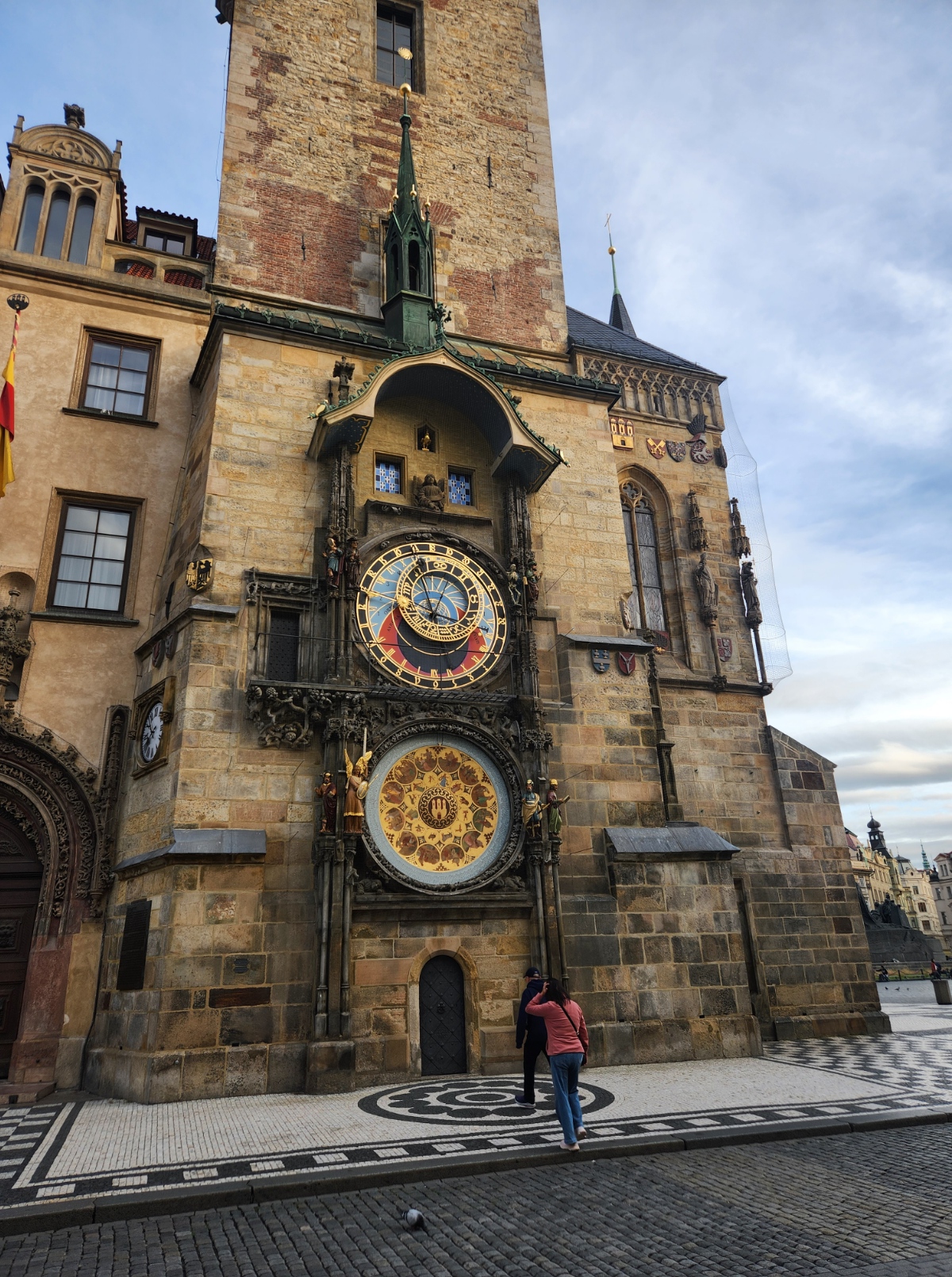
It is 8AM, which might be just about the only time that Wenceslas Square is not packed with people. There’s are still a small herd of Chinese tourists anxiously waiting next to the Astronomical Clock, and the dings of competing clocks are a nice accoutrement to the Dvorak occurring in my ears.

Kit arrived yesterday, and is still catching up on a bit of sleep, so I slipped out to do what I seemingly do best, come to let my fingers run until they find something interesting to tap out about the human condition.

I believe that I’d be derelict in my reportage if I didn’t start in Estonia.

This trip began cleanly enough. I was asked to speak at an EV Battery Recycling Conference in Frankfurt, Germany. Having plenty of reasons to visit partners in Germany/Belgium, that made sense. Then there was the addition of the Netherlands, for some scouting for additional opportunity.

Then there was a 95 degree day in Indiana’s most proudly German town, Jasper, at Strassenfest, that’s when things began getting interesting.

(Side note, as I sit here, I looked up to see a blue jacket with an IU hat on his head. As I do, I said “Go Boilers” to no effect. Being me, I then kept hollering until the guy stopped and turned around. Turns out he’s a Kiwi with one son at IU and another starting his PhD at Purdue in aerospace engineering next fall. The world is small.)

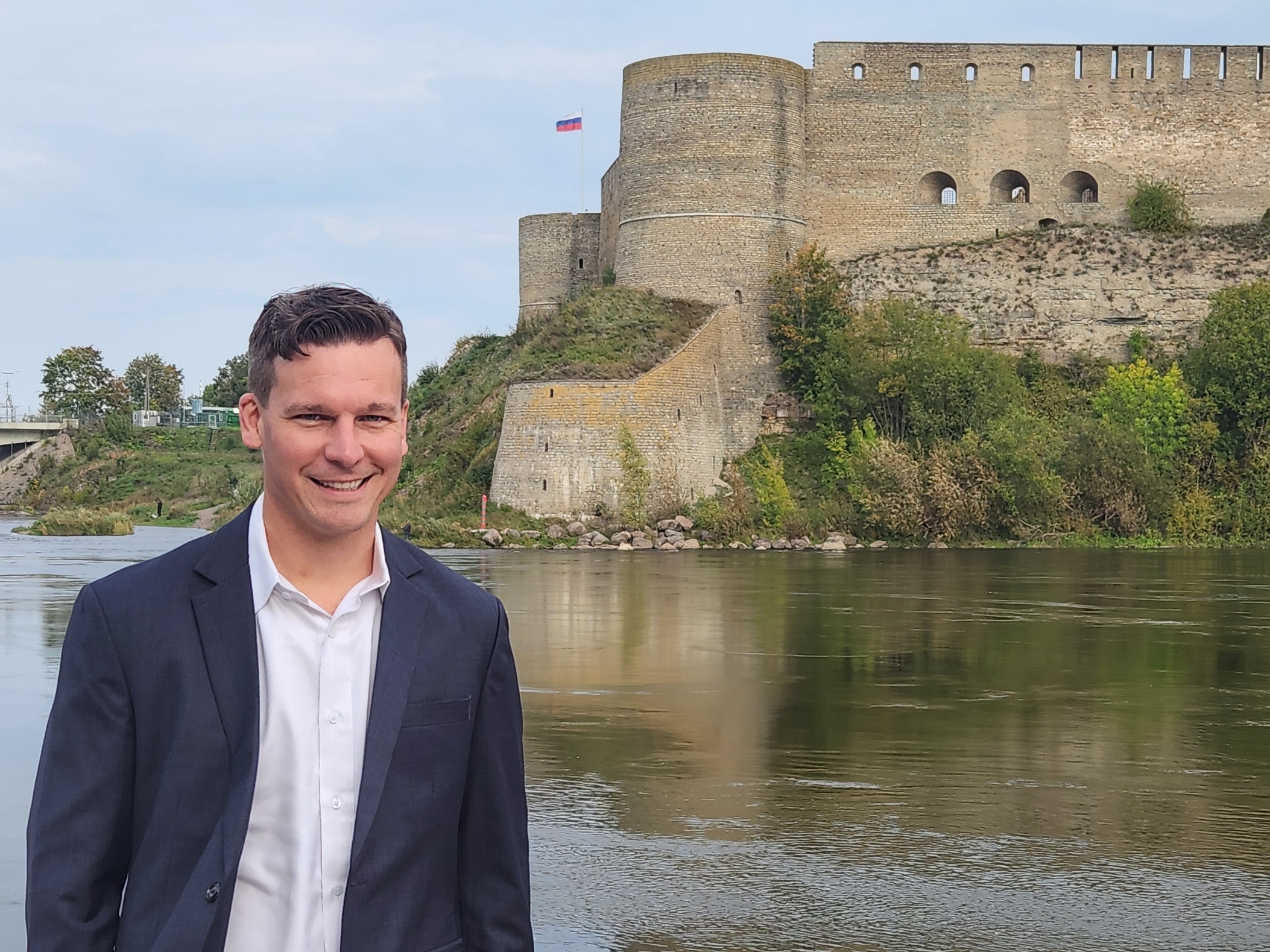
Sweating in the Southern Indiana heat, dancing an endless polka with Betsy, whose heat tolerance must be far more Nordic than her blood, Kit decided that she wanted to go to Oktoberfest for her 30th. Given that I was going to be in Europe anyway, she plied me with another large beer and suddenly we were going on our first joint European adventure. I talked her into Prague with a bit of relentless salesmanship, and she made it contingent on going to Salzburg to live out her Sound of Music fantasies in between. Having booked the tickets, I was then told that I needed to go meet the Estonian sovereign wealth fund. Changing my flight from Prague to Tallinn, I ended up standing on the Russian border in a former Soviet uranium enrichment facility.

Estonia has gleaned my respect for sure. Not knowing much of anything about Estonia besides it geographic location, there was a certain angst in Kit about the fact that I was going to be on the Russian border as the collective wars in Israel, Ukraine, and Lebanon kick off, with the Russians back on their traditional side of wherever the Americans are not.

I assured Kit that Estonia was no more dangerous than Boston, given that her former boss had brought them into NATO 20 years ago. According to Article 5, any issues in Estonia would be no different to the US and our allies than a bomb dropped on Manhattan. I’m not sure that this was a wholly comforting pitch, but it was effective enough.

As I landed in Tallinn, I went for a quick walk around the Old Town before finding something to eat. I ended up eating in a bar carved out of a meters thick city wall (bear dumplings and pilsner.)

The next morning I was picked up by my handlers from Invest Estonia to head to the Russian border. That was about a 2.5 hour car ride, which gave me plenty of time to ask all of the questions that my curiosity demanded. Estonia is a country of 1.3MM people. The fact that it has a unique culture at all is a millennium old underdog story, as for all but about 45 years, it has been handed back and forth between the Swedes, Germans and Russians as a particularly sought after piece of continental Europe. The two windows of true Estonian independence were from the end of WW1 to the start of WW2, and then from the fall of the Soviet Empire through today. Throughout all those changes of ownership, the Estonians have been able to keep a distinct language and culture.

Being that only 1.3mm people are native speakers of Estonian, they have become flexible by necessity in their willingness to open up to the world. Over 77% of Estonian adults are bilingual, with many speaking as many as four languages.  The post-Soviet era has made it one of the fastest growing EU economies, and they have a cultural willingness to look at the situation to find whatever narrow path of advantage that they can.

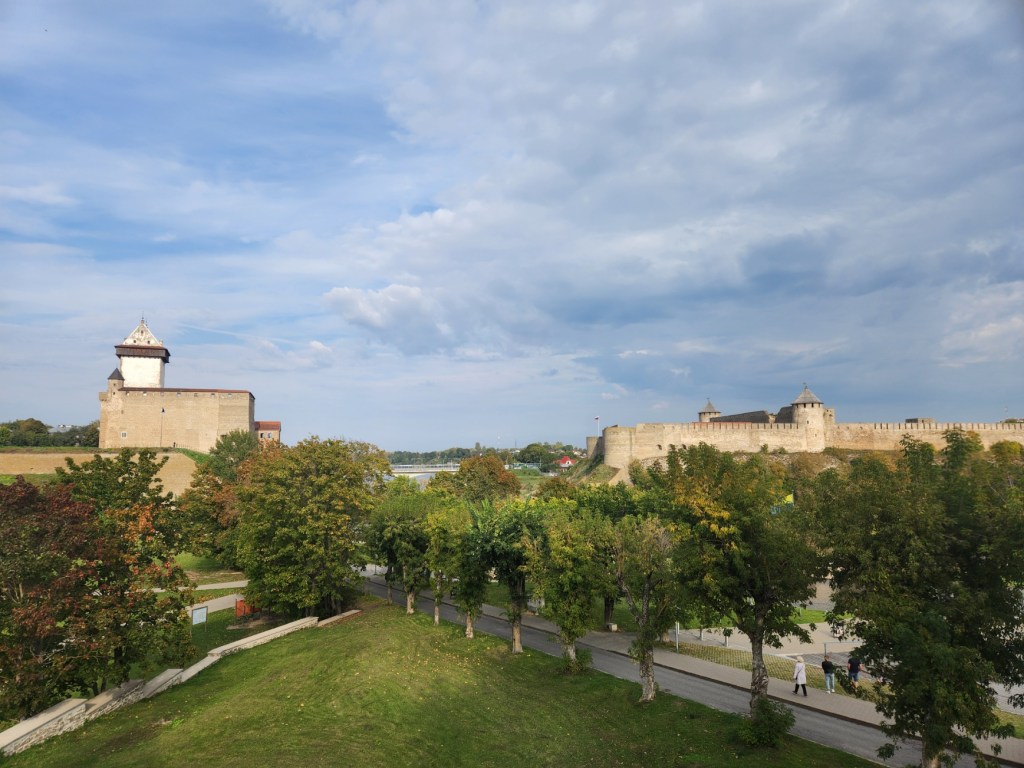
The two castles straddling the Russia/Estonia Border

Far from being culturally adjacent to Russia, they are much more a friendly Nordic country on the continent. Estonian language is closest to Finnish linguistically with plenty of shared words from German and Russian.

Ilmar and Toomas, my handlers, gave me a history lesson as well as an introduction to Estonian sauna culture. Let me say, as a lover of saunas, these folks have it down. On the beautiful coast of the Baltic Sea, we stayed at a spa/hotel which had no fewer than 7 different types of saunas. Dry, cool, hellfire, salt based, they had it all. They told me that the culture is such that this is a standard place to both have a communal sweat and get business done.

As Ilmar and I walked into the first sauna, there was a 20 something Estonian who could only be described as sturdy, beating guests wearing hats reminiscent of the 7 dwarves with bundles to oak branches, “to open up the skin!” This was followed by plunges in cold pools, introduction of juniper berry extract to the hot rocks, and no shortage of beer.

The competence of a culture that has always had to navigate between powers that were orders of magnitude larger than themselves was on display. These are folks that think through every possibility before deciding that there is a possible path to prosperity and going at it full tilt. Growing up in the warm embrace of the global preeminent power, wherein our errors are typically rooted in our overconfidence, it was a refreshing contrast.

Whether Luke Skywalker in Star Wars finding the one and only ventilation shaft that can bring down the Death Star or watching Purdue lose to double digit seeds in the NCAA tournament, I have grown to have a real respect for underdogs who carefully survey the situation, eliminating every potential path before betting the house on the one asymmetric bet that has a chance of coming in. Estonia is that underdog, and they’ve done remarkably well.

There were also some similarities between Estonia and Indiana that stuck out to me. The question of “What develops a cultural character?” has always been interesting to me. I have long posited that Indiana’s cultural character was forever changed by the Canal crisis of 1848. For those who have not found themselves immersed in Indiana history, I’ll give a brief synopsis.

In the middle 1800s, the success of the Erie Canal in opening up low cost logistics from the interior to the coast was looked at as a model for what is now the Midwest. Indiana, a young frontier state in its 30th year, made an all-in bet on the Mammoth Improvement Project, borrowing heavily to invest in canal infrastructure to help develop the state north of it’s Ohio River logistics chain. London bankers were courted, bonds were issued, and canals were dug from Delphi to Jeffersonville and all points in between.

Unfortunately, this all in bet happened roughly 10 minutes before interior canals were displaced by railroads. Indiana’s massive investment was stillborn, the state went bankrupt, and the lesson gleaned was not, “always search the horizon for the NEXT innovation” but instead, “never get too big for your britches.” Less than a decade later, Chicago became the hub of grain trading in the Midwest, and Indiana settled into a conservative, “don’t lose” mentality that made it a hub for manufacturing for the innovations of others. This might be a bit simplistic, but I don’t think anyone jumped on to  read a detailed dissertation of Indiana’s place in mid 19th century bond markets.

Estonia’s cultural outlook was defined by the fact that it never looked to expand its borders, merely keep the next landlords from entering the fray. As Ilmar spoke about the cultures of the different Nordic countries, he reminded me that Sweden was the only Nordic country that had not been dominated or occupied by any others, and this gave them a certain Nordic swagger not seen by the Danes, Norwegians or Finns.

For all that I know about Swedes, swagger would not have been on the top of the cultural characteristics list by any means, but these are the kinds of things that one learns while wearing a dwarf hat in a sauna in Estonia.

European history is the story of how those characters were formed and reformed over centuries. Whether it was a minor German princess sitting as the Autocrat of the Russian Empire or Vikings(Normans)  reigning as the masters of both Sicily and England, culture is a soup that takes on a bit of flavor from each random ingredient added, whether rulers or migrants or conflicts. Absent totalitarian eradication of a culture (which rarely works absolutely) a people will evolve alongside those characteristics that history has intertwined into their DNA (in both a genetic and abstract sense.)

Well the sun is rising and the tourists are starting to throng the square, so I’d better go find a bit more coffee and roust my beloved wife from bed. It is Saint Wenceslas’ feast day today, so I’d imagine that there’s going to be quite a hoopla that I’d hate to miss.

Musings in Montreal

There are few things that bring me more joy than listening to the gabble of a language that I barely understand in the background. Montreal is essentially the bunny hill of foreign travel…everyone speaks English, but given the choice, they’ll speak French. They are even quite kind about me trying to speak my broken French back to them (that sense of grande morveuse  seen in French in the metrepole seems to have been bred out over the past 300 years.)

Montreal is a beautiful city, a fusion of Chicago and New York with a certain old world charm that cannot be replicated. One can feel the French influence here in much more than the language. You can feel it on the sidewalk on a 75 degree night…partially because those sidewalks are filled with people who actually walk, but more so from the way that they dress. There are suit shops seemingly every third block, and women are obviously more influenced by Parisian fashion than the crass utilitarianism of Gen Z Americans.

I’ve managed to “collect” a fair amount of foreigners in my current role, which by no means breaks my heart. Kit loves to say that I collect two things, tribal masks and foreign men (I do feel like she’d be slightly more upset if I collected foreign women at the same clip.) My interesting position in the world of battery minerals and rare earth elements is a perfect place to make and collect foreign friends. Whether the Belgians in logistics or the German engineers or the Ghanian sovereign wealth fund or the Quebecois battery chemists or the Korean metal traders, there are few days when I speak to more domestics than imports.

Living in Indianapolis, a place not known as a magnet for immigrants, it is a welcome change of pace.

I have always thought that the immigrant story of “how you got here?” was one of the most interesting that could be told, but being in Montreal, a place that is jealously (and perhaps somewhat foolishly) protective of its unique French heritage, I find that I have a certain respect for the Gallic stubbornness that has kept Quebec, after two quintessentially Canadian (re:polite) attempts at a “Quexit” from the rest of Anglophone Canada, a place that sits in the middle of a jagged Venn diagram between its nation (Canada), its mother country (France), and its most important trading partner (US).

The economist in me completely understands how homogenization happens. To duplicate and translate everything for a population of less than 9 million people is…less than efficient. But for as much as capitalism has raised people out of poverty, it has also destroyed plenty that is “valuable but hard to quantify.”

Arguments against homogenization arise across many fields, from biology to education to culture. They are rarely successful, as one side shows up with numbers and heterogeneity shows up with a general feeling of “this could end badly.”

Let me tell you, numbers beat a general sense of “this could end badly” 99x out of 100.

As my mentor Doug Wilson once said to great effect, “More is not an achievable goal…it is just more.” Whether monoculture in industrial agriculture harming bees or Amazon destroying the local bookstore or China dominating the rare earth market there is a loss that is easier to feel than to quantify.

Modern man has traded instinct for spreadsheets, just as it has traded the 400 year old stone buildings of old Montreal for the big box store that will inevitably be torn down in 20 years, the quarterly profit of a corporation for the steadfastness of  Molson and Sons, LTD.

This is not some scathing critique or enlightened ephiphany, as I now look at Quebec as a nearly impossible place to do business for an Anglophone American with an aversion to bureaucracy, but a recognition that there is ALWAYS a tradeoff in decision making. What Quebec has kept in its heritage has inevitably cost it something in quantifiable economic prosperity. But it has kept something, like those little lobsterman villages in Maine or the UNESCO Heritage sites in German, that could never be purchased with a larger allocation of GDP.

Heritage is a much like land, there is an opportunity cost in keeping it, but once sold, it is impossible to get back at any price. As my astute sister in law once said, having read my favorite novel, East of Eden, “I get why this is Chris’ favorite book, its all about family and land.”

In a world where answers seem to be instantaneous and readily available, I find that the appropriate questions are asked less and less. I don’t pretend to have the answer for the balance between tradition and progress, heritage and modernity, I only wish that more folks would  bother asking the question.

But my steak tartare has arrived, and I never miss a chance to eat raw meat in foreign lands. The Quebecois have done a fine job of keeping this particular tradition alive.

Relational Capital and Sauerkraut

Hannover, Germany

8.20.23

Relational Capital

Ever since I was a little boy, I had a habit of rifling away petty cash in odd places in my room, only to come across it later. While this isn’t the greatest of investing tactics, it was better than spending it. Plus, there is always an odd amount of joy in finding money, even if I knew I had hidden it from myself.

I’m starting to see that I do the same thing with relational capital. Especially in foreign markets.

As I jumped on my first international trip since becoming a father, there was an odd tug that I’d never really felt before. There are few things in life that reliably quicken my heartbeat and put a smile on my face like jumping onto an international flight. The boy from Bedford always wanted to see the world, so whether it was steerage on Ethiopian Airlines for 14 hours from Singapore to Joburg or that first trip across the pond sitting between Alex Barnes and the woman who will forever be known as “the mother in law” who took up most of my seat while belching with a tenor and length that I have never again seen, I just love getting on planes with a passport in hand.

It was a little different this time as I kissed Betsy goodbye. 10 days is not an eternity, but she’ll be 13% older than she was when I left, and there was a tug there that I’d never felt. (This is NOT to say I do not miss Kit as well, but the beauty of marrying an independent woman is that frankly she probably enjoys the peace and quiet for a bit when I’m gone.)

As I jumped on my domestic transfer, I locked eyes with a guy who looked very familiar. Now I was flying from Indy, so that isn’t surprising, but when we both realized who the other was, he broke into that broad smile. Andre Benin somehow became my handler as I took the concept of a data center from a whiteboard conversation to steel and concrete on the banks of Lake Michigan. While my feelings on that project are still raw, given that my brainchild was, in the words of Kipling, “Twisted by knaves to make a trap for fools”, we still got Indiana’s first major Tier 1 datacenter built.

Outcomes being what they are, I learned a ton and know that I built something special even if I never got any credit or cash for the effort. The Bhagavad Gita reminds us that we are here to do our duty and that we should feel blessed to have meaningful work to do, regardless of the outcome. (It also has some bits about karma that I hope come true for the aforementioned knaves, but I digress.)

My duty has always been to my Indiana home, whether it was the badge on my chest as I screamed in the pits or breathing new life into a facility in Marion, Indiana that employed 4000 people the day I was born before being irrevocably shuttered 20 years ago. If meaningful work to be done is a blessing, then I will live a VERY blessed life in that respect.

As we walked towards our connecting flights together, mine to Berlin, his to Paris, we quickly caught up about the intervening years. In a 20-minute hurried airport walk, we smiled, laughed, and game-planned some potential collaborations in Africa. While we are in very different industries, contacts and geographies matched up.

That’s the kind of dividend that you can’t see coming from relational capital. Honestly, the chances of Andre and I ever doing anything together again from a business side are close to nil, but that isn’t why you have relationships. He is a great guy and we did something important together whether it was an airport connection or a random call in 10 years, either of us would have gladly helped the other.

As I landed in Berlin, I quickly texted Fabio, my travel buddy for a 5-6 week period during the original Conquest in 2014. Fabio and I have talked/texted regularly for almost a decade, and while I haven’t laid eyes on him in 9+ years, he and his wife Marleen have hosted my father multiple times and my mother once as well. There is a picture of them in the Babin, and the picture of us covered in Laotian mud still sits on my inherited “library” desk in my front room.

Fabio and I discuss a bit of this and that, the differences between business culture in Germany and the US, our perceptions of each other’s countries from the media, and we trade reading recommendations back and forth. For all the evils of social media, I’ve got to say that Whatsapp is one helluva upgrade from my father anxiously clapping his watch during the $2/minute calls to England with the Stall family when I was 10.

I’ll be staying with Fabio and his family over the next weekend, and I couldn’t be more excited. Marleen will tell me how when I repeat German phrases that it sounds like “You haff a mouth full of POTATOES” and their two little boys will wonder just what in the world this Yankee is talking about. But I’ll get to see the triplex that Fabio owns, understand what energy prices mean to him and his budget, will get to discuss over a map the differences that I saw on the train as I went from the former East Germany to West, and all the other things that books and media will never be able to personalize like the conversations of a friend.

Kit always says that I like to collect foreign men….which sounds much racier than it really is, but it bears no small amount of truth. Whether it was being able to ask Benny what someone thought about a situation in Brussels, and having a forwarded text response within a couple hours, or asking Vicky about the newest populist candidate in Argentina, and whether or not the inflation rate I read has anything to do with the actual situation on the ground, or my mate Glen talking about the absurdities of being a tradesman in today’s UK, these are real points with real people. I am very blessed to not have to take the media’s word as gospel about large swaths of the world. I have friends who can add color and context to a screaming headline.

The last year I’ve gotten to call on a lot of these relationships in my new role with ReElement. Who would have thought that my screaming at a Purdue/IU game in a Tribeca loft 12 years ago was going to somehow lead me to the White House and achieving my lifelong goal of getting quoted in the Wall Street Journal? Yet that’s what happened when I called Mohamed and said, “There’s someone mining lithium in Mali right across the Faleme River from Senegal…can you look into that?”

I’ve used it before in reference to an ill-fated bike ride without a map in Buenos Aires, but Prisig’s quote in Zen and the Art of Motorcycle Maintenance rings true with relationships as well.  

“You look at where you’re going and where you are and it never makes sense, but then you look back at where you’ve been and a pattern seems to emerge.”

Were I not so committed to Sulla’s Epitaph, that would probably be a decent thing to etch into my Bedford limestone grave marker.

As the majority of my writing has been letters to my future (and current) children lately, I haven’t been nearly as active in adding to the Conquest. However, something magical happens when I leave the shores of my homeland, my brain starts firing in a different direction, and my fingers start tapping out something beyond cliché drivel.

I hope to have some time to write more over the next 10 days. The decade that has passed since the Conquest has had no shortage of heartache, tragedy, and failure, but looking back, I have seen the pattern emerge. There have also been some great achievements, even if they didn’t all pan out as hoped.

The searching 27-year-old who took off with a backpack and a one-way ticket to Oz, hoping to replicate Dietrich Mateschitz’s feat of finding a multi-billion dollar idea tucked in some obscure Thai village is now a seasoned man. One with responsibilities, as well as the kinds of opportunities that that 27-year-old would have royally horsed up. The scars from battles lost and the wisdom of lessons learned, as well as the patience and polishing of my beloved wife, have set the stage for an exciting next chapter. Turns out that billion-dollar ideas can reside closer to home, whether in a lab in the Forney Building at Purdue or a little office 5 miles from home. Changing the world requires knowing the world, and I’ve been very blessed to have the desire, time, and money to know the world and to make real friendships with people from different walks of life on each inhabited continent.

Looking forward to some reminiscences this week with some of the Conquest’s early cast. Hope I can articulate them in a way that is worth a reader’s time.

Farewell to a Sir of the Highest Order

April 30, 2012 was one night that I’ll never forget.

Driving a 24-foot U-Haul through the crowded streets of Manhattan, I had the accumulated possessions of myself, Dane May, and Ryan Moore as we headed from our first NYC apartments in the Village to our massive (by NYC standards) flat in TriBeCa. I was driving while Dane sat in the second seat. Ryan was crammed into the middle area without a proper seat complaining that he had been smashed in like a secondhand accordion.

A few wrong turns due to some dodgy directions and we were forced across the Brooklyn Bridge with no alternative but to go to Brooklyn and turn around to head back to the island.

We arrived about 11:15PM to an absolute trash heap. More accurately, a series of trash heaps.

We would come to find out later, that the previous occupants had been bankers, and had spent the last week of their lease playing cocaine flip cup with a bunch of strippers.

8 million residents live in the island estuary for world human migration known as New York City, so the odds of knowing similar people seem low. But Manhattan apartments of a certain size gain their own patinaed verbal history, transmitted by the social connections of their rotating cast of occupants.

We had a U-Haul full of our possessions that had to be returned that night otherwise we’d be paying a $250 ticket as well as an additional day on the truck.

Our friends, lovable bro-snakes that they were, were there waiting to help us move in our stuff in. They laughed, well more of a hearty grimace with sound, as they walked into our “new palace.” Shuffling through trash as we tried to pile it all into the living room, we got our possessions inside and the truck returned about 3:00.

This was our 5 man “Snakepit”, and it was an adventure in anthropological studies. Whether it was DJ practice at 2AM on Tuesday, or me needing to cajole an aspiring model to scoot down the counter to allow me access to my 4 cup Mr. Coffee pot at 5:30AM before work on a Thursday, this was a jungle far from home.

It was neither clean nor comfortable, but it was a place of massive maturation. A few weeks after we moved in, Dane came to the roommates and said that he had a proposition. An Aussie friend of a friend, Ben Harrison, was moving to NYC for the summer and was trying to avoid hiring his own apartment. The nature of temp visas nearly always made this an “arm and a leg” proposition. He was offering to pay a chunk of rent to put a loft in our massive “activities” area, where we had a full-sized basketball backboard and a ping pong table. Always the cheap ass, I wholeheartedly said yes, and everyone else shrugged as they indifferently agreed.

Ben walked in wearing loose leopard print “pants”, a vintage hat pushed back on his balding head and large, odd rings on both hands. Upon his back, he had no more possessions than could be navigated while running through an airport. His voice had a tinny vibrato that would crescendo until he found a point to ask, “Right?”

He had been coordinating outdoor music festivals in Australia for years and was now looking to come over and scrap his way around electronic music in NYC. His girlfriend, Alice, was a dance captain for a Broadway show. Having avoided winter for 3 years at that point, this was an opportunity to steal a summer spending time with her personally while advancing himself professionally.

From almost no contacts save for club guys we knew, Ben managed to make himself invaluable to the electronic music scene, finally being given a 5% ownership stake of a club for sweat equity.

This wasn’t his foremost achievement that summer. That would be me.

I’d always had a desire to travel. My parents made the “interesting” decision to allow me and my slightly older friend Alex Barnes to go visit our friends‘ family, the Stalls, who made an ex-pat career move to London for a few years. At the time, it was a 12-year-old and 15-year-old navigating through England with only our paper traveler’s cheques and a tube map with a 20 pence piece taped to it, the Stall’s phone number scrawled across the front.

We survived, as one does, after several hair-raising adventures, discussion of which still brings tears of laughter to our eyes.

I’d seen quite a bit of the US between family vacations and getting to spend a school year traveling with my father as he hawked asphalt planers, stump grinders, and slot cutters across the US.

Internationally I was still a neophyte though, and Benny told me about his unbelievable travels over the past 7 years. He’d been to something like 35 countries at that point, backpacking through Europe and North Africa for nearly a year when he was 21.

This was the roundabout way he’d become our roommate, via poor directions and a deceptively named hostel/brothel called “The Heart of Amsterdam” wherein he met fellow Boiler Clint Misamore, both of whom had hoped to be in bed at somewhere OTHER than a brothel.

I was amazed that someone could do that. Vacations in the US were nearly always under 2 weeks, with the majority of one’s 15 days being spent on obligatory holidays, weddings, and funerals. I never envisioned time during my career to go travel for long stretches like Ben had.

It was interesting to discuss, but this was the life of someone else. I was a trader, and traders had to be trading. A week here and there might be taken off, but there was no possibility of taking a massive hiatus and expecting a job when I returned.

Fast forward 3 years, and I have since traveled to 5 continents and 18 countries. Ben and I as of 7PM local time on July 31, 2015, had joined the 5 continent club, having seen North America, Europe, Australia, Asia and South America together. Not bad considering we live on opposite sides of the world most of the time.

Ben taught me that there is no such thing as the “way.” There are only goals and the motivation to achieve them.

Every choice leads somewhere.

One day I decided the path I was on would only lead to a life that I was unhappy with, so I jumped off, and emailed Ben the following subject line:

“Quit my job. Need an adventure. Call when you can.”

Ben called within 12 hours from the other side of the world and within 14 days, I was en route to Perth with a backpack and little else.

That took me on the trip of a lifetime, and totally refocused my perspective from one driven by money and the status afforded it, to a life view focused on where I wanted to do legitimate good in the world.

It was a choice that would take me to a bamboo railroad in Laos, a yacht in the Whitsundays, an elephant camp in Thailand, and countless sleeper busses in between.

Ben Harrison was an engineer.

He was a network sustainability engineer. Ben saw the world as a treat to be consumed, and he found that the most efficient way to do that was by becoming an asset to an ever-expanding network of friends in different time zones.

Millions of people have connected at an event thrown by Ben Harrison over the past 20 years. From promoting underage clubs in Melbourne as a high schooler to the DJ booth at the world-famous Pacha in Ibiza and hundreds of temporary stages in grassy fields around the world.

Ben designed spaces and experiences where people wanted to find themselves.

Ben found plenty of connections as the keyhole for the parties he threw, but his never-ending craving for authenticity drove him to connect with people whenever they came within shouting distance of that tinny, Aussie rasp of his.

It was Richard, the Shakespeare of enlightened profanity cab driver in Perth.

It was Hein smiling through broken English as Benny tried in vain to discern a particular point of emphasis as we cooked the stuffed squid roles in Vietnam.

It was Gomez, a broke 18-year-old kid trying to make it in the music business in NYC that Benny brought along like a little brother.

It was Ariana or Nat or any of the other broken women who found an unexpected side in Benny. One that mended her broken wing and shared the security and affirming rush of initial intimacy…only to be put back out to fly with a smile and a lifelong friend and the knowledge that it could never be permanent.

Ben had an endless heart for people he “rated.” He had a tight list of Aussie insults for those who didn’t. This discernment was important because from Ibiza to Melbourne to Tulum to Tunis, Benny had a friend. I’d be surprised if the Council on Foreign Relations could activate boots on the ground so quickly in so many places.

Benny had a guy or a “bird” for everything. And as soon as they answered the phone, they started smiling as he asked, “How ya goin’?” He’d ask whatever was on his mind, say “great, I’ll connect you” and tell you to call the next time you were in XYZ.

Even if he’d called someone who couldn’t help, they’d always pass him along to a friend who could, because it was almost impossible to not want to help Benny. You could vouch for Ben because he was a professional vagabond, who drank champagne next to the grapes and every place it would ever be shipped. That is a widely sought-after profession that very few outside of English nobility enjoy. Ben was a gentleman in very specific ways, and his complex moral compass, while difficult to decipher, never, ever deviated. So long as you understood it, you could take it to the bank.

Ben was the most frustratingly selfish human being on earth. His personality was so big, that as colorful as I am, I was merely grey wallpaper in many rooms where the Benny Show found an audience.

Whether it was the $800 bottle of champagne that he ordered that you’d be expected to split or the plans that he’d unilaterally change if he met a couple of girls who wanted to join…or his utter intractability once his mind was made up, no one ever called life with Ben easy.

I’m sure Nigel and Kerry would say he was an absolute nightmare to raise. If there was a teacher in his entire academic career who had something nice to say about him, I’d be surprised.

He could be a little bit like the sun, life-giving when you need it and oppressive if you can’t escape it.

He lived fast and hard. But whether he’d lived another 2 weeks or 40 years, I am certain that he could not have died more peace with the life he lived.

Life was to be lived today, not in some indefinite future.

He did it his way and he let me come along. Ben Harrison taught me how to love the world as no one else ever could. Taught me that life is a magnificent set of possibilities for those who are free. Showed me that it is possible to be unapologetically yourself.

There were many lessons Benny couldn’t teach, but there were some that ONLY he could teach. I was truly blessed to have that hairy, Lebanese incarnation of Krishna show me the entire world of possibilities residing underneath his breastplate and mine if only we’ll get amongst it.
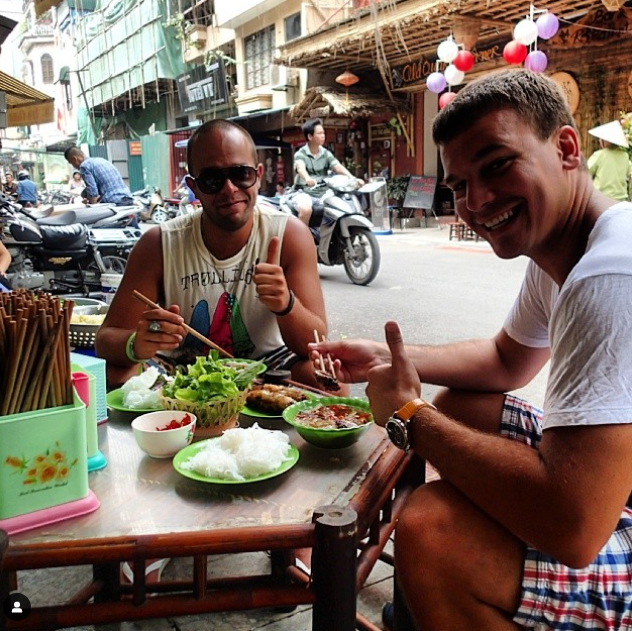
I’ll miss Ben for the rest of my life. He wasn’t constituted for middle age, so he shoved an entire lifetime into half of it, and lived knowing that he’d maximized every day he was given.

It’ll be hard to not have him randomly call from literally anywhere on the globe, talk about the Bombers latest defeat, some liquor rep screwing something up, and where he’ll be next month.

To know that I became the sole living memory of our experiences across 5 continents together is hard. Memory is only original so long as it is shared. Absent that, it is only a replica, with all of the defects, both subtle and substantial, that make a replica inferior to the original. The entire course of my life changed in the company of Benny.

It never would’ve happened had I not gone through a miserable night in a trash pile of an apartment, unloading three beds, couches and everything else up a 1.5 floor walkup.

It wouldn’t have happened if I’d merely laughed when Ben told me that a lifestyle of travel and freedom was possible for anyone, not just the lucky lot in music.

It never would’ve happened if one day I looked in the mirror and said, “the money isn’t worth losing your soul. Do something different or you’ll never achieve a goal worth a tinker’s piss.”

Here’s to two roads and choosing the one less traveled by.

It has made all the difference.

Thank you Ben. I’ll miss you brother.

As Days Go By

And no matter what the progress 
Or what may yet be proved
The simple facts of life are such
They cannot be removed. -As Days Go By

We’ve covered a lot of ground here at the Conquest. From alcoholism to child rearing, the ennui of returning home from an eye-opening trip to crushing systemic poverty in South Africa. We’ve talked about Vietnamese cooking and the death of loved ones, Argentinian wines, and Bobby Knight.

My first post while traveling was an essay about the classic movie Casablanca. In it, the protagonist Rick, flies off the handlebars as his piano man Sam plays a song that he hates. That song, As Time Goes By, is the basis for this particular essay.

Last night, I watched an emaciated Bill Clinton take the stage on behalf of his wife at the Democratic National Convention. (This is not meant to be a political essay at all. I’m well aware that there is no such thing as a civil debate in politics at the moment, and I don’t intend to engender a digital screaming match.)

As the nearly 70-year-old Clinton shuffled across the stage, I was shocked at his appearance. This was not the youthful governor running in 1992, this was an old man with a shock of white hair and only the faintest echoes of his famed charisma. The first part of his speech showed none of that charisma, but as he gained speed in his 40+ minutes, he finally found a little bit of that uniquely Clintonian charm and I found myself wishing for another time.

I have spent much of the past week in the hospital with my 96-year-old great grandmother, who is recovering from emergency gallbladder surgery. At 96, there are very few positive outcomes that result from invasive surgery, but she is recovering nicely, if a little out of sorts mentally, a condition that in her 96 years she has never had to struggle with. As I sat with her, trying to keep her entertained (a tough exercise for a woman who is legally blind and struggles with hearing) she seemed to retreat from the present, but talked with outstanding lucidity about her trips around the world with my grandfather and others. She walked about visiting Russia in the 70s, Spain during the reign of Franco, Thailand before it was at all Westernized, and the 35 other countries that she visited during her prodigious traveling career.

Watching a woman who has meant so much to me near the end of her life made me wish, as is I suppose only natural, for the 70-year-old woman I grew up with, the one who was planning the next trip, and going every morning to the pool at her condo complex. The one whose role as a matriarch in both her biological family as well as her family by marriage was never questioned. Sitting there beside her as she struggled to draw breath, as she confused me for my father, I would have given anything to have her back in the health to which she held so tightly to for over 9 decades.

Watching Bill Clinton on that stage, I wished for the same thing. I wished that America could rewind the past 3 decades, to the fall of our modern-Carthage, the Soviet Empire. Unfortunately, like so many other great nations before us, we fell victim to our own success and our own press clippings.

Having made ourselves the center of a unipolar world order, we squandered both our financial resources and our moral authority through an endless series of gaffes and infighting. After the tragic “Black Hawk Down” incident, we punted our role as the arbiter of justice in the face of a few lost American lives. A decade in a half into our “War on Terror” we have managed to make the world a less stable place through both our own hubris and a series of half-hearted “fixes.”

We lost our enemy without, and we created the enemy within. No longer was it us against the injustices of the world, it was us against them. And “they” lived next door.

We lost our conscience through a series of shortsighted political “wins.” In economics, both micro and macro, the uses of capital are either investment or consumption. Instead of investing the dividends of peace, we consumed them, one bureaucratic boondoggle after another. Our ruling class, so like the political class of Rome, fell to fighting amongst each other for the ears and votes of the citizenry, with no vision at all for a better tomorrow.

Reaction has taken the place of intellectual rigor in our political process. Anyone who thinks that issues such as civil rights, economics, and geopolitics can be distilled into 140 characters is certifiably insane in my own opinion. The age of constant mass media has created a citizenry more akin to Pavlov’s dog than the reasoned discussion of our forbearers. We have been trained in the age of instant reaction, to look not at the core of an incident or issue, but only the responses that it engenders. Vision is a large unchanging horizon; reaction, merely motion.

As my great-grandfather Ivan, a hardscrabble Depression era farmer who bought the first rubber tire wagon in Madison County, Indiana once told me, “The best thing about the good old days is that they are gone.” Coming from a man who grew up planting from a two-row horse driven corn planter to seeing the massive diesel planters and combines of the 21st century, he was correct.

We must not idealize the past, but strive for a future which marries progress and tradition. The 1950s are looked at as the pinnacle of the “American Dream.” This interpretation does not account for the fact that America’s economic prosperity was brought on by the enduring reality that we were the only major industrialized nation which had not seen our factories, fields, and citizens blown to bits in the Second World War. America had to be at work because we were the only nation able to do so.

We must not fall victim to the digital reactions of today, but recommit ourselves to actual vision of the individuals that we want to be, and the country that we want to live in. Looking at the two major candidates, I don’t want to live in the visions that either one espouses. Trump with his dystopian “law and order” themes, seeking to promote safety at a cost of liberty and the high-minded ideals of our founders. Hilary’s platform is a continuation of a corrupt and failing status quo.

I don’t want to be shackled to an unrealistic view of the past. I want to see a country that says sacrifice is necessary to achieve goals worth accomplishing. I want to see a country that says community, those neighbors who we live, work and play with, must be our primary focus if we are to tackle the issues of the day such as violence, poor public education, and a continuous erosion of economic opportunity.

The virtues taught across cultures, from Aesop to Confucius, Christ to Buddha, the gods of Rome to the philosophies of the enlightenment are as real as the nose on my face. Doing the right thing is not situational, nor is it constantly achievable, but the principles of hard work, humility, respect for fellow man are universal. It is only our intentional pursuit of those simple yet difficult principles that will ever produce the prosperity so often pined for.

Just as championship teams sometimes come back flat in the season following their triumph, so too has America. Without a unifying enemy without, we chose to fight one another over issues so comical as transgender bathroom rights while we have young men and women dying every day from violence and drugs in communities that have lost the ability to articulate and pursue a vision for a better tomorrow.

This is unacceptable. Full stop.

If we are to, in the words of Donald Trump, “Make America Great Again” it will be achieved by commitment to a goal, and that goal MUST be of a higher order than a political win. Game theory tells us that the optimal short term decision can eliminate the chance of an overall win. Like the little kid who plays checkers and tries valiantly to not lose any pieces, only to find himself in a dreaded double jump situation the next turn, we must look with a longer view than November if we are to truly achieve victory. The victories available are nearly countless, from reform of a student loan situation which effectively creates debt serfs, to an education system so obsessed with objective testing that we have lost the ability to impart in our students the ability to “think” about problems with options not marked A-D, to the distrust of communities towards the men and women asked to keep the peace. There is so much WINNING to be done, should we find it within ourselves to define a win as something greater than a snarky tweet.

Thinking about “As Time Goes By” I am brought back to the opening lines of that song:

This day and age we’re living in 
Gives cause for apprehension
With speed and new invention
And things like fourth dimension

These words are as true today as when Sam sang them back in 1942.

There is no need to be apprehensive about the future, so long as we collectively decide what that future should look like.

Here’s to starting a conversation that won’t end after 140 characters.

The Conquistador’s Lament

I’ve put off writing the concluding post to the Latin America leg of the Conquest for long enough. It is time to try to put into words what the constantly smiling gringo felt so vividly for two weeks.

OLYMPUS DIGITAL CAMERA

OLYMPUS DIGITAL CAMERA

We went to Iguazu Falls for Ben and the girls’ last leg of the trip. After 36 hours, Ben would fly off to Ibiza and the girls would continue onto Brazil for the next leg of their trip. I was heading back to Buenos Aires, excited about the prospect of exploring on my own terms, but missing the companionship of more travel partners I might never see again.

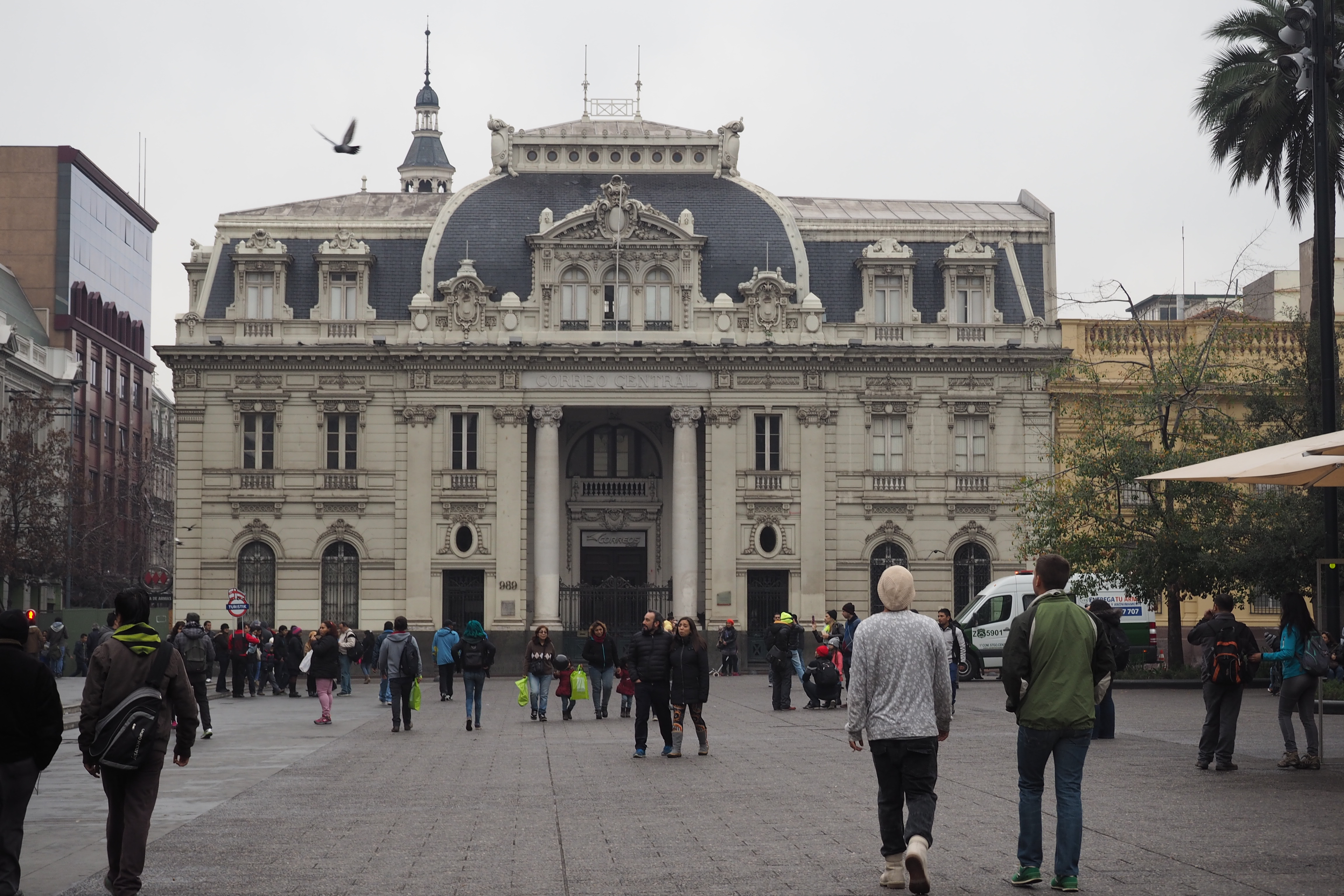
I checked into a hostel called “The Pink House.” That is a play on the name of the presidential mansion in Buenos Aires, known as Casa Rosada. It was spartan but clean in the Recoleta neighborhood, which I wanted to explore from instead of our further west initial place in trendy Palermo.

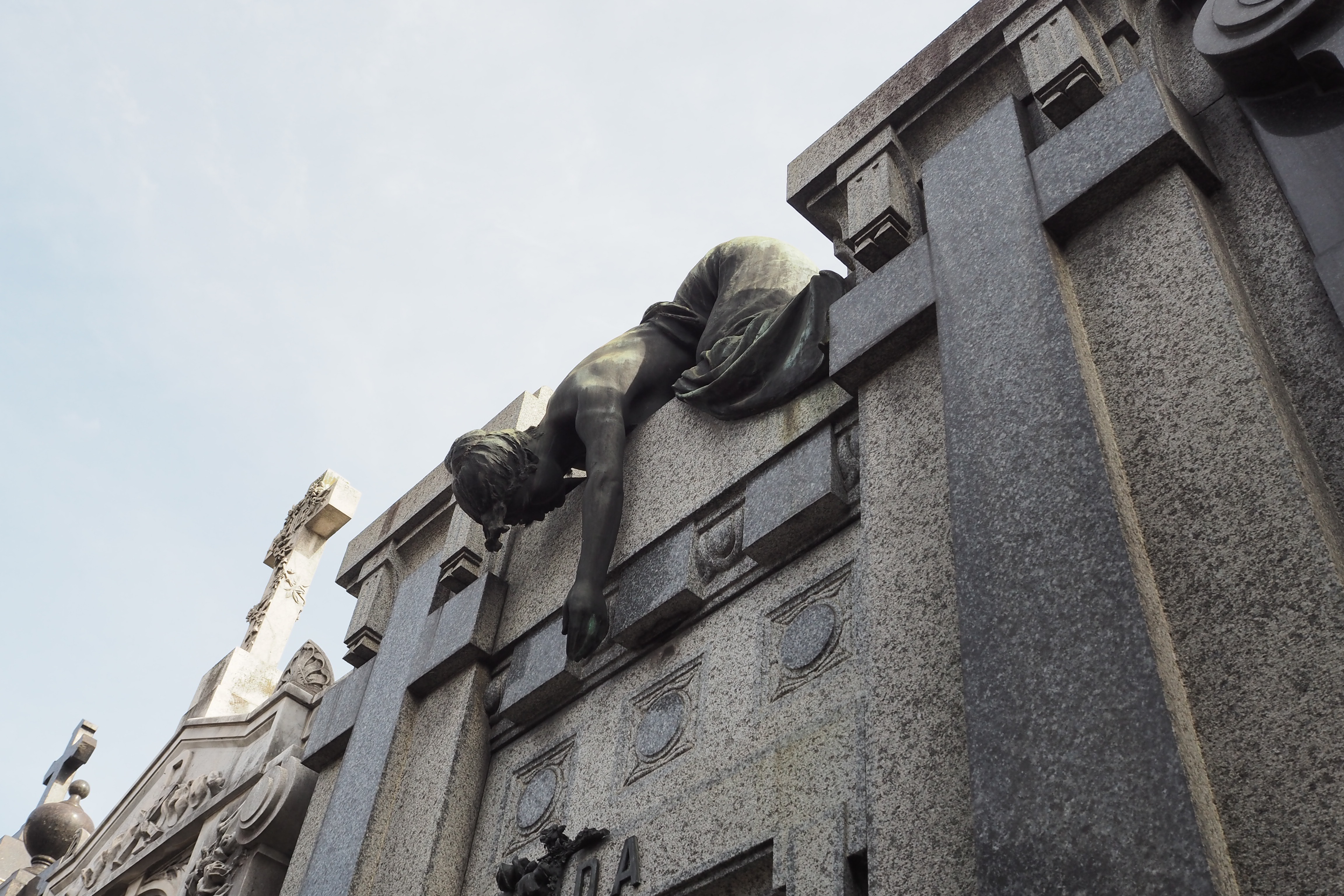
Recoleta is not really setup for tourists outside of the few blocks around the famed cemetery that holds Evita’s remains along with the dearly departed phenomenal mausoleum builders, some of which are seen below. Past that, it is very much a nice but ungentrified neighborhood in Central BA, serving as a portal to the governmental and financial districts. It is also a Jewish district, bringing me back to my first international travels where the herd of the very Catholic Stall family stuck out like sore thumbs among the Abraham Lincoln-esque costumes in the Jewish Orthodox neighborhood of Westminster.

OLYMPUS DIGITAL CAMERA

OLYMPUS DIGITAL CAMERA

I found some fine restaurants around the area, as well as a very overrated hamburguesa. There were plenty of cafes to hole up in on a rainy day, reading Seneca and then the mindblowing Kierkegaard. My appreciation for comprehensible philosophy grew in an unbelievable way. It is one thing to try to tackle Kant’s Critique of Pure Reason. It is something vastly different to read Seneca’s common language letter to his best friend.

My days were filled with walking through antique shops on the way to the next cafe, late nights at jazz clubs, and treating myself to phenomenal steaks and Malbecs. Vicky continued to show me around in BA in a way that I never could’ve seen as a tourist, and the experiences continued to be incredible.

On Sunday morning, I trudged through a persistent drizzle towards San Telmo, about 4 miles from my hostel. About ⅔ of the way there, I got tired of being rained on and decided to get a coffee and a sandwich in the next cafe I came across. Bar de Cao was a relic from another age. 115 years old, it had wine bottles all over the walls, important documents from the history of Buenos Aires that had been signed there, and a spiked coffee named after Hemingway to boot.

There were 4 waitresses, one older and the other three about my age. They took turns swooping in on the gringo, with the short one (though still wearing 3 inch multicolored foam platforms on the bottom of her black sneakers) taking the first turn.

As my coffee turned into a ham sandwich, which turned into a glass of Malbec, the girls all took their turn seeing what they could get the blue eyed gringo to say. I sat there writing about one of them, as I often do while people watching.

Describing a living breathing person in minute detail who is interacting with the world and only very rarely you, that is a powerful writing exercise. The way she buttered the toast that she kept munching on, and the rhythm of her fingernails clicking the bar. The things that her body language said as she interacted with other patrons and staff. The way her mole wiggled as she laughed at my broken Spanish, and the muted one heeled turn she employed when walking away. All of these things are what makes real characters in fiction, a keen look at behaviors without becoming a direct (and therefore contaminating) influence. I’d be willing to wager great money that more than a few famous characters were the result of people watching in a bar with a notebook.

I sat there, writing away, both a character description and the outline of a novel, as I continued to soak up all the sensory perceptions that I could in a place that I might never come to again. Suddenly the older waitress comes bombing over to my table and says “Bag! You bag!”

Pretty startled from my dreamlike character study, I patted my wallet and said “No bag. All good.” She quickly grabbed a bartender who then grabbed the man sitting with his back to me at the table behind me, tossing him into the street. Apparently the man was feeling my coat, which was full of $400 worth of pesos, as I had just exchanged money that morning. The waitresses, now clucking around hen-like, never gave me more than 5 minutes without a visit again.

This was great service.

OLYMPUS DIGITAL CAMERA

OLYMPUS DIGITAL CAMERA

As I paid my bill, a comical $13 for 2 glasses of wine, a sandwich and a spiked coffee, I used my newly acquired Spanish to ask my muse for directions to the San Telmo market. Her body language immediately changed into one I hadn’t yet recognized, one leaning slightly forward in a vulnerable position, made incredibly disconcerting to an American boy with a huge weakness for Latin American women. We stumbled through my request, plenty of looking down and laughing as we both butchered the other’s language. Finally I got my directions and put on my green rain shell, and as I walked away from her, she lightly brushed my shoulder with her outstretched hand, raising the hair down my spinal column like contact with light electricity.

Vowing in blood to teach myself Spanish upon return to the US. I set off to a bookstore to find a Spanish fairy tale book to read to the ever growing legion of kids that my friends continue to hand off to “dear Uncle Moorman.” I figure start small and work up. No way I’m going to get anything out of trying to read Borges in Spanish.

OLYMPUS DIGITAL CAMERA

OLYMPUS DIGITAL CAMERA

The next day, as I boarded the plane, I said goodbye to a country that found its way into my heart in the first 3 hours of my arrival, I wondered if I would get back. I tell myself I will, but then again there are a lot of places in that category at this point. International flights are the expensive part of travel, and that budget is shrinking rapidly as the business requires capital to grow.

Someday, when we get the business humming like it should, maybe I’ll go back. But it’ll be different, it always is. A few of the restaurants I grew to love will be out of business for one reason or another, the currency will have appreciated so that my beloved $12 steak is now $25. Vicky will be on assignment in Paraguay, or whatever far flung reaches of Latin America offer Deloitte the most billable hours, and the red wine won’t ever taste as sweet as that first Carmenere on the veranda of our AirBnB in Palermo.

Maybe that’s a pessimistic way to look at it, and I should adopt Ben’s travel thesis of, “every time in a place is different. It is the traveller’s job to separate them and don’t let the bad bleed into the magic of a first impression.”

Well that’s not quite how he says it, but it is the gist.

My time in Buenos Aires was incredibly magical. To kiss a gorgeous, intelligent and (really freaking tall) Argentinian girl in the midnight rain down a sidestreet lit up only by the neon of restaurants and bars, as you’ve just walked out of seeing a 17 piece jazz band that resolutely reconfirmed your love of live music. To walk back soaked to the bone, with a smile on your face because you stole a scene in life that is only real in the movies.

That’s magic.

That is undeniable, in your face, think about it on your deathbed with a smile on your face stuff.

Most of the time we let all of our moments bleed together, letting the bad stain the good with marks that won’t come off, but why? What do we gain by trying to compress our experience into a format where the greatest are marred by the average and the mundane?

So many moments of my life are compressed into a slurry that reminds me of the stuff inside of chicken nuggets. Sure, I think back on years of my life and I have some memory that will make me smile, but these are momentary placeholders in years of forgettable (and forgotten) experiences. A stolen chicken nugget tastes great, but eating the box of 20 at McDonald’s is a shit way to spend the 3 hours after a meal.

I am so glad that I’ve realized this early, and made it my goal in life to appreciate moments in real time. How few times do we realize how truly content we are in the moment itself? Most of the time it is the bitter memory of a time that was better than now, picked from the slurry of forgettable years.

Moments like that don’t just happen on travel. They happen every day. It is the “Eureka!” moment that comes in the business when you realize where the funding is coming from, or it is the moment when you take your highly technical designs to a Purdue professor, and have him stand up impressed.

These are moments that have to be savored in the moment to be properly remembered in the future. It is not a quantity race. It isn’t an Instagram picture from Greece with 200 likes in a moment that you don’t really remember because you were hammered. It can be the sunrise coming over a cornfield, or a moment of achievement after work well done. It can be the first time that baby grabs your hand, or the moment when your 6 year old finally starts turning his shoulders and hitting everything in sight in Coach’s Pitch.

It is about recognizing it, not has a hazy also ran picked from the lot, but as a vivid experience that gives you strength to think about.

As Seneca said in that letter to his friend, “Everyone hurries his life along and is troubled by a longing for the future and a weariness for the present.”

Don’t be that person. Don’t be caught in a trap of “tomorrow will be different.” Live a life as a collection of moments that you will think back on in the past and say, “Well if I made it out of a 14 mile mapless bicycle odyssey around Buenos Aires in the dark, surely I can make it through this.”

That navigation fiasco could’ve been a real game changer in my time in Argentina. I could’ve had a real go at Ben and ruined our dynamic for the rest of the trip. Instead, it ends up being one of the truly treasured experiences of my trip, one where I learned to just keep pedaling and figure it out.

When I got back and did tersely tell Ben that he left me without a map and I didn’t appreciate it, he incredulously looked at me and said, “Listen mate, you’re an independent guy and you figured it out, I don’t see the problem.” He didn’t, and after 2 glasses of red wine, I didn’t either.

Nothing was irreparably broken, so why not enjoy the next sip of wine and let it go?

That’s a life worth living, where our triumphs are learned from and remembered, and our failures are learned from and left to the slurry of unfocused memories.

OLYMPUS DIGITAL CAMERA

OLYMPUS DIGITAL CAMERA

I’m glad I figured that out now, I’ve still got quite a few years before the scales fell from my eyes to catch up on.

There is truly wisdom to be learned from men who wrote down how to not take life too seriously. I’m glad that I stumbled upon Seneca and his brand of no nonsense Stoicism. To read it, take it in and digest it was truly a gift to have been done in Buenos Aires. To look around and say that I am in this moment and there is no where else I’d rather be, because tomorrow this won’t be the same. That’s a truly magical experience, no matter where it is.
Look for a few more of those. You’ll thank me when you find them.

If Heaven Ain’t Like Buenos Aires, then I Don’t Want to Go.

Scrawled onto the folded backs of two large white placemats from Cafe Thibon was the sum of my afternoon writing yesterday.Starting slowly yesterday, I walked along Ave de Santa Fe towards the Recoleta neighborhood to meet Vicky for lunch. We met, (she was late, but the whole country is late so…there’s that) and I quickly ignored her recommendation to stay away from the mondongo, and piled right in.

Mondongo is something in Argentina that could be passably described as “cow stomach curry.” It is a mix of vegetables, lentils, blood sausages and chorizo, stewed together in a base yellow sauce, with two inch chunks of stomach thrown in for the main meat.

When in Rome right?

It was actually very good so long as I didn’t look directly at the piece of stomach as I lifted the spoon to my mouth. The ridges and seemingly jelly-fish like frills of stomach lining were a bit less than appetizing, but after the first bite, it wasn’t going to kill me.

While I tried my best blue eyed poor me act to get Vicky to get a carafe of wine and skip the rest of the dwindling afternoon of work, I failed, and so was left to my own devices.

I was going to go to the cathedral, but I was sidetracked along the way by a set of faces that made me quickly question where I was. I stopped into Cafe Thibon, to recollect my thoughts and get a cup of coffee to put me over the mid-afternoon drop nods.

Cafe Thibon is part liquor store, part cafe. The green granite bar prominently displays two vintage sets of Malbec, while a taciturn and portly old man dropped clean silverware into a worn wooden box between the espresso makers. My seat had me looking out into the street, but the wooden boxes of wine were stacked so high that I could only see a sliver through the open door. The occasional biker would flit by, only staying in my sight for a second, while the seemingly endless supply of grand old men with their ringed fingers and sweater covered walrusy midsections wandered by the displays of wines and liquors.

Behind me to my right was one of these old men, looking like he could’ve been the Argentinian brother of Bloomberg’s Tom Keene. He had a regal mane of white on the sides but very little on top, so to compensate, he combed his hair back, those wiry white strands, so that they connected, much like an electrical circuit that would fail if connections were breached. His forearms pressed flat on the table next to his newspaper, his left hand would go up like clockwork every 4-5th breath, pressing those hairs back towards their more numerous counterparts.

As I started to doodle on a placemat, I looked over the names of the wines in the glass cases beside me. Alamos, Angelica Zapata, Los Arboles, and Catena were a few of the more prominent names. The crackling of AM Spanish language radio could be heard faintly, with the tunes of jingles rolling together with the music to my untrained ear.

Cafe Thibon roasted their own coffee which they kept in massive glass cylinders on the back counter. Their gold domed tops seemed to be lacking only a crescent moon from the mosque tops I’d seen throughout the Middle East. An old fashioned balance, worn black with the grease of hands and the decades of coffee, is used to determine the amount of coffee sold. The curmudgeonly old man would gently place the cylindrical weight on one side and a bag on the other before tapping out a few beans into the bag, frowning, and repeating the process again and again until symmetry was achieved.

As he finished one bag, he reached his sausage fingers into a large dish of stuffed olives, selecting three, then rolling them around in his palm with a move from his thick thumb. Examination done, he clutched down on two and ejected one into his open mouth, before putting those two with some others that he’d soon serve me.

I asked the waitress for a glass of Malbec. Sure it was 3:00 in the afternoon, but I was on holiday for Chrissake. As I sipped the delightful house offering, I started to visualize the rhythm of Buenos Aires in a way that I had not before. Just as some people can pick up the beat of a song from just a handful of notes, so too can one feel the cadence of a city. The way that old men shuffle  down sidewalks and the rapidity that cabs take off from red lights, these are but a few small sample pulses from the beating heart of a city. The overheard intonation of a conversation and the movements of waitress, these too show la tiempo de vivre. In a place like Argentina, the home of one of the world’s most famous dances, the Tango, this rhythm takes on even more meaning. Plain as the smell of a place or the mountains and rivers that comprise its landscape, the rhythm is as real as the nose on your face once you have trained yourself to look.

*********

Ever since I was a little boy, I loved to go wandering through the hustle and bustle of a city anonymously. My father used to drop me off in the Loop of Chicago with my cousin Brad, who usually still had a few hours of work left before going home. Brad would rip a sheet of stationary so that I had his address, and then tell me to go wander around until 5, and to ask for help if I got lost.

Nothing like free range cousin-ing right?

I always longed for the feeling of aimless anonymity walking past thousands of people where no one knows your name. This effect is only amplified when one does not understand the language as throngs of people are living lives truly parallel to my own, a graceful mystery save for a the few non-verbal cues that I can ascertain.

I find myself with odd sense of deja vu here in Buenos Aires. I’ve certainly never gone on a prolific enough bender to have gotten here and back in a timely fashion, so all of my experiences should be new ones. These senses are not that of interaction wtih place, but instead the briefest inclination that I have seen the face of one of my deceased loved ones.

Yesterday I was walking down a side street in Palermo, as an old man shuffled closer with his head down. As I got within arm’s length of him, he picked his cabbie hatted head up a little bit, and to my shock and surprise, the face of Uncle Bill Kay was smiling back at me. The crinkled skin around his very round eyes and the way his face was always reminiscent of a round faced white owl who had been turned into an eternally boyish old man, this was the face that peeked out from under that cap. For that briefest of seconds, I saw those blue eyes twinkle at me once more, just like they did for so many Christmases of my youth.

Just as quickly he was gone, like a warm blooded ghost who had disappeared into the wall. As I walked onward, this feeling of seeing someone I loved out of the corner of my eye only increased. As soon as I turned to look, they were always gone.

I started thinking about Buenos Aires as my heaven replacement. Maybe all of my loved ones are here, living lives that no longer diverge with my own, but still loving, living and breathing as they did when our lives intersected. Perhaps Uncle Bill gets up every morning about 9AM, dresses impeccably in his blazer, sweater vest and scarf, and heads over to Cafe Thibon for his morning coffee, where he banters with the waitress, and playfully argues with the similarly dressed man sitting next to him about tomorrow’s weather. Then he shuffles in his leather shoes over to the park, where he plays chess with the other old men and talks about the romantic conquests of his youth, before going home to the butcher and picking up a slice of meat to grill and eat with his evening wine.

I’ve read enough of the Bible to know, that the actual cardinal directions to “Heaven” were quite general. Who is to say that our loved ones don’t merely move on to this Paris of the Southern Hemisphere and continue living lives with hopes, fears, joys and pains? It seems equally comforting to me, that if I continue to travel the ends of the earth, that I might for the most instantaneous of seconds, get to see that loved one of mine in a moment that requires neither acknowledgement or discussion, only the feeling of a full heart and a sense of contentment that all is as it should be.

Even if it is just Uncle Bill’s doppelganger, I wouldn’t trade the brief blissful feeling of Resurrection for all the facts on Earth.

Some mysteries are better left in the ether.

Zen and the Art of Being Lost in Buenos Aires

There is a half read book on my nightstand at home called Zen and the Art of Motorcycle Maintenance. In it, Robert Pirsig takes a trip across the American West on his motorcycle with his slightly autistic son and a couple of friends. Most people look at that title and wonder what kind of drugs someone had to be on to come up with something so inane. Having read a good half of it, before other books jumped up the ladder, I find that some of the most instructive tomes about life seem to be the most random.

I had my own moment of Zen on a pushbike yesterday. Fearing that the weather might turn rainy later in the week, we tried to get out and see as much as we could yesterday. A trip to the Recoleta Cemetery, a place that puts the greatest of New Orleans mausoleums to shame, and a lunch of empanadas and tortas had shown us two different neighborhoods, but we resolved to get some bikes and make our own tour.

No one moves very quickly in Argentina, and the nonchalance with respect to time has already infected us, so by time we actually got to the bike shop, it was nearly 4PM. Being winter in the Southern Hemisphere, we only had about two hours of daylight left to burn. We grabbed a couple of maps and headed off through a city seen as one of the most bikeable in the world.

Then things started to go a bit haywire. Ben and I lost the girls after about 10 minutes of riding, which was probably to be expected. We meandered along some bike trails, edging closer to the water, but only getting into the port district. Seemingly anywhere in the world, you’d never prefer to be by the docks as the sunsets, but there we were.

Also, as opposed to nearly EVERY map I’ve ever seen in this life, the map given to us by the bike shop was oriented not on a North/South axis, but instead on the city grid of Buenos Aires, which was laid with a datum relative to the river instead of cardinal directions. This meant that saying I want to go “up” on the map than I am now was a very trying experiment in map turning.

About 7 miles from home, my chain came off and became wedged between the sprocket and chain guard. Having no tools and not enough Spanish to figure out “wrench” we battled with the bike for about ten minutes before deciding that I should just throw it into a cab and head back before it got dark. Ben grabbed my map and headed back on his bike, because neither of us fancied a nocturnal bike ride around a city we’d known for only 24 hours.

I thought getting a cab would be easy, but no one wanted to let me put my greasy bike (and even greasier hands) in their tiny Peugeot cab. So I stood there slackjawed, wondering how in the world I was going to make it home without a map, Spanish skills and a bike a chain off the rails and no way to fix it. Finally a security guard finally took pity on me and brought me out a pair of pliers, and I quickly got the bike back in working order. Then a couple of Venezuelans came and took pity on me, giving me some very general directions toward the Palermo neighborhood where I’d started. At this point, I was nearly 6 miles away with a very quickly setting sun.

I took their advice to the best of my ability, taking a bike path to the end of the line (praying that I’d come out at the CORRECT end.) A quote from Pirsig started to hum in my ears as my mindset moved from annoyed to determined.

“You look at where you’re going and where you are and it never makes sense, but then you look back at where you’ve been and a pattern seems to emerge.”

Trying to isolate the pattern, both in my own life and in this particular bicycle marooning, was a trying exercise. I had left the docks, where I at least knew my general relative position to home, moving in a direction that the Venezuelans promised would take me home. Having no  geographic context  to draw from, I had to stay 100% true to their directions or I’d end up god knows where.

Looking back on my own life, I recognize the same pattern. So many people put their heads down and start charging off in a direction given to them by others, only to find that the slightest deviation in direction will leave them stranded with no idea how to get either back from whence they came or forward to an original destination.

That is why the need for context is sacrosanct. Knowing only a handful of street names, my context in this odyssey was very limited, so I was dependent on external forces to give me a direction. The more streets that one recognizes, the more able to self-help he becomes. He recognizes small mistakes before they lead so far off track that it loses all feasibility.

The same is true in life. For as long as I can remember, I wanted to be rich and live in NYC. I grew up on a diet of Friends, Seinfeld and the Wall Street Journal, and I knew that at the Southern tip of an island at the center of the world, my dreams would all come true. (There is currently a gingery Semite, a sleeping Indian, an illiterate Italian, and a bald…well whatever Gar is, reading this and laughing hysterically that I thought that all my dreams would come true in our dingy corner of the financial world.)

I got to my destination, and for a while, I loved it. The stress, the money, the comical number of amazing women to be found in Manhattan…this is what I came for.

Then complacency snuck in. My whole life had been about getting to this place, covering the distance, both physical and cultural, that lay between the sleepy cornfield I’d grown up in and the screaming trading pits that I so desperately wanted to be a part of. Once I’d stopped “pedaling” as I arrived at my destination, I got nervous that the bike would fall over on top of me.

Back in Buenos Aires, the sun had set and the buildings weren’t getting any nicer. I followed Cordoba street until it Y’d off. Inevitably, I took the wrong side of the Y. Pedaling faster was motion, but it was not to be confused with progress by any means. I was merely going faster in the wrong direction for 20 blocks.

Finally I began asking anyone standing still how to get to Palermo. My original directions were now defunct, and the only way I’d get home was to find a new set. An older woman (hell this is South America, she could’ve been 35 or 55 and I wouldn’t know the difference) told me that I was at least 40 blocks from Palermo, but if I went up 3 streets and turned right, that I would get onto Serrano and as long as I kept pedaling, I’d get to somewhere I’d recognize.

Now I had a direction that would turn my motion into progress. This was the “eureka” moment that gave purpose to what was otherwise aimless wandering.

Sure enough, after hoofing it 14 miles around Buenos Aires, I came up to the Plaza de Armes and knew that the bike shop was just around the corner.

Eureka moments happen in all facets of life, not just with hopelessly lost Americans on pushbikes. Mine happened on that brutally cold February morning in Chicago, that moment when I knew that I was headed in the wrong direction. So I asked if I could follow someone else’s for a while, and much to my benefit, he said yes. Eventually Ben’s direction and mine diverged, but that was alright, because I had enough context to self-correct. My direction is rarely perfect, but knowing that a path is the wrong one is always worth something.

If I’ve got one lesson to teach anyone, let it be the danger of sheepishly following along. One has to find their own direction, otherwise we’re just eating and shitting until we die.

Also though, I’d still advise a map in Buenos Aires, but boy can you learn a few things without one.

“The truth knocks on the door and you say, “Go away, I’m looking for the truth,” and so it goes away. Puzzling.” Robert Pirsig