From West Baden to Baden-Baden

Baden Baden, Germany 10.5.24

Guten morgen from the famed springs of Baden Baden in the misty hills of the Black Forest. Being a sucker for UNESCO World Heritage sites and natural hot springs, when I needed a place to escape the city for the weekend before re-entering the working world, I immediately thought, “Boy wouldn’t Baden-Baden be amazing?” Turns out it is not only amazing, but remarkably cost effective (author’s note: this is all on a curve and this is still the EU, not 2014 Vietnam)

As Kit and I walked, slightly struggling from a few too many beers at Oktoberfest the night before, through the Residenz Museum in Munich there were a few random intellectual pursuits in my life that came neatly together. The incredible former seat of the Wittelsbach dynasty, the Residenz satisfied the peaceable goal of castle builders, to show in stone and gilt the immense power of a dynasty. Walking past the Bavarian equivalent of the Field of Mars in Ancient Rome, there was a feeling of comprehension when I felt like I’d seen it before. I had, festooned in Nazi paraphernalia from the black and white newsreels of Hitler’s rise.

Whether the Marshall Plan or the destruction wrought by two World Wars or just the petering out of the genetic predisposition, today’s Germans would be considered total impostors to the legacy of the Germanic tribes that were the terror of the Romans:

To quote our old friend Tacitus:

“Statim arma capiunt; non ante deponunt quam senectus. Nulli domus aut ager aut aliqua cura; sola regum liberi libertique armati agunt. Idque proprium et perpetuum signum est libertatis, arma ferre.”

“Arms are taken up at once and never laid aside; no one can go about unarmed. To carry arms is to show you are free.”

“Tamquam mollia et infirmi ingenii corpora labore quaerere quod possis sanguine parare.”

“They actually think it tame and spiritless to accumulate by the sweat of toil what they can gain by their blood.”

Today’s Germans are remarkably domesticated by comparison. A report that came out last week said that in the event of a real war for survival against Russia, the German military would have only two days worth of ammunition. To see that change in the lifetime of my “Grandmother” Mickey is one of modernity’s remarkable transformations.

Now after that digression, back to the point I was trying to make. The Residenz had a hall filled with the busts of Roman emperors and their consorts. It was nearly a full football field long, filled with all those old friends and monsters from Mike Duncan’s incredible podcast, The History of Rome. 

There was Augustus as both a young Octavian and the elder statesman who consolidated chaos into the peak of human civilization that would not again be seen for a millennia and a half. There was Vespasian, that humble soldier who merely laughed as courtiers brought him a family tree tracing his lineage to the gods. There was Marcus Aurelias, the last of the five good emperors, next to his grand mistake and heir, Commodus.

There was Septimius Severus, the first African to be hailed Emperator, and my personal favorite, the black sheep of the Julio-Claudian dynasty Claudius, who attempted to hide in a curtain assuming he’d be killed in the aftermath of Caligula’s assassination, only to be hailed as Caesar and arguably ruled as well as anyone not named Augustus.

To try to piece together the Latin names into the men whom I’ve read and listened to so much about was its own joy, but to see the importance that nearly modern rulers gave to the legacy of Rome nearly two millennia later made me think quite a bit about modernity’s proud disdain for the lessons of history.

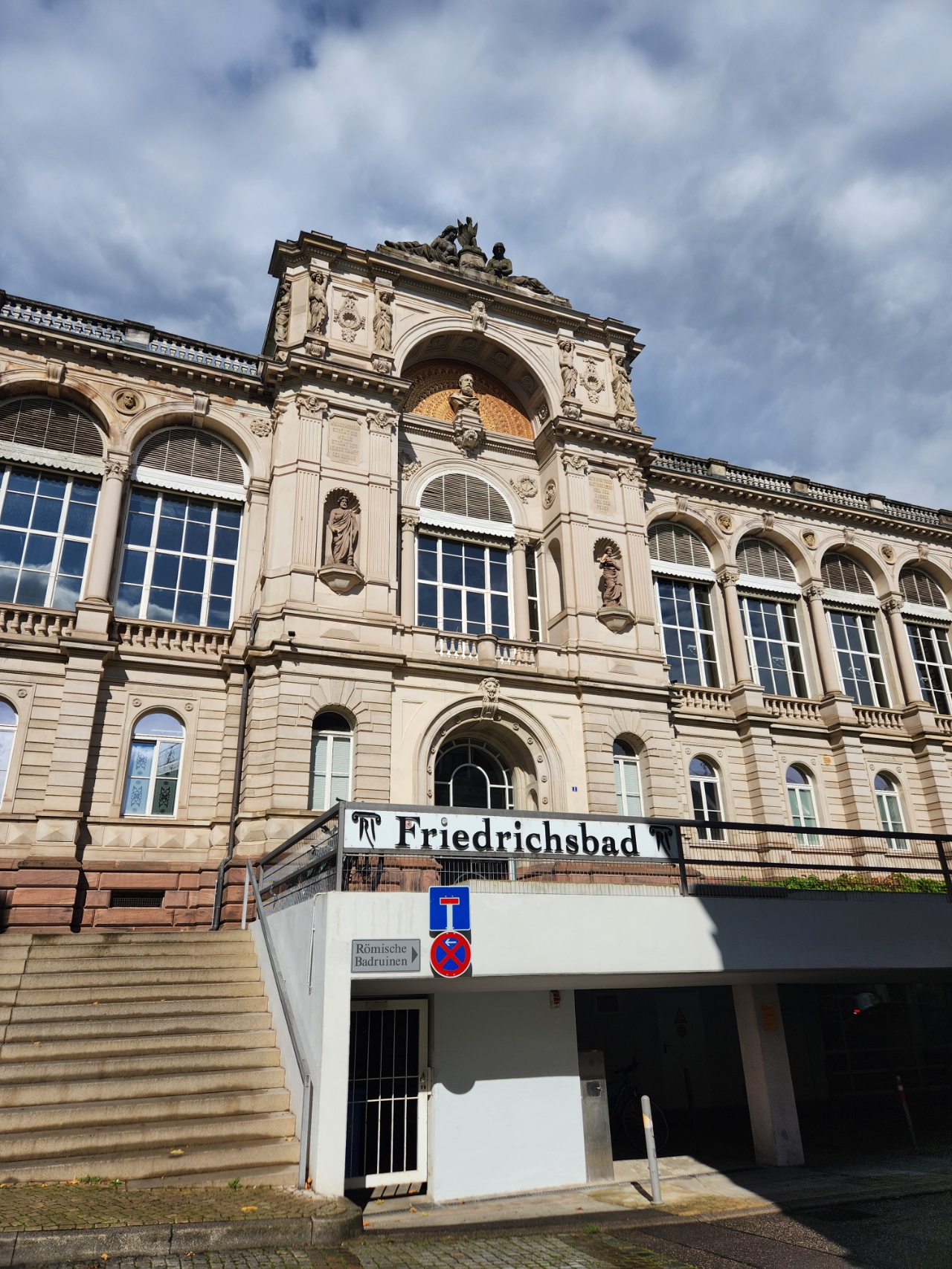
From that grand hall to the hills of the Black Forest, Rome is never far away in Germany. There were no shortage of attempts to conquer the Germans. Marius, Augustus, Germanicus, Aurelias all had their run-ins with those warlike giants from the North, but somehow Germany was never fully Latinized. The spot where I sit today had the first Roman baths built in the time of Caracalla, one of the true monsters of the Caesars. The Romans were very serious about their baths, and seemed to set about building them just about as soon as the fighting stopped. This particular spot had no shortage of hot springs at over 150 degrees out of the ground, so it was a bit easier engineering feat than building a central boiler system as they did in other places.

Baden Baden was THE spa town for the European elite for centuries. I’m always a bit hesitant to describe healing properties to waters, but after five hours in one of the complexes yesterday, I can say that I haven’t felt quite this balanced in years.
It becomes ironic that this spot, with its millennia of history, happens to have a corollary with my upbringing in the hills of Southern Indiana. The sulfur waters of French Lick and West Baden brought the wealthy to what could have just as easily been a blank spot on a map. Grand dreams of the Carlsbad of America were hatched by businessmen (circus owners) in the late 1800s. The waters that had been used by Native Americans for healing purposes were commercialized and sold as America’s equivalent to Baden-Baden. Lee Sinclair built the world’s largest freestanding dome, which, at least anecdotally, had to be the tallest structure for 100s of miles. He filled it with neo-classical statues made from local limestone, mosaics to imitate the Italians, and brought plenty of Germans in to ply their ancestral trades as POWs from WW1. His creation brought characters as diverse as Joe Lewis, FDR and Al Capone.

Unfortunately it didn’t have nearly the staying power of Baden-Baden and fell into complete disrepair by the time I was a child.

While Americans don’t have nobility, we do have plenty of homegrown wealth, and in a fit of truly magnificent noblesse oblige, Bill Cook funded the restoration of the resort and dome to preserve these Hoosier architectural marvels in the late 1990s.

To be sitting almost 5000 miles away in the original is a really special experience.

But now its time to figure out how in shape my legs are. There are plenty of wineries in these hills, and I’m about to hire a pushbike to go see a few.

At least I’ll get to have some healing waters when I return.

Relational Capital and Sauerkraut

Hannover, Germany

8.20.23

Relational Capital

Ever since I was a little boy, I had a habit of rifling away petty cash in odd places in my room, only to come across it later. While this isn’t the greatest of investing tactics, it was better than spending it. Plus, there is always an odd amount of joy in finding money, even if I knew I had hidden it from myself.

I’m starting to see that I do the same thing with relational capital. Especially in foreign markets.

As I jumped on my first international trip since becoming a father, there was an odd tug that I’d never really felt before. There are few things in life that reliably quicken my heartbeat and put a smile on my face like jumping onto an international flight. The boy from Bedford always wanted to see the world, so whether it was steerage on Ethiopian Airlines for 14 hours from Singapore to Joburg or that first trip across the pond sitting between Alex Barnes and the woman who will forever be known as “the mother in law” who took up most of my seat while belching with a tenor and length that I have never again seen, I just love getting on planes with a passport in hand.

It was a little different this time as I kissed Betsy goodbye. 10 days is not an eternity, but she’ll be 13% older than she was when I left, and there was a tug there that I’d never felt. (This is NOT to say I do not miss Kit as well, but the beauty of marrying an independent woman is that frankly she probably enjoys the peace and quiet for a bit when I’m gone.)

As I jumped on my domestic transfer, I locked eyes with a guy who looked very familiar. Now I was flying from Indy, so that isn’t surprising, but when we both realized who the other was, he broke into that broad smile. Andre Benin somehow became my handler as I took the concept of a data center from a whiteboard conversation to steel and concrete on the banks of Lake Michigan. While my feelings on that project are still raw, given that my brainchild was, in the words of Kipling, “Twisted by knaves to make a trap for fools”, we still got Indiana’s first major Tier 1 datacenter built.

Outcomes being what they are, I learned a ton and know that I built something special even if I never got any credit or cash for the effort. The Bhagavad Gita reminds us that we are here to do our duty and that we should feel blessed to have meaningful work to do, regardless of the outcome. (It also has some bits about karma that I hope come true for the aforementioned knaves, but I digress.)

My duty has always been to my Indiana home, whether it was the badge on my chest as I screamed in the pits or breathing new life into a facility in Marion, Indiana that employed 4000 people the day I was born before being irrevocably shuttered 20 years ago. If meaningful work to be done is a blessing, then I will live a VERY blessed life in that respect.

As we walked towards our connecting flights together, mine to Berlin, his to Paris, we quickly caught up about the intervening years. In a 20-minute hurried airport walk, we smiled, laughed, and game-planned some potential collaborations in Africa. While we are in very different industries, contacts and geographies matched up.

That’s the kind of dividend that you can’t see coming from relational capital. Honestly, the chances of Andre and I ever doing anything together again from a business side are close to nil, but that isn’t why you have relationships. He is a great guy and we did something important together whether it was an airport connection or a random call in 10 years, either of us would have gladly helped the other.

As I landed in Berlin, I quickly texted Fabio, my travel buddy for a 5-6 week period during the original Conquest in 2014. Fabio and I have talked/texted regularly for almost a decade, and while I haven’t laid eyes on him in 9+ years, he and his wife Marleen have hosted my father multiple times and my mother once as well. There is a picture of them in the Babin, and the picture of us covered in Laotian mud still sits on my inherited “library” desk in my front room.

Fabio and I discuss a bit of this and that, the differences between business culture in Germany and the US, our perceptions of each other’s countries from the media, and we trade reading recommendations back and forth. For all the evils of social media, I’ve got to say that Whatsapp is one helluva upgrade from my father anxiously clapping his watch during the $2/minute calls to England with the Stall family when I was 10.

I’ll be staying with Fabio and his family over the next weekend, and I couldn’t be more excited. Marleen will tell me how when I repeat German phrases that it sounds like “You haff a mouth full of POTATOES” and their two little boys will wonder just what in the world this Yankee is talking about. But I’ll get to see the triplex that Fabio owns, understand what energy prices mean to him and his budget, will get to discuss over a map the differences that I saw on the train as I went from the former East Germany to West, and all the other things that books and media will never be able to personalize like the conversations of a friend.

Kit always says that I like to collect foreign men….which sounds much racier than it really is, but it bears no small amount of truth. Whether it was being able to ask Benny what someone thought about a situation in Brussels, and having a forwarded text response within a couple hours, or asking Vicky about the newest populist candidate in Argentina, and whether or not the inflation rate I read has anything to do with the actual situation on the ground, or my mate Glen talking about the absurdities of being a tradesman in today’s UK, these are real points with real people. I am very blessed to not have to take the media’s word as gospel about large swaths of the world. I have friends who can add color and context to a screaming headline.

The last year I’ve gotten to call on a lot of these relationships in my new role with ReElement. Who would have thought that my screaming at a Purdue/IU game in a Tribeca loft 12 years ago was going to somehow lead me to the White House and achieving my lifelong goal of getting quoted in the Wall Street Journal? Yet that’s what happened when I called Mohamed and said, “There’s someone mining lithium in Mali right across the Faleme River from Senegal…can you look into that?”

I’ve used it before in reference to an ill-fated bike ride without a map in Buenos Aires, but Prisig’s quote in Zen and the Art of Motorcycle Maintenance rings true with relationships as well.  

“You look at where you’re going and where you are and it never makes sense, but then you look back at where you’ve been and a pattern seems to emerge.”

Were I not so committed to Sulla’s Epitaph, that would probably be a decent thing to etch into my Bedford limestone grave marker.

As the majority of my writing has been letters to my future (and current) children lately, I haven’t been nearly as active in adding to the Conquest. However, something magical happens when I leave the shores of my homeland, my brain starts firing in a different direction, and my fingers start tapping out something beyond cliché drivel.

I hope to have some time to write more over the next 10 days. The decade that has passed since the Conquest has had no shortage of heartache, tragedy, and failure, but looking back, I have seen the pattern emerge. There have also been some great achievements, even if they didn’t all pan out as hoped.

The searching 27-year-old who took off with a backpack and a one-way ticket to Oz, hoping to replicate Dietrich Mateschitz’s feat of finding a multi-billion dollar idea tucked in some obscure Thai village is now a seasoned man. One with responsibilities, as well as the kinds of opportunities that that 27-year-old would have royally horsed up. The scars from battles lost and the wisdom of lessons learned, as well as the patience and polishing of my beloved wife, have set the stage for an exciting next chapter. Turns out that billion-dollar ideas can reside closer to home, whether in a lab in the Forney Building at Purdue or a little office 5 miles from home. Changing the world requires knowing the world, and I’ve been very blessed to have the desire, time, and money to know the world and to make real friendships with people from different walks of life on each inhabited continent.

Looking forward to some reminiscences this week with some of the Conquest’s early cast. Hope I can articulate them in a way that is worth a reader’s time.

Kids Being Kids

While traveling, we’re drawn to the differences in culture. The way French girls smoke like chimneys and laugh after rapidly firing off the equivalent number of words in War and Peace, all in less than 20 seconds. The way English guys give a hearty laugh about something “lad-tastic” (Lad being English for “Bro”) and then cast their eyes about to make sure no one else heard.

How Germans walk around the bus they are about to travel in 3 times, before announcing in their sharply pronounced English, “Yes dis vill do.” And how a Brazilian girl, laughing throatily at something, will catch your eye just as her face finds the pose of maximum exuberant beauty.

The Brazilian eye thing really is like the shocking thrill of jumping into cold water…every single time she laughs.

You notice how Cambodians are never all working at the same time, and a few are inevitably hanging from a hammock taking a midday snooze. How the Vietnamese girls working at the hotel in Nha Trang can remember the name of every person under their roof within 2 hours of checking and Vietnamese men can whisk in and out of a room without anyone noticing their presence. You meet the legion of Laotian 12 year old girls who inevitably run the business end of so many guest houses.

The little things that you notice while traveling are endless. I could spend days talking about the little odds and ends that people do over here that are different from how we do them back home. Construction is done with scaffolding made of stripped tree limbs. Guesthouses are opened after the first floor is completed, and additional floors will be added ad-hoc as money allows. There isn’t a single place I’ve eaten over here that would come close to passing a US Food and Health inspection (but we all seem to survive.)

The last few days I’ve been spending time with a German couple from Cologne. They are 31 and highly experienced travelers, but are great fun and love to interact. Fabio, a second generation German of Sicilian extraction, and I have had a blast comparing things in Germany and the US. His girlfriend is Maleen, who is German of…German extraction. We’ve really come to understand some things about the other’s country. We’ve talked about national pride, welfare, family size, school size, divorce, travel plans, iPhones, tax codes, history, and of course the Autobahn. The also taught me a fantastic card game called Ralf-runta. (I’m sure that isn’t even close to spelled correctly.)

Fabio is teaching me German, (Maleen offers sporadic advice as well, “you sound as if you haff a mouthful of potatoes, TAKE DEM OUT!) and they are gleaning small bits of English off of me, words like “industrious” and “loophole.” He’s also getting a few “Moormanism’s” like, “many ways to skin a cat,” “hotter’n hellfire,” “neater’n socks on a rooster,” “hell in a handbasket,” and other, Gene Moorman-esque, less family friendly phrases. The kinds of language skills you can’t possibly get from a book, only real conversation.

The more we talk, the more I notice both differences and similarities between our cultures. The one thing that I always find interesting is when we either interact with or see small children. We always find common ground on how kids act.

Kids are kids the world over. I grew up with a school teacher for a mother, and working at the Boys Club with 150 kids a night running amok, so I’ve had a fair few dealings with kids and I find them fantastic to be around. Given the choice between frowning and smiling, they always choose the smile. Small things, sometimes as simple as a big refrigerator box can make them extraordinarily happy and when cranky a sandwich or a nap will nearly always fix the problem. Kids are simple because they only worry about things that actually matter.

Am I safe?
Am I hungry?
Does someone love me enough to help me if I’m in trouble?

You give a kid those 3 things, and you’ll have a well-adjusted kid. No book purchase necessary.

Kids in war zones don’t have it because they can’t feel safe.
Kids in Africa are just hungry.
American kids lose it because they don’t have enough positive daily interactions to actually feel loved.

In SE Asia, the family unit is omnipresent. Most guesthouses/restaurants/businesses of any kind are run by a multi-generational family. Side by side down so many streets the scene is exactly the same. Grandma is sitting with the baby, anyone from 12 to 50 is jumping up to do whatever needs done, and anyone under 12 is running around in a pack of 10-25 neighborhood kids.

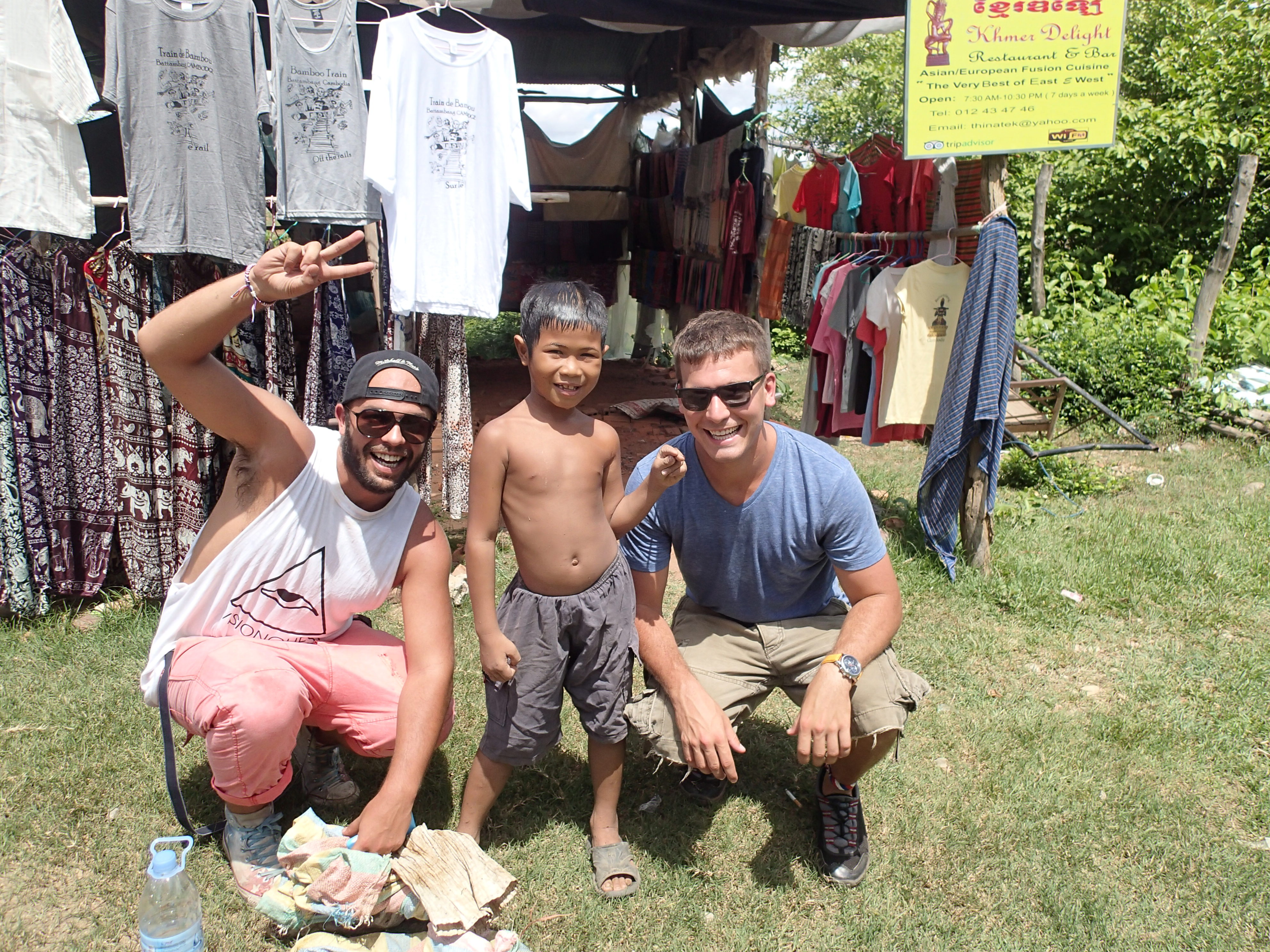
Chilling with the local kids

Chilling with the local kids

At meal time, the whole family sits around a big pot of broth with vegetables, noodles and rice of some sort, and usually a skewer or two of meat. Everyone is laughing, interacting, talking about (well God knows what they’re talking about actually) and everyone is smiling. No one fidgets with a cellphone, the TV isn’t on, and no one is at all concerned about a phone ringing. If a customer needs someone, there is a quick circular wave of eyes around the table until someone throws their head back in a feigned pout and jumps up to take care of it.

OLYMPUS DIGITAL CAMERA

Pardon me for thinking that they don’t have it wrong.

Children in SE Asia are remarkably bold. These kids fear absolutely nothing, whether climbing a tree so high that I’m getting nervous, or the 10 year old firebreather in Saigon. I joked above about the 12 year old Laotian girl running the guesthouse, but anyone who stayed at Mr. Mo’s dealt with her.

I think they get this confidence from a couple different factors. The free play of the peer group in every possible situation imaginable and the fact that every adult in sight cares about their well-being.

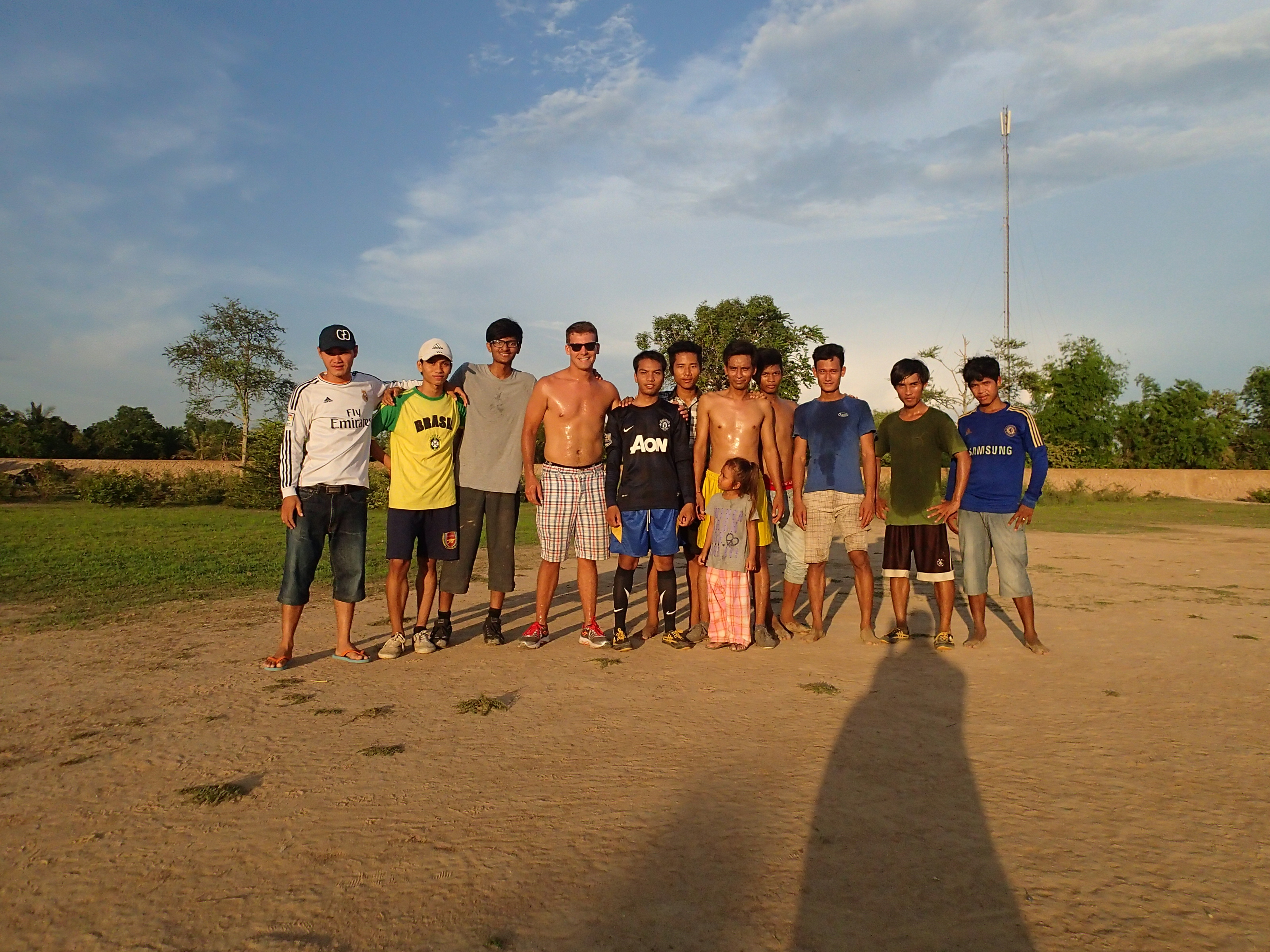
The soccer crew

The soccer crew

American kids today are over sheltered to the point of comedy. Every activity is run by an adult, school, extra curricular activities, sports, play dates, you name it. Pickup baseball games are a bygone pastime, both because of liability to let unsupervised kids on a field and simply a lack of kids with the freedom to get on a bike and come play ball. Urban and suburban kids don’t have any open nature spaces to interact with, where they could push down dead trees or throw rocks or build dams across creeks or just get muddy.

4 generations eating together nightly

4 generations eating together nightly

Even if more American kids did have access to a natural landscape, how many would shut off the XBox to actually interact with it?

They have activities and homework. Scheduled play dates and clarinet lessons. Volleyball practice and youth group. They play video games for hours, against people they can’t actually see. A roaming group of teenaged kids is just an invitation to get harassed by police in many places, so interactions take place indoors, where activities are typically limited to drugs, sex and video games.

Seeing these people live, and how much they smile, I really wonder who has things closer to right. We’ve got a lot of things, but how many of us live close enough to have dinner with a family member even 1 night a week? Let alone being able to see your grandmother and every niece and nephew at every meal.

Kids are kids the world over. Needs are simple and happiness obtained with only the barest of requirements.

God bless them for that.