Knee Deep in Leatherwood Creek

A wet argument with a couple of dead Greeks:

Around the World and Home

I believe I’ve spent two 4ths of July off of American shores. One was punctuated by an early morning run with the Bulls of Pamplona and another was spent in Koh Lanta, Thailand, wherein a very guttural screed was written as a frustrated American.

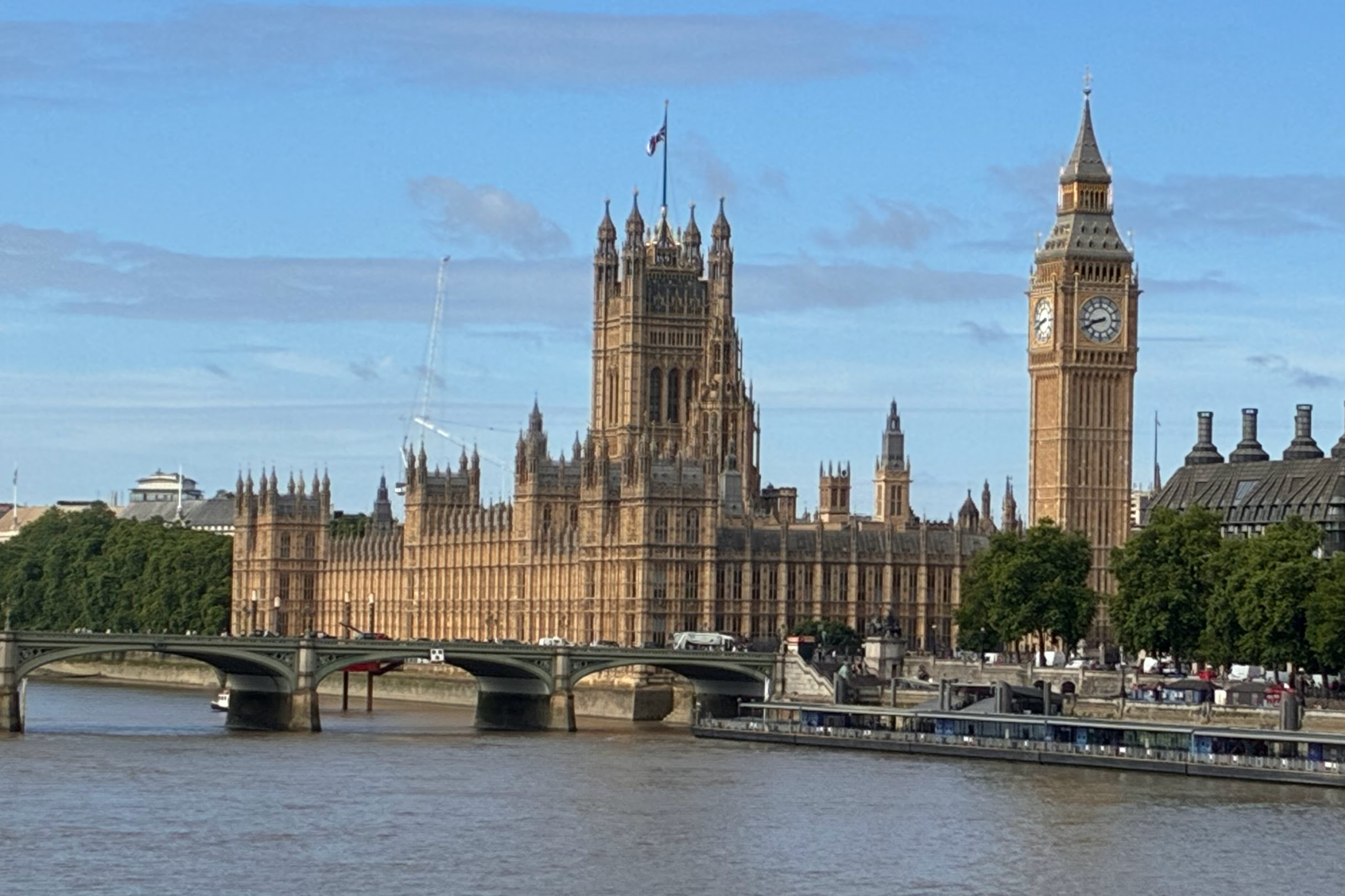
This particular 4th was spent back home again in Indiana on the heels of a trip back from London. While there is 70% of an essay about that trip and the British Museum sitting currently unfinished, the contrast between London (which is still the center of the universe) and the stretch where the glacier stopped that I call my hometown could not have been greater.

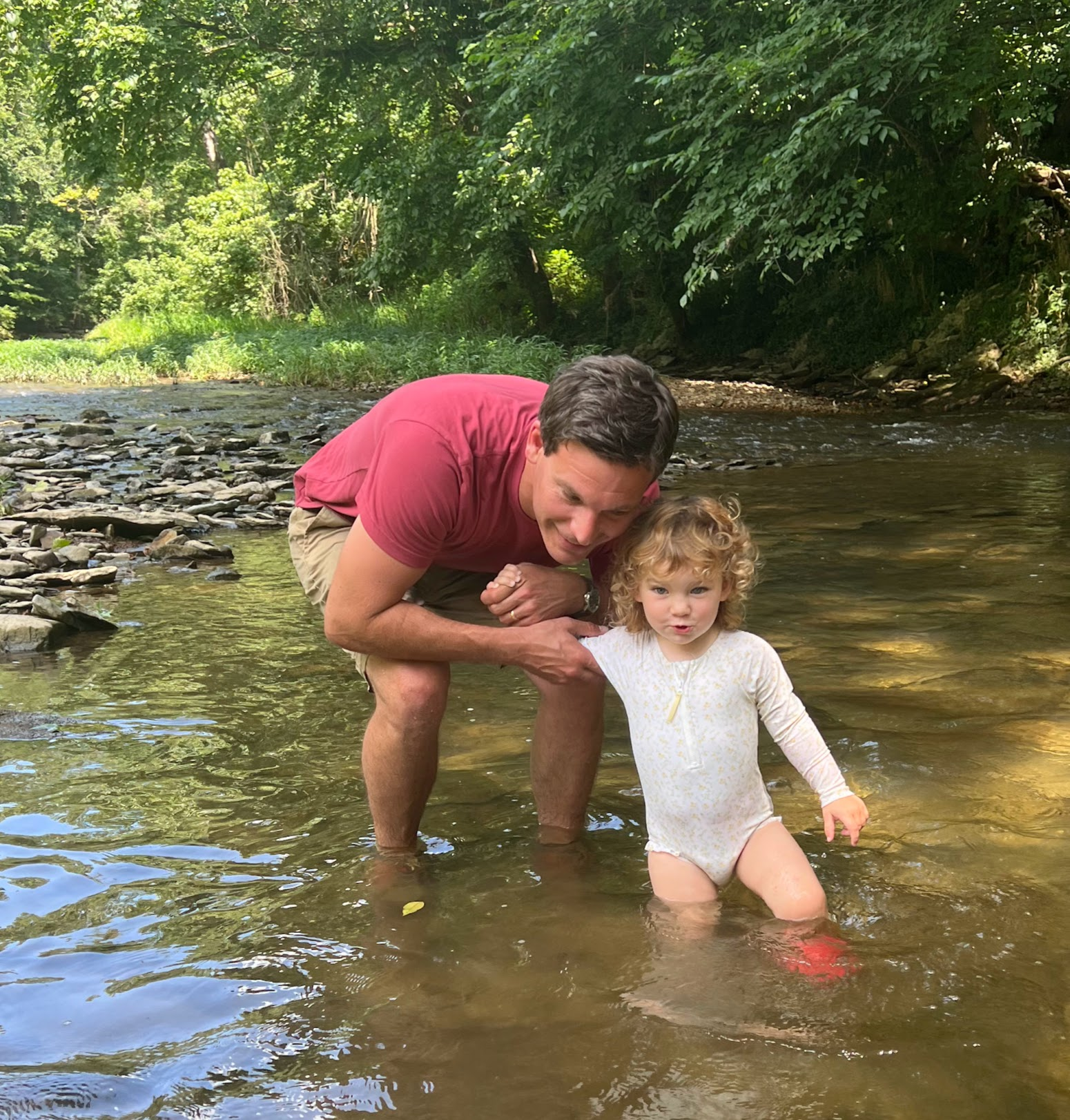
This weekend I took my two year old Betsy down to visit my surrogate grandmother Mickey Martin. Given that there are 99.5 years in between Mickey and Betsy and no genetic predisposition, there’s an obvious but inexplicable link between the two of them.

At Mickey’s were also my “cousins” her two oldest grandsons Chad and Andrew, with whom I’ve shared the vast majority of Thanksgivings and at least a bit of time in summers stamping down the cliff from Mickey’s house in Leatherwood Creek.

Leatherwood creek is between 12-30 feet wide, and rarely deeper than two feet. It winds around Bedford, through Otis Park Golf Course (which makes some bends quite nice for finding golf balls) past the valley where I grew up and eventually dumps unceremoniously into White River south of town.

It is objectively an unextraordinary creek in every way but one…it was mine as a boy.

This was the first time that I’d taken Betsy to properly play in the creek. Little different than when we were 5 or 8 or 24, Chad and Andrew and I were knee deep in that little creek, trying to catch crawdads and skipping the flattest rocks we could find.

Betsy, far from any reservations about these two relatively strange men or the creek, charged her little red knockoff Crocs into the reflected gold off that limestone bottom.

I’ve always been big on place. That place, without breathtaking vistas or world class fishing or any unique differentiator between it and a thousand small creeks running through rural topographies, is about as important as any other to me.

Heraclitus said that “a man never steps in the same river twice.”

(Heraclitus probably gets a little too much play on The Moorman Conquest, partially for my lack of witty Ancient Greek phrases to be pulled on command, and partially because I really love moving water.)

This aphorism can be applied to anything from hydrological flow constantly evolving a river to “generals always fighting the last war”.

Leatherwood Creek is different than I was when I was a kid, whether the fallen sycamores that have accumulated on the piling of the humpback bridge or the channel that cut an island next to what used to be the only flow strong enough to knock over a 10 year old. Compared to the differences found in all those other places where my feet have trod over the last 33 years, it is almost identical.

Being able to take Betsy there and seeing her joy in those humble ancestral waters that I once called mine, gave a sense of an uncertain trajectory that eventually orbited back towards home. Orbits don’t stop moving, but eventually one will come back to see the same perspective again, but with all of the knowledge gained in the interim.

This revolution around a woman whose characteristics I’d always thought of as with the raw, enduring and unstoppable power of a glacier, feels different. This is a woman for whom a Great Depression, a World War, six kids and a husband whose first heart attack was before 40, and unavoidable losses of 102 years of loved ones has yet to break.

As I showed Betsy, through the eyes of an eager audience for whom this was all VERY EXCITING, where cucumbers grew and where we got our worms from the compost pile and cooked crawdads over the fire on a flat rock, I realized how much of my life was formed between two acres and a creek at the bottom of Slaughter House Hill.

The worm bin in our back yard that Betsy loves to check on, the canoe leaning uneasily out of the bed of my truck, no less than the conversation with the Zimbabwean Minister of Mines in a London Four Seasons or a connection with the CEO of a 100 year old business in Germany in a town that globalization made redundant.

That place, and very specifically that 101 year old woman with a sweating blue Hamms Beer on the table always knew that no matter what aphelion that I managed to make it out to, gravity would always bring me back.  

Heraclitus might think that Betsy didn’t step in the same river as her papa, but I’ll just have to agree to disagree with him on that small point. I reckon his thoughts and mine on the concepts of logos and the necessity of counterbalancing forces for dynamic harmony.

That Parmenides of Elea was a piker anyway.

Farewell to a Sir of the Highest Order

April 30, 2012 was one night that I’ll never forget.

Driving a 24-foot U-Haul through the crowded streets of Manhattan, I had the accumulated possessions of myself, Dane May, and Ryan Moore as we headed from our first NYC apartments in the Village to our massive (by NYC standards) flat in TriBeCa. I was driving while Dane sat in the second seat. Ryan was crammed into the middle area without a proper seat complaining that he had been smashed in like a secondhand accordion.

A few wrong turns due to some dodgy directions and we were forced across the Brooklyn Bridge with no alternative but to go to Brooklyn and turn around to head back to the island.

We arrived about 11:15PM to an absolute trash heap. More accurately, a series of trash heaps.

We would come to find out later, that the previous occupants had been bankers, and had spent the last week of their lease playing cocaine flip cup with a bunch of strippers.

8 million residents live in the island estuary for world human migration known as New York City, so the odds of knowing similar people seem low. But Manhattan apartments of a certain size gain their own patinaed verbal history, transmitted by the social connections of their rotating cast of occupants.

We had a U-Haul full of our possessions that had to be returned that night otherwise we’d be paying a $250 ticket as well as an additional day on the truck.

Our friends, lovable bro-snakes that they were, were there waiting to help us move in our stuff in. They laughed, well more of a hearty grimace with sound, as they walked into our “new palace.” Shuffling through trash as we tried to pile it all into the living room, we got our possessions inside and the truck returned about 3:00.

This was our 5 man “Snakepit”, and it was an adventure in anthropological studies. Whether it was DJ practice at 2AM on Tuesday, or me needing to cajole an aspiring model to scoot down the counter to allow me access to my 4 cup Mr. Coffee pot at 5:30AM before work on a Thursday, this was a jungle far from home.

It was neither clean nor comfortable, but it was a place of massive maturation. A few weeks after we moved in, Dane came to the roommates and said that he had a proposition. An Aussie friend of a friend, Ben Harrison, was moving to NYC for the summer and was trying to avoid hiring his own apartment. The nature of temp visas nearly always made this an “arm and a leg” proposition. He was offering to pay a chunk of rent to put a loft in our massive “activities” area, where we had a full-sized basketball backboard and a ping pong table. Always the cheap ass, I wholeheartedly said yes, and everyone else shrugged as they indifferently agreed.

Ben walked in wearing loose leopard print “pants”, a vintage hat pushed back on his balding head and large, odd rings on both hands. Upon his back, he had no more possessions than could be navigated while running through an airport. His voice had a tinny vibrato that would crescendo until he found a point to ask, “Right?”

He had been coordinating outdoor music festivals in Australia for years and was now looking to come over and scrap his way around electronic music in NYC. His girlfriend, Alice, was a dance captain for a Broadway show. Having avoided winter for 3 years at that point, this was an opportunity to steal a summer spending time with her personally while advancing himself professionally.

From almost no contacts save for club guys we knew, Ben managed to make himself invaluable to the electronic music scene, finally being given a 5% ownership stake of a club for sweat equity.

This wasn’t his foremost achievement that summer. That would be me.

I’d always had a desire to travel. My parents made the “interesting” decision to allow me and my slightly older friend Alex Barnes to go visit our friends‘ family, the Stalls, who made an ex-pat career move to London for a few years. At the time, it was a 12-year-old and 15-year-old navigating through England with only our paper traveler’s cheques and a tube map with a 20 pence piece taped to it, the Stall’s phone number scrawled across the front.

We survived, as one does, after several hair-raising adventures, discussion of which still brings tears of laughter to our eyes.

I’d seen quite a bit of the US between family vacations and getting to spend a school year traveling with my father as he hawked asphalt planers, stump grinders, and slot cutters across the US.

Internationally I was still a neophyte though, and Benny told me about his unbelievable travels over the past 7 years. He’d been to something like 35 countries at that point, backpacking through Europe and North Africa for nearly a year when he was 21.

This was the roundabout way he’d become our roommate, via poor directions and a deceptively named hostel/brothel called “The Heart of Amsterdam” wherein he met fellow Boiler Clint Misamore, both of whom had hoped to be in bed at somewhere OTHER than a brothel.

I was amazed that someone could do that. Vacations in the US were nearly always under 2 weeks, with the majority of one’s 15 days being spent on obligatory holidays, weddings, and funerals. I never envisioned time during my career to go travel for long stretches like Ben had.

It was interesting to discuss, but this was the life of someone else. I was a trader, and traders had to be trading. A week here and there might be taken off, but there was no possibility of taking a massive hiatus and expecting a job when I returned.

Fast forward 3 years, and I have since traveled to 5 continents and 18 countries. Ben and I as of 7PM local time on July 31, 2015, had joined the 5 continent club, having seen North America, Europe, Australia, Asia and South America together. Not bad considering we live on opposite sides of the world most of the time.

Ben taught me that there is no such thing as the “way.” There are only goals and the motivation to achieve them.

Every choice leads somewhere.

One day I decided the path I was on would only lead to a life that I was unhappy with, so I jumped off, and emailed Ben the following subject line:

“Quit my job. Need an adventure. Call when you can.”

Ben called within 12 hours from the other side of the world and within 14 days, I was en route to Perth with a backpack and little else.

That took me on the trip of a lifetime, and totally refocused my perspective from one driven by money and the status afforded it, to a life view focused on where I wanted to do legitimate good in the world.

It was a choice that would take me to a bamboo railroad in Laos, a yacht in the Whitsundays, an elephant camp in Thailand, and countless sleeper busses in between.

Ben Harrison was an engineer.

He was a network sustainability engineer. Ben saw the world as a treat to be consumed, and he found that the most efficient way to do that was by becoming an asset to an ever-expanding network of friends in different time zones.

Millions of people have connected at an event thrown by Ben Harrison over the past 20 years. From promoting underage clubs in Melbourne as a high schooler to the DJ booth at the world-famous Pacha in Ibiza and hundreds of temporary stages in grassy fields around the world.

Ben designed spaces and experiences where people wanted to find themselves.

Ben found plenty of connections as the keyhole for the parties he threw, but his never-ending craving for authenticity drove him to connect with people whenever they came within shouting distance of that tinny, Aussie rasp of his.

It was Richard, the Shakespeare of enlightened profanity cab driver in Perth.

It was Hein smiling through broken English as Benny tried in vain to discern a particular point of emphasis as we cooked the stuffed squid roles in Vietnam.

It was Gomez, a broke 18-year-old kid trying to make it in the music business in NYC that Benny brought along like a little brother.

It was Ariana or Nat or any of the other broken women who found an unexpected side in Benny. One that mended her broken wing and shared the security and affirming rush of initial intimacy…only to be put back out to fly with a smile and a lifelong friend and the knowledge that it could never be permanent.

Ben had an endless heart for people he “rated.” He had a tight list of Aussie insults for those who didn’t. This discernment was important because from Ibiza to Melbourne to Tulum to Tunis, Benny had a friend. I’d be surprised if the Council on Foreign Relations could activate boots on the ground so quickly in so many places.

Benny had a guy or a “bird” for everything. And as soon as they answered the phone, they started smiling as he asked, “How ya goin’?” He’d ask whatever was on his mind, say “great, I’ll connect you” and tell you to call the next time you were in XYZ.

Even if he’d called someone who couldn’t help, they’d always pass him along to a friend who could, because it was almost impossible to not want to help Benny. You could vouch for Ben because he was a professional vagabond, who drank champagne next to the grapes and every place it would ever be shipped. That is a widely sought-after profession that very few outside of English nobility enjoy. Ben was a gentleman in very specific ways, and his complex moral compass, while difficult to decipher, never, ever deviated. So long as you understood it, you could take it to the bank.

Ben was the most frustratingly selfish human being on earth. His personality was so big, that as colorful as I am, I was merely grey wallpaper in many rooms where the Benny Show found an audience.

Whether it was the $800 bottle of champagne that he ordered that you’d be expected to split or the plans that he’d unilaterally change if he met a couple of girls who wanted to join…or his utter intractability once his mind was made up, no one ever called life with Ben easy.

I’m sure Nigel and Kerry would say he was an absolute nightmare to raise. If there was a teacher in his entire academic career who had something nice to say about him, I’d be surprised.

He could be a little bit like the sun, life-giving when you need it and oppressive if you can’t escape it.

He lived fast and hard. But whether he’d lived another 2 weeks or 40 years, I am certain that he could not have died more peace with the life he lived.

Life was to be lived today, not in some indefinite future.

He did it his way and he let me come along. Ben Harrison taught me how to love the world as no one else ever could. Taught me that life is a magnificent set of possibilities for those who are free. Showed me that it is possible to be unapologetically yourself.

There were many lessons Benny couldn’t teach, but there were some that ONLY he could teach. I was truly blessed to have that hairy, Lebanese incarnation of Krishna show me the entire world of possibilities residing underneath his breastplate and mine if only we’ll get amongst it.
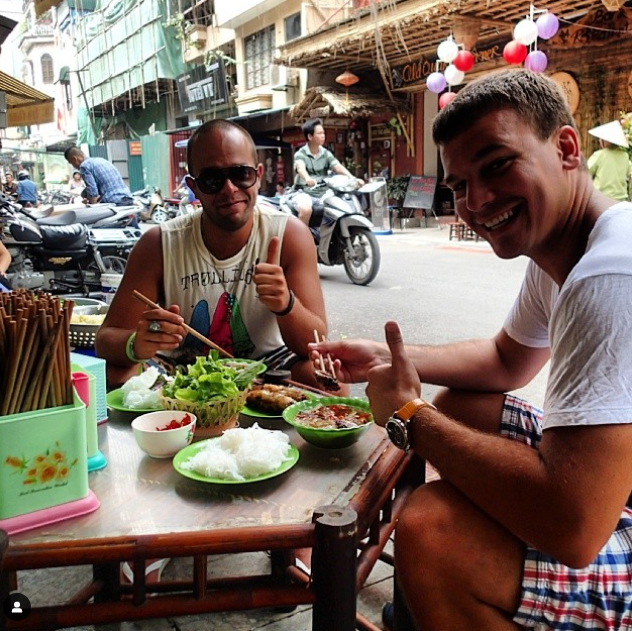
I’ll miss Ben for the rest of my life. He wasn’t constituted for middle age, so he shoved an entire lifetime into half of it, and lived knowing that he’d maximized every day he was given.

It’ll be hard to not have him randomly call from literally anywhere on the globe, talk about the Bombers latest defeat, some liquor rep screwing something up, and where he’ll be next month.

To know that I became the sole living memory of our experiences across 5 continents together is hard. Memory is only original so long as it is shared. Absent that, it is only a replica, with all of the defects, both subtle and substantial, that make a replica inferior to the original. The entire course of my life changed in the company of Benny.

It never would’ve happened had I not gone through a miserable night in a trash pile of an apartment, unloading three beds, couches and everything else up a 1.5 floor walkup.

It wouldn’t have happened if I’d merely laughed when Ben told me that a lifestyle of travel and freedom was possible for anyone, not just the lucky lot in music.

It never would’ve happened if one day I looked in the mirror and said, “the money isn’t worth losing your soul. Do something different or you’ll never achieve a goal worth a tinker’s piss.”

Here’s to two roads and choosing the one less traveled by.

It has made all the difference.

Thank you Ben. I’ll miss you brother.

The Conquistador’s Lament

I’ve put off writing the concluding post to the Latin America leg of the Conquest for long enough. It is time to try to put into words what the constantly smiling gringo felt so vividly for two weeks.

OLYMPUS DIGITAL CAMERA

OLYMPUS DIGITAL CAMERA

We went to Iguazu Falls for Ben and the girls’ last leg of the trip. After 36 hours, Ben would fly off to Ibiza and the girls would continue onto Brazil for the next leg of their trip. I was heading back to Buenos Aires, excited about the prospect of exploring on my own terms, but missing the companionship of more travel partners I might never see again.

I checked into a hostel called “The Pink House.” That is a play on the name of the presidential mansion in Buenos Aires, known as Casa Rosada. It was spartan but clean in the Recoleta neighborhood, which I wanted to explore from instead of our further west initial place in trendy Palermo.

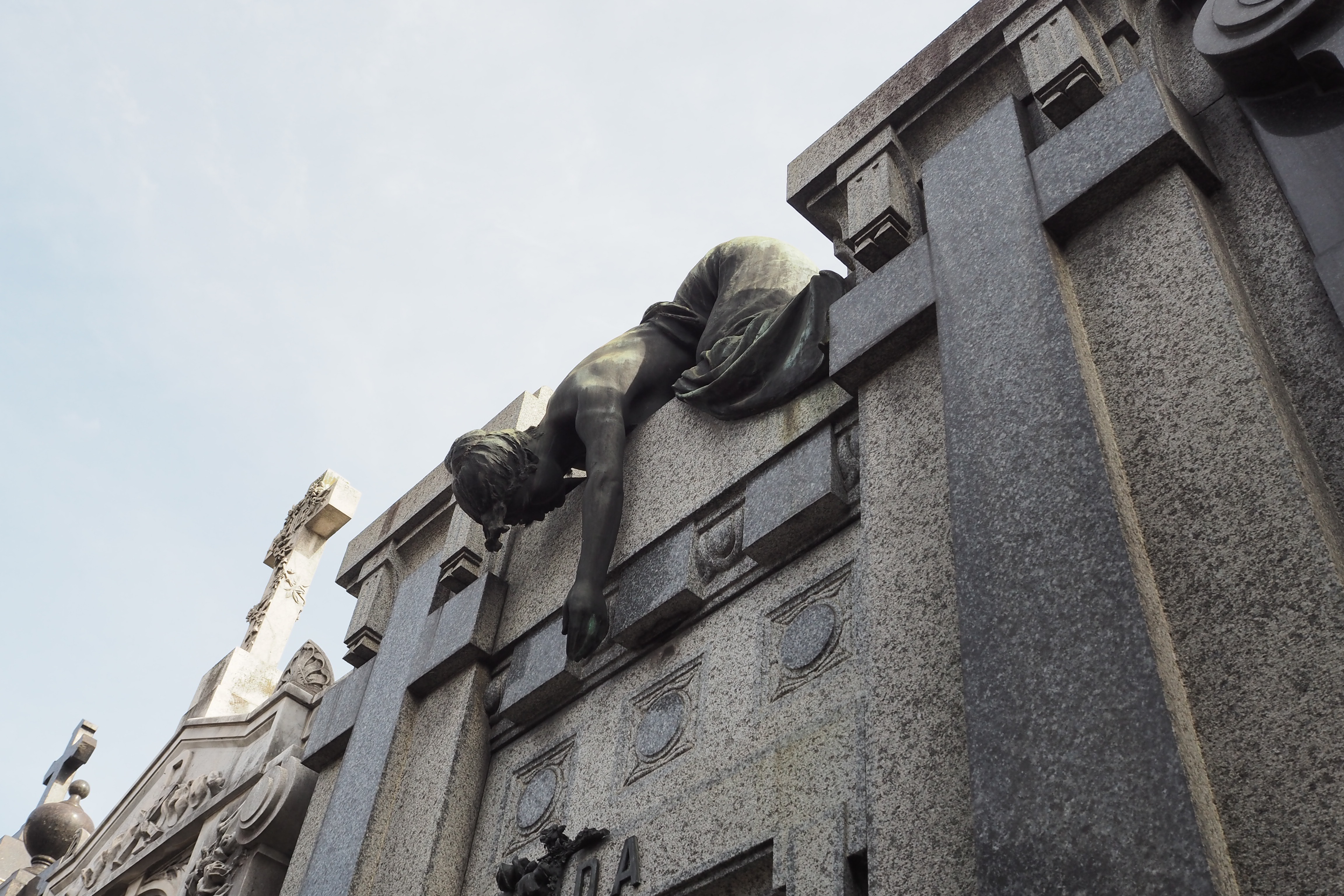
Recoleta is not really setup for tourists outside of the few blocks around the famed cemetery that holds Evita’s remains along with the dearly departed phenomenal mausoleum builders, some of which are seen below. Past that, it is very much a nice but ungentrified neighborhood in Central BA, serving as a portal to the governmental and financial districts. It is also a Jewish district, bringing me back to my first international travels where the herd of the very Catholic Stall family stuck out like sore thumbs among the Abraham Lincoln-esque costumes in the Jewish Orthodox neighborhood of Westminster.

OLYMPUS DIGITAL CAMERA

OLYMPUS DIGITAL CAMERA

I found some fine restaurants around the area, as well as a very overrated hamburguesa. There were plenty of cafes to hole up in on a rainy day, reading Seneca and then the mindblowing Kierkegaard. My appreciation for comprehensible philosophy grew in an unbelievable way. It is one thing to try to tackle Kant’s Critique of Pure Reason. It is something vastly different to read Seneca’s common language letter to his best friend.

My days were filled with walking through antique shops on the way to the next cafe, late nights at jazz clubs, and treating myself to phenomenal steaks and Malbecs. Vicky continued to show me around in BA in a way that I never could’ve seen as a tourist, and the experiences continued to be incredible.

On Sunday morning, I trudged through a persistent drizzle towards San Telmo, about 4 miles from my hostel. About ⅔ of the way there, I got tired of being rained on and decided to get a coffee and a sandwich in the next cafe I came across. Bar de Cao was a relic from another age. 115 years old, it had wine bottles all over the walls, important documents from the history of Buenos Aires that had been signed there, and a spiked coffee named after Hemingway to boot.

There were 4 waitresses, one older and the other three about my age. They took turns swooping in on the gringo, with the short one (though still wearing 3 inch multicolored foam platforms on the bottom of her black sneakers) taking the first turn.

As my coffee turned into a ham sandwich, which turned into a glass of Malbec, the girls all took their turn seeing what they could get the blue eyed gringo to say. I sat there writing about one of them, as I often do while people watching.

Describing a living breathing person in minute detail who is interacting with the world and only very rarely you, that is a powerful writing exercise. The way she buttered the toast that she kept munching on, and the rhythm of her fingernails clicking the bar. The things that her body language said as she interacted with other patrons and staff. The way her mole wiggled as she laughed at my broken Spanish, and the muted one heeled turn she employed when walking away. All of these things are what makes real characters in fiction, a keen look at behaviors without becoming a direct (and therefore contaminating) influence. I’d be willing to wager great money that more than a few famous characters were the result of people watching in a bar with a notebook.

I sat there, writing away, both a character description and the outline of a novel, as I continued to soak up all the sensory perceptions that I could in a place that I might never come to again. Suddenly the older waitress comes bombing over to my table and says “Bag! You bag!”

Pretty startled from my dreamlike character study, I patted my wallet and said “No bag. All good.” She quickly grabbed a bartender who then grabbed the man sitting with his back to me at the table behind me, tossing him into the street. Apparently the man was feeling my coat, which was full of $400 worth of pesos, as I had just exchanged money that morning. The waitresses, now clucking around hen-like, never gave me more than 5 minutes without a visit again.

This was great service.

OLYMPUS DIGITAL CAMERA

OLYMPUS DIGITAL CAMERA

As I paid my bill, a comical $13 for 2 glasses of wine, a sandwich and a spiked coffee, I used my newly acquired Spanish to ask my muse for directions to the San Telmo market. Her body language immediately changed into one I hadn’t yet recognized, one leaning slightly forward in a vulnerable position, made incredibly disconcerting to an American boy with a huge weakness for Latin American women. We stumbled through my request, plenty of looking down and laughing as we both butchered the other’s language. Finally I got my directions and put on my green rain shell, and as I walked away from her, she lightly brushed my shoulder with her outstretched hand, raising the hair down my spinal column like contact with light electricity.

Vowing in blood to teach myself Spanish upon return to the US. I set off to a bookstore to find a Spanish fairy tale book to read to the ever growing legion of kids that my friends continue to hand off to “dear Uncle Moorman.” I figure start small and work up. No way I’m going to get anything out of trying to read Borges in Spanish.

OLYMPUS DIGITAL CAMERA

OLYMPUS DIGITAL CAMERA

The next day, as I boarded the plane, I said goodbye to a country that found its way into my heart in the first 3 hours of my arrival, I wondered if I would get back. I tell myself I will, but then again there are a lot of places in that category at this point. International flights are the expensive part of travel, and that budget is shrinking rapidly as the business requires capital to grow.

Someday, when we get the business humming like it should, maybe I’ll go back. But it’ll be different, it always is. A few of the restaurants I grew to love will be out of business for one reason or another, the currency will have appreciated so that my beloved $12 steak is now $25. Vicky will be on assignment in Paraguay, or whatever far flung reaches of Latin America offer Deloitte the most billable hours, and the red wine won’t ever taste as sweet as that first Carmenere on the veranda of our AirBnB in Palermo.

Maybe that’s a pessimistic way to look at it, and I should adopt Ben’s travel thesis of, “every time in a place is different. It is the traveller’s job to separate them and don’t let the bad bleed into the magic of a first impression.”

Well that’s not quite how he says it, but it is the gist.

My time in Buenos Aires was incredibly magical. To kiss a gorgeous, intelligent and (really freaking tall) Argentinian girl in the midnight rain down a sidestreet lit up only by the neon of restaurants and bars, as you’ve just walked out of seeing a 17 piece jazz band that resolutely reconfirmed your love of live music. To walk back soaked to the bone, with a smile on your face because you stole a scene in life that is only real in the movies.

That’s magic.

That is undeniable, in your face, think about it on your deathbed with a smile on your face stuff.

Most of the time we let all of our moments bleed together, letting the bad stain the good with marks that won’t come off, but why? What do we gain by trying to compress our experience into a format where the greatest are marred by the average and the mundane?

So many moments of my life are compressed into a slurry that reminds me of the stuff inside of chicken nuggets. Sure, I think back on years of my life and I have some memory that will make me smile, but these are momentary placeholders in years of forgettable (and forgotten) experiences. A stolen chicken nugget tastes great, but eating the box of 20 at McDonald’s is a shit way to spend the 3 hours after a meal.

I am so glad that I’ve realized this early, and made it my goal in life to appreciate moments in real time. How few times do we realize how truly content we are in the moment itself? Most of the time it is the bitter memory of a time that was better than now, picked from the slurry of forgettable years.

Moments like that don’t just happen on travel. They happen every day. It is the “Eureka!” moment that comes in the business when you realize where the funding is coming from, or it is the moment when you take your highly technical designs to a Purdue professor, and have him stand up impressed.

These are moments that have to be savored in the moment to be properly remembered in the future. It is not a quantity race. It isn’t an Instagram picture from Greece with 200 likes in a moment that you don’t really remember because you were hammered. It can be the sunrise coming over a cornfield, or a moment of achievement after work well done. It can be the first time that baby grabs your hand, or the moment when your 6 year old finally starts turning his shoulders and hitting everything in sight in Coach’s Pitch.

It is about recognizing it, not has a hazy also ran picked from the lot, but as a vivid experience that gives you strength to think about.

As Seneca said in that letter to his friend, “Everyone hurries his life along and is troubled by a longing for the future and a weariness for the present.”

Don’t be that person. Don’t be caught in a trap of “tomorrow will be different.” Live a life as a collection of moments that you will think back on in the past and say, “Well if I made it out of a 14 mile mapless bicycle odyssey around Buenos Aires in the dark, surely I can make it through this.”

That navigation fiasco could’ve been a real game changer in my time in Argentina. I could’ve had a real go at Ben and ruined our dynamic for the rest of the trip. Instead, it ends up being one of the truly treasured experiences of my trip, one where I learned to just keep pedaling and figure it out.

When I got back and did tersely tell Ben that he left me without a map and I didn’t appreciate it, he incredulously looked at me and said, “Listen mate, you’re an independent guy and you figured it out, I don’t see the problem.” He didn’t, and after 2 glasses of red wine, I didn’t either.

Nothing was irreparably broken, so why not enjoy the next sip of wine and let it go?

That’s a life worth living, where our triumphs are learned from and remembered, and our failures are learned from and left to the slurry of unfocused memories.

OLYMPUS DIGITAL CAMERA

OLYMPUS DIGITAL CAMERA

I’m glad I figured that out now, I’ve still got quite a few years before the scales fell from my eyes to catch up on.

There is truly wisdom to be learned from men who wrote down how to not take life too seriously. I’m glad that I stumbled upon Seneca and his brand of no nonsense Stoicism. To read it, take it in and digest it was truly a gift to have been done in Buenos Aires. To look around and say that I am in this moment and there is no where else I’d rather be, because tomorrow this won’t be the same. That’s a truly magical experience, no matter where it is.
Look for a few more of those. You’ll thank me when you find them.

Zen and the Art of Being Lost in Buenos Aires

There is a half read book on my nightstand at home called Zen and the Art of Motorcycle Maintenance. In it, Robert Pirsig takes a trip across the American West on his motorcycle with his slightly autistic son and a couple of friends. Most people look at that title and wonder what kind of drugs someone had to be on to come up with something so inane. Having read a good half of it, before other books jumped up the ladder, I find that some of the most instructive tomes about life seem to be the most random.

I had my own moment of Zen on a pushbike yesterday. Fearing that the weather might turn rainy later in the week, we tried to get out and see as much as we could yesterday. A trip to the Recoleta Cemetery, a place that puts the greatest of New Orleans mausoleums to shame, and a lunch of empanadas and tortas had shown us two different neighborhoods, but we resolved to get some bikes and make our own tour.

No one moves very quickly in Argentina, and the nonchalance with respect to time has already infected us, so by time we actually got to the bike shop, it was nearly 4PM. Being winter in the Southern Hemisphere, we only had about two hours of daylight left to burn. We grabbed a couple of maps and headed off through a city seen as one of the most bikeable in the world.

Then things started to go a bit haywire. Ben and I lost the girls after about 10 minutes of riding, which was probably to be expected. We meandered along some bike trails, edging closer to the water, but only getting into the port district. Seemingly anywhere in the world, you’d never prefer to be by the docks as the sunsets, but there we were.

Also, as opposed to nearly EVERY map I’ve ever seen in this life, the map given to us by the bike shop was oriented not on a North/South axis, but instead on the city grid of Buenos Aires, which was laid with a datum relative to the river instead of cardinal directions. This meant that saying I want to go “up” on the map than I am now was a very trying experiment in map turning.

About 7 miles from home, my chain came off and became wedged between the sprocket and chain guard. Having no tools and not enough Spanish to figure out “wrench” we battled with the bike for about ten minutes before deciding that I should just throw it into a cab and head back before it got dark. Ben grabbed my map and headed back on his bike, because neither of us fancied a nocturnal bike ride around a city we’d known for only 24 hours.

I thought getting a cab would be easy, but no one wanted to let me put my greasy bike (and even greasier hands) in their tiny Peugeot cab. So I stood there slackjawed, wondering how in the world I was going to make it home without a map, Spanish skills and a bike a chain off the rails and no way to fix it. Finally a security guard finally took pity on me and brought me out a pair of pliers, and I quickly got the bike back in working order. Then a couple of Venezuelans came and took pity on me, giving me some very general directions toward the Palermo neighborhood where I’d started. At this point, I was nearly 6 miles away with a very quickly setting sun.

I took their advice to the best of my ability, taking a bike path to the end of the line (praying that I’d come out at the CORRECT end.) A quote from Pirsig started to hum in my ears as my mindset moved from annoyed to determined.

“You look at where you’re going and where you are and it never makes sense, but then you look back at where you’ve been and a pattern seems to emerge.”

Trying to isolate the pattern, both in my own life and in this particular bicycle marooning, was a trying exercise. I had left the docks, where I at least knew my general relative position to home, moving in a direction that the Venezuelans promised would take me home. Having no  geographic context  to draw from, I had to stay 100% true to their directions or I’d end up god knows where.

Looking back on my own life, I recognize the same pattern. So many people put their heads down and start charging off in a direction given to them by others, only to find that the slightest deviation in direction will leave them stranded with no idea how to get either back from whence they came or forward to an original destination.

That is why the need for context is sacrosanct. Knowing only a handful of street names, my context in this odyssey was very limited, so I was dependent on external forces to give me a direction. The more streets that one recognizes, the more able to self-help he becomes. He recognizes small mistakes before they lead so far off track that it loses all feasibility.

The same is true in life. For as long as I can remember, I wanted to be rich and live in NYC. I grew up on a diet of Friends, Seinfeld and the Wall Street Journal, and I knew that at the Southern tip of an island at the center of the world, my dreams would all come true. (There is currently a gingery Semite, a sleeping Indian, an illiterate Italian, and a bald…well whatever Gar is, reading this and laughing hysterically that I thought that all my dreams would come true in our dingy corner of the financial world.)

I got to my destination, and for a while, I loved it. The stress, the money, the comical number of amazing women to be found in Manhattan…this is what I came for.

Then complacency snuck in. My whole life had been about getting to this place, covering the distance, both physical and cultural, that lay between the sleepy cornfield I’d grown up in and the screaming trading pits that I so desperately wanted to be a part of. Once I’d stopped “pedaling” as I arrived at my destination, I got nervous that the bike would fall over on top of me.

Back in Buenos Aires, the sun had set and the buildings weren’t getting any nicer. I followed Cordoba street until it Y’d off. Inevitably, I took the wrong side of the Y. Pedaling faster was motion, but it was not to be confused with progress by any means. I was merely going faster in the wrong direction for 20 blocks.

Finally I began asking anyone standing still how to get to Palermo. My original directions were now defunct, and the only way I’d get home was to find a new set. An older woman (hell this is South America, she could’ve been 35 or 55 and I wouldn’t know the difference) told me that I was at least 40 blocks from Palermo, but if I went up 3 streets and turned right, that I would get onto Serrano and as long as I kept pedaling, I’d get to somewhere I’d recognize.

Now I had a direction that would turn my motion into progress. This was the “eureka” moment that gave purpose to what was otherwise aimless wandering.

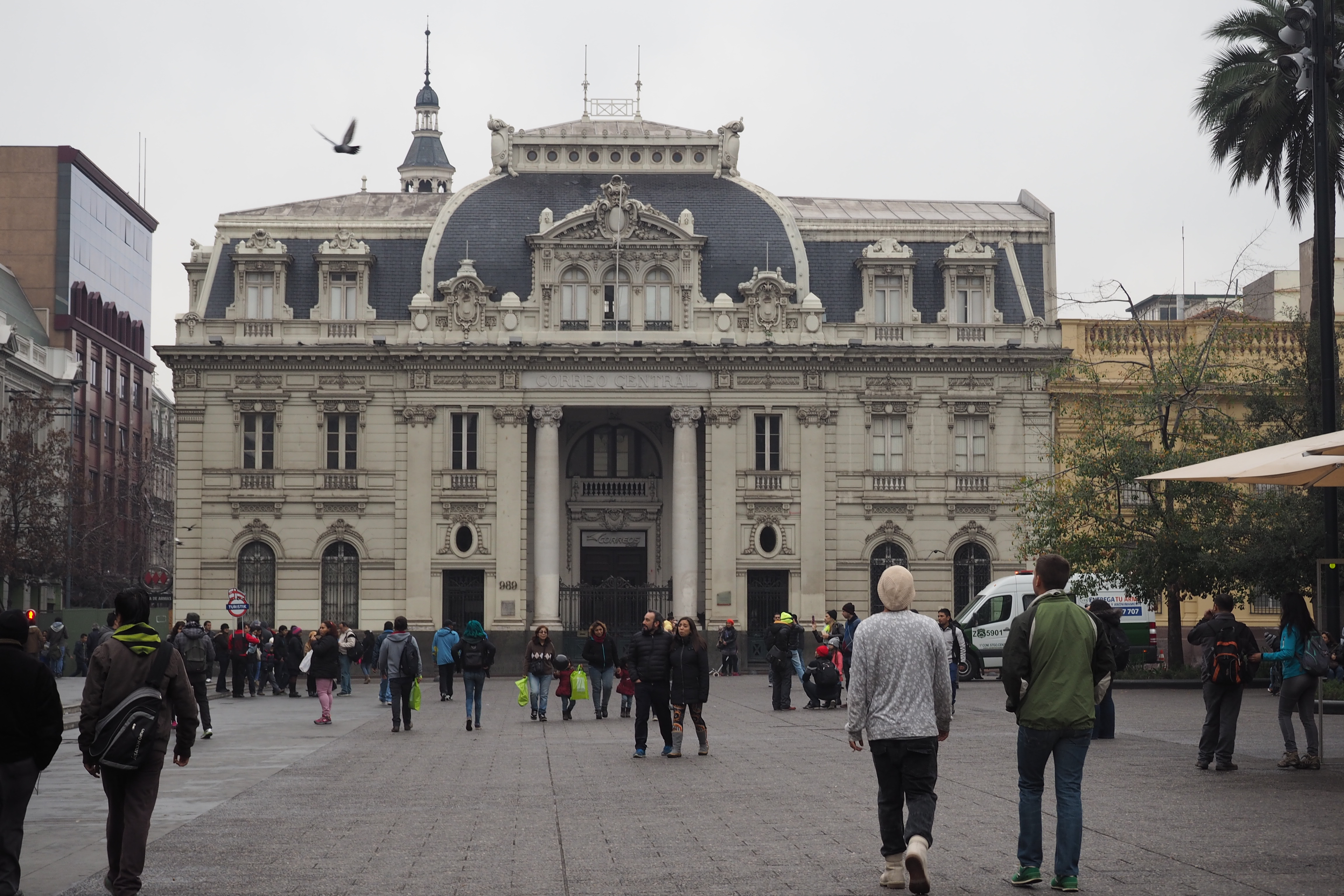
Sure enough, after hoofing it 14 miles around Buenos Aires, I came up to the Plaza de Armes and knew that the bike shop was just around the corner.

Eureka moments happen in all facets of life, not just with hopelessly lost Americans on pushbikes. Mine happened on that brutally cold February morning in Chicago, that moment when I knew that I was headed in the wrong direction. So I asked if I could follow someone else’s for a while, and much to my benefit, he said yes. Eventually Ben’s direction and mine diverged, but that was alright, because I had enough context to self-correct. My direction is rarely perfect, but knowing that a path is the wrong one is always worth something.

If I’ve got one lesson to teach anyone, let it be the danger of sheepishly following along. One has to find their own direction, otherwise we’re just eating and shitting until we die.

Also though, I’d still advise a map in Buenos Aires, but boy can you learn a few things without one.

“The truth knocks on the door and you say, “Go away, I’m looking for the truth,” and so it goes away. Puzzling.” Robert Pirsig

Same Same but Different

Throughout SE Asia, I probably heard the line a million times.

“Same same, but different.”

Whether it was someone trying to talk me into their restaurant or sell me “real” designer underwear at the market, the line became the English chorus in the teeming cacophony of mopeds, firecrackers and horns.

The most rewarding part of travel isn’t the places seen or the people met, it is the internal effect that it has on one’s viewpoints. It is looking at anything, old or new, and looking at it not as what you projected it to be, but as something closer to what it actually is.

I find that since getting home, I’m looking at many things that I took as routine parts of the landscape differently. The sound of walnuts and acorns rustling through limbs and dry leaves as they careen toward the ground had escaped my attention for 26 years, now it seems to be all I hear on my morning run. Perfectly spaced rows of drying corn suddenly possess a noble beauty that I had never appreciated.

Then there are the things that never bothered me, but now seem strangely absurd. Walking into a restaurant, and seeing the only healthy option to be a cheese, dressing and bacon covered “salad” is shocking after 6 months of eating little more than sliced tomatoes and cucumbers for a light meal.

The huge amount of trash that Americans generate on a daily basis, largely on the basis of overpacking everything, seems ludicrous. For instance, I bought a 2.5 inch long USB jump drive, and found myself bringing home an 8 inch by 12 inch plastic package, complete with a cardboard insert of nearly the same dimensions. All in the name of stopping shoplifters I suppose.

Also my relationship with the media has changed drastically. After a long hiatus from American news sources, I am continually shocked by the two pillars of American cable news.

Fear and consumption.

I challenge anyone to watch a news program with a discerning eye and find content that isn’t predicated on one (or both) of those pillars. From the comically fearmongering coverage of the Dallas Ebola patient, to the shamelessly consistent product placement (celebrities included) that passes as “news”, the American news media has largely ceased to serve any meaningful function within the democracy.

While traveling, I watched Anchorman 2. I loved Anchorman, but I thought that the sequel was merely a poor exercise in fill-in-the-blank jokes from the first film. However, I was intrigued by the satire of the cable news industry throughout, a point running behind the story line. Ron Burgundy becomes a late night news anchor on a 24 hour news station started by a fictional Richard Branson. After making an absurd bet that he’d beat the primetime ratings of a rival, he begins to run anything that people will watch from live police chases to cat specials, etc. His estranged wife Veronica has her once-in-a-career interview with Palestinian Yasser Arafat bumped off air by Ron’s coverage and commentary of a meaningless police chase.

In all of Ron’s blunders, he realized a fundamental truth. Viewers demand that their news be entertaining instead of informative. As I look at the state of our media now, nothing could be more obvious. Anyone able to string 6 misspelled inflammatory words together on a Twitter account can be a part of the broadcast.

We sacrificed insight for soundbites.

I decried in an earlier post the Donald Sterling debacle as being all about the wrong things, his team shouldn’t have been taken away for racist diatribes in a private phone call, it should’ve been taken away in 2003-2006 when he was being sued by tenants and the Justice Department alike for systemically racist leasing policies.

The difference was that generating outrage in the 2003-2006 period would’ve taken actual journalism, whereas a 10 second soundbite with that most dreaded of racial epithets generated more outrage than 100 well-researched articles would have.

There are countless things one learns during real travel, both about yourself and the world. The most impactful lesson will always be the learned ability to look at something for what it is, as opposed to through the societal glasses you’ve always worn.


The End of the Beginning

There are some things in life that can’t be forced. Reflective writing and bowel movements find themselves at the top of that list for me, but that very well might be more a manifestation of my last week than anything.

I am home. The Conquest has returned to the States.

I’ve been trying to talk myself into writing some sort of a concluductory post since Monday. I had 27 hours in flight to think about it, but I avoided my computer the whole time. I had a bus ride, a few quiet hours here and there, and finally a 4 hour staring match with a blank sheet of paper.

I just never could figure out how to force it.

Then, as most great ideas do, it came to me in the midst of a hot shower (shower temperature and creative output have a correlation nearing 100% for me.)

This post wasn’t meant to be a conclusion or a hasty recap of the last 6 months, it was yet another jumping off point.

The Conquest hasn’t ended, it has merely entered a new phase. Every idea has a life cycle, whether a business, a diet, a relationship or evening plans. There is the exciting “eureka moment,” there is the planning stage, there is the long (sometimes arduous) process of execution, and then there is always the inevitable evolution.

That’s what the Conquest is going through now.

I struggled all week about “doing the end justice” and pressuring myself to make this the best piece that I’ve written the whole time. It has driven my digestive system into a dither, but absolutely nothing had appeared on a page.

I wanted there to be some great takeaway, something gained from the last 6 months that I could point to and convince myself (and others) that “see, I knew I’d find my million dollar idea out there somewhere.”

Truth is, I didn’t even find myself. If anything, I now have a more ambiguous sense of self than I ever have.

And then I realized it.

No greater treasure will man ever find.

**********

Surrounded by a sensory overload of smells, noise, colors and people, I found a life without distractions.

The difference between social interaction and social media regained a clarity lost in the digital din. Shared meals showed why nearly every society makes hospitality and “the breaking of bread” a cornerstone virtue. I got to experience the shared attributes of humanity, those which transcend language, culture, politics or any of the other “higher forms” of civilization, to reveal the most basic of human necessities.

I found in the midst of abject poverty, the existential truth in Mark Twain’s words, “Comparison IS the death of joy.”

I saw all the complications of life slip away, if even only briefly. We are born, we love and we die. The only difference is our reaction to these intractable truths.

That slavery will exist always in some iteration is an inviolable truth of the human condition. The absence of physical chains hasn’t ended slavery any more than a cloudy night ends the moon. Slavery to opinion, to possessions, and to expectations are chains more powerful than iron.

The cruelest forms of slavery will always be self-inflicted.

I found that there is much more that unites people than divides. I saw, that outside of our protected zones of comfort, people will seek to connect rather than exclude. However, when the status quo becomes its own self-evident good, divisions both natural and manmade will seek to separate each from their neighbor.

I found sustainable living in a place where my bank account dropped daily.

The world showed me to be a fool time and time again, but acknowledgement of my ignorance was a comfort in itself. I found that those who think they know the most are always the least likely to learn, and I impolitely recused myself from membership in that self-satisfied group.

I found that a fight between two friends willing to listen to one another is one of the greatest tools for growth that man will ever find. I also found that some friendships are less permanent than we would hope, but that an end does not define the whole.

I saw the human condition at its most vulnerable, and witnessed the strength that it takes to be weak. Death comes for us all, regardless of color, income or location.

Fear only diminishes each breath that remains.

Like Cassandra foreseeing the destruction of Troy, I stood in the midst of the jungles of Laos with tears in my eyes that this too would someday fall victim to the unstoppable force of consumerism, a natural treasure sold piecemeal as presswood Ikea TV stands and glossy paper advertisements.

The dangers of confusing technical expertise with wisdom became clearer and clearer. Just as a man with a hammer sees every problem as a nail, so too does technical expertise lack the vision to see the unintended consequences of a “solution.”

As the West encroaches further and further into societies which grew up Darwinistically different values to our own, we will find ourselves trying to repair and improve mechanisms that we truly do not understand. Just as we have moved further from the values of our forefathers, cocksure in our belief that newer, bigger, and faster are self-evident goods, so to will we unintentionally destroy that which has bound vibrant communities together for centuries.

The list of observations I made could go on for days, but they all lead to the same inexorable conclusion. For all the knowledge that my travels afforded me, they merely showed how woefully insufficient the framework I use to cobble it together truly is. Only by acknowledging our own stunning ignorance can any of us hope to truly learn, and only by questioning those “truths” we’ve held as absolute can we ever be sure of anything at all.

Even as the world becomes interconnected at an ever increasing pace, it appears to me that individuals are retreating further and further into our own rigid beliefs. This would seem, to a mildly logical man, to be two opposing forces eventually destined for direct conflict. Will people simply pop their heads out of the foxhole after the battle occurs and acknowledge the “truth” as told by the victors?

History doesn’t seem to think so, although through most of human history, we didn’t encourage our best thinkers to become “excellent sheep.”

I hope to have avoided that comfortable affliction.

**********

The Conquest gave me what all great conquests will, the confidence to chase a new horizon.

I didn’t come back with a multi-million dollar idea and I didn’t come back with a groundbreaking novel in the can. I didn’t bring home the woman of my dreams (even if I now know a few locations where she might be hiding.)

I made some of the best friends I could ask for. I saw a side of myself that I didn’t think existed. I freed myself from the endless barrage of manipulated messages, both commercial and from a fear-inducing media, and the world I found turned out to be a safer and more wonderful place than I could’ve possibly imagined.

I saw that there are really a million ways to die, and that to live in fear of any of them is a fool’s errand. I made peace with a few deaths that I hadn’t properly processed, and I realized through bitter tears on an empty Thai beach, that you can say a proper goodbye to a loved one without a body or a suit.

I found friendships can be deeper after 3 days than some can after 10 years, and I saw the power of the human spirit in overcoming adversity.

I saw the good in man that I thought that I’d forgotten, and I saw some of the forgotten faceless in places that won’t ever get talked about on the news.

The man in the mirror looks back at me differently today.

He smiles a lot more. He reminded me that he’s the only one in this life that will take every step with me, and that if I don’t make peace with him, what the hell chance to I have with the rest of it. He showed me that I can be as happy in a bunk bed as I can in a multi-million dollar house, and that sometimes the best look we’ve got has a few tears running down our face.

I missed many things while I was gone. I missed a parcel of babies being born, and the weddings of some of my dearest and oldest friends.

Nothing is without cost, yet another universal truth that I uncovered.

The former commodity trader found that there are only two commodities that really matter.

Love and time.

As I returned home and picked up the 2 month old daughter of two of my best friends, I realized that instantly. Even if that were the only thing the Conquest had taught me, it would’ve been enough.

Thankfully it taught me so much more.

************

Thank you to everyone who has taken the time to follow my blog. The support that I’ve gotten from friends, family and total strangers who happened accidentally wandered on has been stunning and humbling.

I hope you enjoyed reading about it a tenth as much as I enjoyed living it. As I re-integrate back into “reality”, there will be more posts of reflection about some of the things I’ve seen and done. There will also be some thoughts on life back in the Western world as I re-acclimate myself to a reality that was once the only one I’d ever known.

If I can offer any advice on travel, the first piece is “Do it.” Anything more specific, please reach out to chrismoorman13@gmail.com and I’d be more than happy to offer tips or advice on any of the places I’ve been, or backpacking in general. We were all blessed with a wide and wonderful world on which to live, and it is a true shame to relegate ourselves to only the small corners where we were born.

Life as a hastily planned adventure works. Just poke around my ramblings and musings on this page if you need proof.

Wayward Sheep

Much has been made recently of a book by William Deresiewicz entitled Excellent Sheep. By most accounts, it is a scathing review of the highest echelons of  the American university system.  His main point is simple, we’ve created a system where entry to the top levels of society is predicated upon high achieving hyper-conformity.

Mountains of eerily similar student profiles litter the desks of admissions agents. Perfect grades, high SAT scores, and a carefully cultivated list of extracurricular activities are stacked in homogenous piles, waiting for a harried admissions agent to pick out the proverbial “needle in the haystack.”

How do so many high achievers end up looking exactly the same on paper? In an age where “individualism” is disingenuously held up as a self-evident virtue (the 40 other people at the train stop staring at their (I)phones are unique little snowflakes, doing exactly the same thing), how are we producing so many uniformly similar students?

I’ve spoken in earlier posts about the danger of narrow thinking. To pull some of society’s highest achievers into a conformity trap at a young age is condemning them to a life with a golden ceiling.

It prevents many of our best and brightest from ever trying their top gears, and we wonder why we have such high levels of depression in our high achievers. Life is great for a natural test taker so long as there is a test put on the desk. When the scantron becomes a blue book though, well that changes things.

Deresiewicz’s moniker of sheep seems harsh, but his point is that our high achievers have become excellent at doing what they’re told.

What are the long term ramifications for a society that promises security and wealth to those who show the most unwavering adherence to the script? Is our current political structure symptomatic of this thinking, so far as we’ve made no haven for truly dynamic leaders, only those who stick rigidly to the party line?

What happens to a society when our leaders are merely managers instead of visionaries? Like the multitude of blinkered horses dragging carts here in Thies, so many people are blinded to the wider world by the next task at hand. It is impossible to build an integrated sense of self if you are constantly waiting for an external force to reveal your next task.

It isn’t those tasks that reveal character, it is the introspection that occurs during and after. 2500 years ago, Socrates revealed that existential truth that “an unexamined life is not worth living” and it rings no less true today.

Unfortunately, the linear obstacle course only requires eyes on the horizon. The hyperlogical approach would say that there is nothing to be gained by looking around.

As I near the end of my trip, I find myself thinking more and more about my “place” in the world upon returning. I know, beyond a shadow of a doubt, my development as a person has accelerated beyond my wildest dreams. I can feel it instinctively, and I can see it, plain as day through my writing.

Taking the blinkers off will do that.

Yet, there is an element of fear creeping in as my return gets closer and closer. That nagging doubt that says, “All this was fine as long as you kept running, but the downside is coming.”

It takes a certain amount of confidence to take off and start an adventure, but that can be faked if you start at a bit of a run. Ending an adventure requires a confidence that can’t be faked.

In every cell of my body, I know that this was the right decision. But now, I’ve got to return to the “real world” where the sum of a person is distilled to a resume and a cover letter. Excellent sheep make for excellent resumes.

I guess I’ll just have to see what wayward sheep make.

Hopefully not dog food.

Emotional Attachment

Good morning from hot, sticky Thies.

While the Western world might not have a cohesive strategy for ISIS, Noah and I had a detailed strategy session last night to develop a plan for dealing with the hardened West African terrorists known as mosquitoes. Having been eaten alive nightly for the last 10 days, we had to change something in our tactics.

A 3 step plan, bug bombing the room an hour before going to sleep, drenching ourselves in repellent, and changing our potentially infested mats and I woke up with…considerably fewer bites. The cost of freedom from mosquitoes is high, and requires constant vigilance.

No one will sleep while these terrorists are at large.

********

Having had a week in Thies to interact with the kids, I’m starting to become unfortunately attached. We’ve already had some setbacks, with the Embassy denying a visa to one of our Academy students, Ibrahima, who had been given a 50k/year scholarship to the elite Hyde School in CT. The fact that a mid-level bureaucrat, who probably got his job by virtue of the US political patronage system, would stand in the way of a deserving kid’s immense opportunity is both heartbreaking and intensely infuriating.  

The loss to Ibrahima is huge, but the loss to the kids at the Hyde School is really no less. Typically, 50k/year East Coast prep schools are not bastions of socioeconomic diversity. The benefit to those kids through both the cultural interaction, and the fact that they will have a face to associate with West Africa would be huge.

Ibrahima, to his credit, took the bad news stoically. I’m not a terribly emotional person, but I would’ve punted a basketball clear to Mali. He stood there, as Noah told him, and then walked over to his friends with a body language that hadn’t changed. We’ll keep looking for other options for him, and he’ll keep working hard in the gym, perhaps with no greater end in mind than being better than he was yesterday.

All this because a stuffed shirt bureaucrat was told to reject more student visas.

We keep trucking though, working with other students in the hope that this was a one-off problem. One of the captains of the Academy, Abdou Gaye, is applying to a prep school in upstate NY to further his English and gain exposure for college programs. A quiet leader whose English is good until he psyches himself into a stutter, Abdou is exactly the kind of kid that we try to develop at SEED. He’s been in the program 3 years, passed his Baccalaureate exam (only 31% of the few who take the test pass), and has been selected for both the Basketball Without Borders and the U20 National Team. He met Noah and I for lunch to work on his application, and then sent us a heartfelt message for the help after we left.

We met him at the gym to play some half court last night. I should mention that we only have one functioning light at the gym, so half court is more of a forced activity after 8PM. The other side of the court was still filled with kids dribbling in the darkness.

I grew up with some gym rats, especially some of the kids at the Boys Club. Let me assure you, I’ve never seen anyone with enough desire to go dribble in the dark until someone boots them out of the gym.

I drew the unenviable task of guarding Abdou, which was comical for anyone watching. I shouldn’t be allowed on a basketball court with well coached 12 year olds, let alone a bunch of freak athletes, the shortest being a mere 6’6’’. Abdou threw down a couple of 1 handed slams in the 3 games, including one where he almost ran his nose into the bottom of the rim.

I just tried to shuffle my slow, white and old feet in front of him as much as possible.

Noah and I tried to exploit some teachable moments, especially with respect to the physicality of the American game. These kids are all stringbeans, as Mactar found out when he challenged the “toubab” to wrestle.

Listen kid, you might have a full foot on me, but your 160 lbs is NOT going to be putting me on my back. Try again in 40 lbs.  

The games ended when Thies suffered one of its many blackouts. We shuffled to the exit, trying to locate phones and wallets before calling it a night. I think there were still 25 kids in the gym when we left. 17 of them working in lighting categorized as “semi-darkness” at best.

Noah and I headed down the dirt roads back to the apartment, crossing the railroad tracks/dump, and asking “Ca va?” to the many families huddled around radios in the darkness in the “streets.”

It is fun to see the talent and it is amazing to see the drive. It is also heartbreaking to know that all the work these kids put in, both on the court and in the classroom, can be derailed by a bureaucrat after an interview that lasts less than 3 minutes.

The ability to have hard work rewarded is a fundamental component of the American Dream.

It is not however, a universal truth.

Discomfort and Perspective

For the second time on the Conquest, I’m settling in for an extended period of time. Noah and I got back out to Thies, yesterday (pronounced “Chess”) and got down to the business of settling in.

We’re staying with Sara and Laura, two Peace Corp volunteers who are partnering with SEED for the first time this year. Both are “hardened” Peace Corp veterans, with Sara spending several years in West Africa already, and Laura having come from spending a few years in Western Ukraine.

We rolled up to the apartment, and Sara took us to go pick up the essentials for living here in Thies. We went down to the “toubab” market, (toubab being a catch-all West African phrase for white/foreigner) and picked up some food.

The vegetables were bought in a transaction marred by badly broken French, from three austere looking women in brightly colored traditional get-ups. They sit for 10-12 hours a day under a makeshift umbrella fashioned from sticks and doubled up black plastic wrap. The most ambitious vendors whip around the tail of something to keep the omnipresent flies at bay, but most know a losing battle when they see one. The stench from the market was bearable today because it is dry, but it could make a seasoned garbageman retch after a solid rain.

OLYMPUS DIGITAL CAMERA

Having been in SE Asia, where everything is so cheap that it is comical, it is almost painful to pay the prices in the market here. Food is, at a minimum, 200% more expensive here than in Asia, with some things outstripping the prices I would pay back home. The prices of manufactured goods are also very high, although that is less surprising given the lack of manufacturing seen in this part of the world.

As we darted in and out of some of the “boutiques” looking for a frying pan, I came upon 3 men watching the Senegal-Philipines game. They were watching on a 20 inch tube TV, but they were into every shot, and they quickly realized a fellow fan as I swore when Gorgui got hacked in the lane. While we couldn’t really make out much of what the other was saying, the identification of a mutual goal was near immediate, and we shared the smiles of success and the multi-lingual curses of failure for most of the second half of the game.

It put what I’m doing here back into perspective quickly. These guys, standing and sweating in a storefront that might bring in $200 on a good day, had something to be excited about and there we stood, toubab and locals, swearing at a TV which would’ve been thrown out of most US households 10 years ago. It brought me back to the memories of childhood, watching Purdue games on old TVs, never thinking for a second that we needed to see the sweat dripping off of a shooter’s nose more clearly, just glad that we got to see it at all.

The unifying aspect of sports is powerful. In that moment, we transcended a cultural and language gap to care about the same thing, at the same time. For a few minutes in that shop, I forgot how annoyed I was at the heat and the stench. I wasn’t particularly worried about where I’d find fresh meat for dinner or the fact that there would probably be a blanket of flies at the apartment when we returned.

I just cared about a game, and about how my efforts were going to help the next generation of that Senegalese national team. I thought about Ibrahima, and prayed that his visa interview went well so that a kid who grew up in conditions that make American poverty look laughable, will be able to take his full scholarship to a $50,000 a year prep school on the East Coast.

And we’ve just gotten started with the girls. SEED has the ability to move the needle on female education in this country, and produce some of the best women’s basketball players in the world. Nothing increases human capital faster than increasing the educational outcomes of women, and we’ll be sending these girls to US schools in droves in the next few years. 

Then I thought, “Shit, I’d better work on fundraising to keep this dream alive.”

OLYMPUS DIGITAL CAMERA

We grabbed some sheets and a fan, and went back to the apartment to set up our “beds” which consisted of two cushions on the floor. I took my first cold shower of the trip, which was…quite refreshing. The fact that I won’t be seeing AC or hot water for a month is a little disconcerting, but roughing it is part of the territory here.

After we got our limited creature comforts taken care of, we headed over to the gym to watch the last scrimmages of the night and work one on one with a few of the kids.

The gym was probably 95 degrees at 8PM, but the kids were still clamoring to get on the court. Noah and I worked with Mactar, a 6’9’’ 16 year old who MIGHT weigh 160 lbs. He was one of the kids who was invited to play in the NBA showcase in Jo-burg. For about an hour after he was done with practice, he responded to every pointer Noah and I gave him, smiling the entire time, until we made him do push-ups, which was reminiscent of two strands of cooked spaghetti trying to stand upright.

Little extra chicken and some coaching, and the guys in that shop will be watching him some day.

My temporary discomforts look pretty small by comparison.


For more information or to donate to SEED Project, please visit www.seedproject.org

A Dickensian Quest

I was blessed with an unparalleled literary education as a child. Through happenstance and luck, Mary Barnes, the saintlike mother of one of my classmates, volunteered to take a group out of regular English and expose us to the sort of literature that reveals elements of the human condition, instead of being chopped apart for a 10 year old to be able to identify a protagonist and antagonist.

For years, she would come rescue about 6 of us from the monotony of textbook English and give us first the “Great Books” readers, then moved onto one offs with Gene Stratton Porter, Poe, and other authors of note. She taught us to consume literature as opposed to merely reading it. We’d debate and argue the motives of Poe’s villains, and contemplate in heartbreaking agony the plight of Porter’s immortal Limberlost orphans.

For all the thank yous I’ve meted out in this life, I’ve never properly thanked Mrs. Barnes for a piece of my education which has given me more than the rest put together.

On bended knee Mrs. Barnes, I thank you.

I thought of her on my 27 turned 30 hour train ride from Cape Town to Johannesburg. Most people would think that such a journey was a hellacious horror to be avoided at literally any cost. However, as an American, the novelty of train travel has not yet escaped me. Besides, there is a dining car and I still had a bottle of Pinot Noir from 2004 to keep me company. It couldn’t be that bad.

OLYMPUS DIGITAL CAMERA

Well had there been heat, I would have been correct. The Kalahari desert was getting down to about 15 degrees Farenheit, and that old steel box gets cold in the evening a helluva lot faster than it gets warm in the morning. I felt for a moment that my left asscheek and I were on the verge of ending our incredibly close 27 year attachment, but luckily that terrible fate was narrowly avoided.

OLYMPUS DIGITAL CAMERA

Given that you can’t really stare out the window at the fantastic beauty of the South African countryside for a day and a half, I got into my Kindle and found something to sink my teeth into. I decided to try my luck with that greatest of Victorian bards, Dickens.

Having failed to get interested in Oliver Twist once, I felt that it was my duty as a reader to find out what all the fuss was about.

For those unfamiliar with the story, the main gist is this. An orphan boy named Pip is mysteriously invited to the home of a wealthy recluse, Miss Havisham. Upon arrival, he falls inexorably in love with her coldhearted niece, Estella. One day he is informed by a lawyer that he has been anonymously bequeathed an allowance and estate in trust, which allows him to become the sort of gentleman whom he believes that Estella could love. His transformation and internal conflict from blacksmith apprentice to high society London gentleman causes most of the action in the tome.

Mrs. Barnes, why didn’t you tell me about this Dickens chap?

Having read more than my fair share of bildungsromans (new favorite word meaning book about one’s formative years) I was immediately drawn to the internal moral complexities of an old Pip looking back on this time in his life with both wonder and regret.

As he escapes his humble beginnings, he starts to find more and more shame in that which he came from. While I’m no Victorian orphan, I found a few parallels in my own life, as all good literature will show a determined reader.

I grew up in first wave of Midwestern economic decimation. The halcyon days of the major factory bringing prosperity to small communities across the Rust Belt were just coming to an end. My town had three major employers when I was growing up, a naval weapons base, a Ford factory, and a GM foundry.

These were places where solid middle-class lives could be built. Overtime paid the bills when times were tough, but the wages were quite high. People drove new cars because of the employee discounts, and it wasn’t rare at all to see a union guy on the line with a boat behind his truck on the weekends.

Then the party stopped. Globalization took hold, and the world realized that paying these wages wasn’t competitive against labor in the developing world who would happily do the same work for ¼ of the price.

The Ford plant shuttered its doors when I was about 13, and the GM plant started phasing out the legacy union contracts, hiring back replacements from my generation at half the rate that their fathers made.

So this was the economic reality that I grew up in. When people ask me if I grew up wealthy, I usually reply that I grew up about 2/3s of the way up an incredibly short totem pole.

My parents wanted to augment my education, poor Mrs. Barnes couldn’t be expected to teach me everything that I needed to know in the world, so they sent me during the summers to Northwestern University.

Boy did I feel like Pip then. I walked in having no idea what wealth or talent even looked like. I thought that owning a small town car dealership provided all the fantastic wealth that one could ever in his wildest dreams desire. Then I met a few kids from Lake Forest, on the famed North Shore of Chicago, and the world became a different place. The children of famed authors, doctors and CEOs were sitting next to me, wondering who let in the peasant with his one faded Abercrombie shirt.

I was again blessed with another great name from my educational past, Joan Miller, who taught me that rich kids have no inherent virtues impossible for the lower classes to attain. They are beatable, so long as you aren’t competing in the arena of consumption. It took me a decade or so to finally believe her, but it was one of the more valuable life lessons that I’ve been party to, and I’ll go to my grave thanking her for it.

And so from there I set out on my own Dickensian quest. To become one of those rich kids, while retaining the virtues of my humble beginnings.

In hindsight, I should’ve set off for the Holy Grail o

Much more easily attainable.

So I set forth, first to Purdue where I held my Bedfordian roots proudly for all to see. Perhaps too proudly, as a certain fur draped dame in Switzerland loves to remind me. I retained the twang that was so graciously beaten into me by my high school classmates and tried my best to retain those friends from home as we went down our diverging paths.

I watched as more and more of my friends from home found themselves recipients of all expenses paid trips to Iraq and Afghanistan, while my new friends at school wondered largely “just who in the hell was fighting these stupid wars?”

I got the distinct displeasure of burying a few of those former classmates of mine, as Bedford slipped from a thriving community into the throes of an unemployment/drug use death spiral.

Slowly my pride in being from Bedford was falling away. I knew that I could never go back, never again live in a place that harbored people who wouldn’t even help themselves. My love started to get callous, and my new line about my hometown was, “a great place to be FROM, not in.”

I saw this reflected on many others who got “out.” There was no intention to come back, and only a nostalgic pain that the place was going to hell in a handbasket.

From Purdue, I got into the rarified air of high finance. Now I was with people who really knew what wealth was. The kind who could buy my parents’ house 3 times over with a quarterly bonus check. They weren’t what you’d call “good people” but they seemed to like me and they loved the novelty of having someone from “the farm” around.

I think I inherently knew that I had, in Dickens’ words, “no hope of any personal participation in the treasure” but I felt like I almost owed it to everyone back home to find out what these “Masters of the Universe” were up to in their mansions and clubs.

So I buffed up my “talking points” about home and strapped it to my chest. Literally, I was IND in the oil and gold pits of NYC. I talked of the virtues of a small town life, like I was heading back there as soon as the closing bell rang. I spat with disdain at the nonsensical waste of money around me, at the slavish devotion to appearances, and the complete disconnect with what I considered to be “the real world.”

At first it was just an act; I loved it all. I loved the glitz and the glamour. Beautiful girls from all over the world flocked to NYC, and having Easter dinner with a federal district judge in a 20 million dollar home in Connecticut, drinking $500/bottle wine was a dream come true.

I had arrived.

Unfortunately, as any good actor will tell you, at some point the character will consume you if you play him long enough. It gets even trickier when the character you’re playing is an earlier iteration of the man in the mirror. At some point I was trapped, between putting up a false face of disdain (outwardly failing in my initial quest) and actually embracing the life that I had come to enjoy.

Oh but fate’s means of arranging roadside conversions are unparalleled.

There wasn’t a single “scales from the eyes” moment, but one day I woke up and knew that the character I had been playing was right. This was absurd and it was unhealthy.

My rich friends had drug problems of their own, they were just with the more socially acceptable cocaine instead of homecooked meth. The jobs they held were given to them for one reason or another by some backslap connection, and they felt no real sense of satisfaction from any of it.

Those who had grown up in more humble circumstances were no happier, as they’d let their Pip die years ago, content to drink and womanize instead of thinking about the bigger picture.

The whole “scene” that people were so desperate to integrate themselves into was just a flashy set of distractions from lives neither fulfilled nor examined.

Some of the only people I met in the whole ordeal who were actually happy were the two idealists I found running the SEED Project. They’d both grown up in the rarified air of the NYC elite, but they were running an engine for the betterment of their fellow man. You could see it on their faces.

Graduates of Princeton and NYU, they’d seen all that money and the “scene” had to offer, and they made a conscious decision to work for an amount of money which would be considered poverty by any of their well-heeled contemporaries in exchange for having the creative ability to change the fate of children (and eventually a country) halfway around the world.

I was drawn to this, at first for the basketball (I might be a Purdue fan, but it still fills my heart with pride that Damon and the 1990 Stars hold the record for most people ever at a high school basketball game) but eventually for the stunning opportunity to actually HELP someone.

My own cause from home, my beloved Thornton Memorial Boys Club, was gutted by a group of people slightly higher on that very short totem pole. One by one, the men who had taught me the value of service unto others, men like Jim and Jeff Jackson and Jimmy Gratzer were fired through the petty small town machinations of a cabal of people whose collective ego far outweighed both their talents and abilities.

I needed something towards which to redirect my efforts. Something bigger than myself or work, and something outside of my on-again, off-again love affair with my hometown.

Noah and Romola generously offered to let me come help, so now I’m on my way to Senegal.

The race hasn’t finished yet, but my quest was always two fold. I’ll worry about the money some other day, best to get back to those small town virtues before they’re lost for good.

Another wise woman from Bedford once told me, “what of a man who gains the whole world but loses his soul?”

Mickey, turns out I don’t really want to find out.

From Main Street to Wall Street to no streets, the quest continues.

But Bedford, I miss you more than you’ll ever know.