9.28.24
Prague, Czech Republic
Wenceslas Square
It is 8AM, which might be just about the only time that Wenceslas Square is not packed with people. There’s are still a small herd of Chinese tourists anxiously waiting next to the Astronomical Clock, and the dings of competing clocks are a nice accoutrement to the Dvorak occurring in my ears.
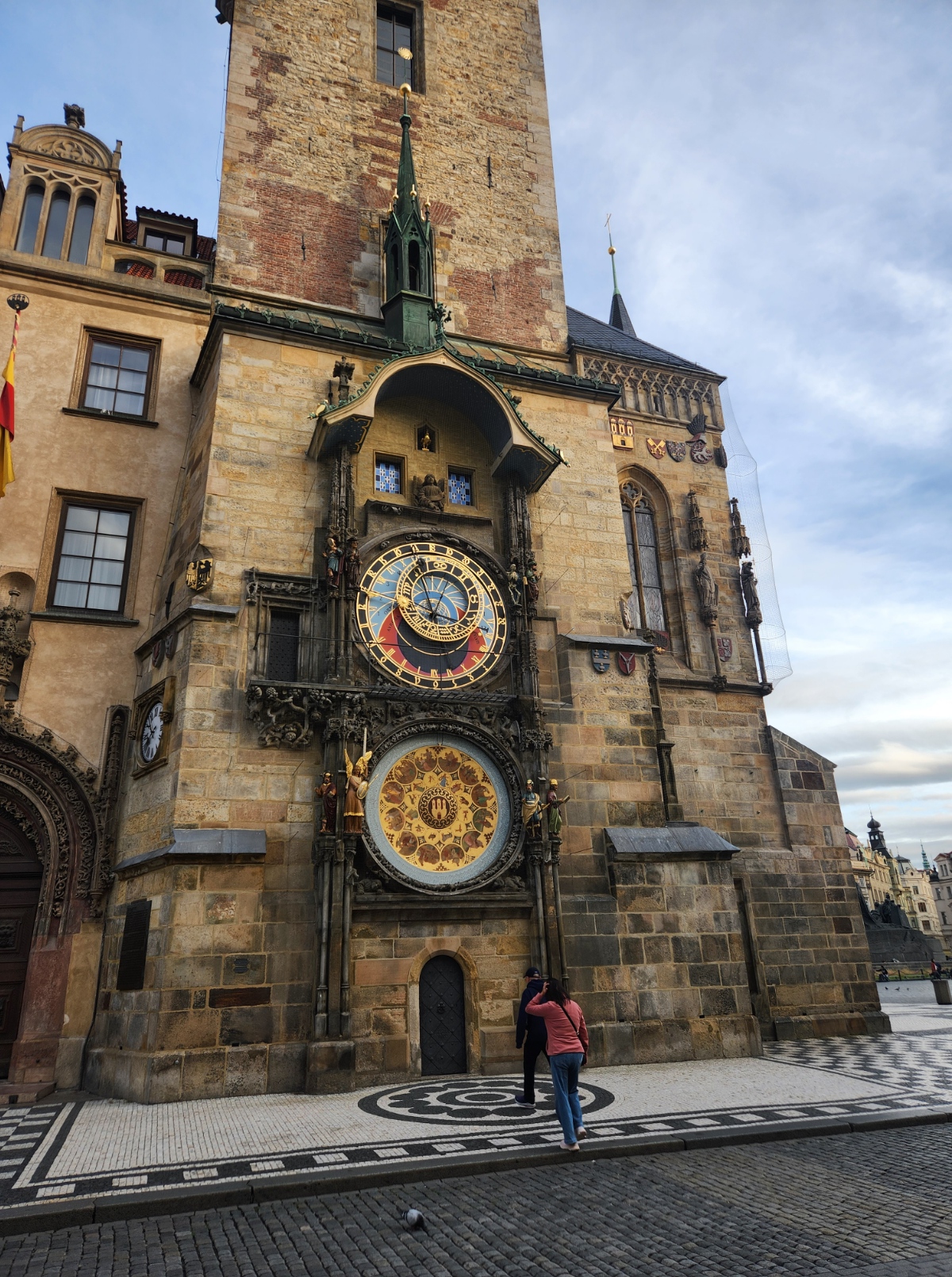
Kit arrived yesterday, and is still catching up on a bit of sleep, so I slipped out to do what I seemingly do best, come to let my fingers run until they find something interesting to tap out about the human condition.
I believe that I’d be derelict in my reportage if I didn’t start in Estonia.
This trip began cleanly enough. I was asked to speak at an EV Battery Recycling Conference in Frankfurt, Germany. Having plenty of reasons to visit partners in Germany/Belgium, that made sense. Then there was the addition of the Netherlands, for some scouting for additional opportunity.
Then there was a 95 degree day in Indiana’s most proudly German town, Jasper, at Strassenfest, that’s when things began getting interesting.
(Side note, as I sit here, I looked up to see a blue jacket with an IU hat on his head. As I do, I said “Go Boilers” to no effect. Being me, I then kept hollering until the guy stopped and turned around. Turns out he’s a Kiwi with one son at IU and another starting his PhD at Purdue in aerospace engineering next fall. The world is small.)
Sweating in the Southern Indiana heat, dancing an endless polka with Betsy, whose heat tolerance must be far more Nordic than her blood, Kit decided that she wanted to go to Oktoberfest for her 30th. Given that I was going to be in Europe anyway, she plied me with another large beer and suddenly we were going on our first joint European adventure. I talked her into Prague with a bit of relentless salesmanship, and she made it contingent on going to Salzburg to live out her Sound of Music fantasies in between. Having booked the tickets, I was then told that I needed to go meet the Estonian sovereign wealth fund. Changing my flight from Prague to Tallinn, I ended up standing on the Russian border in a former Soviet uranium enrichment facility.
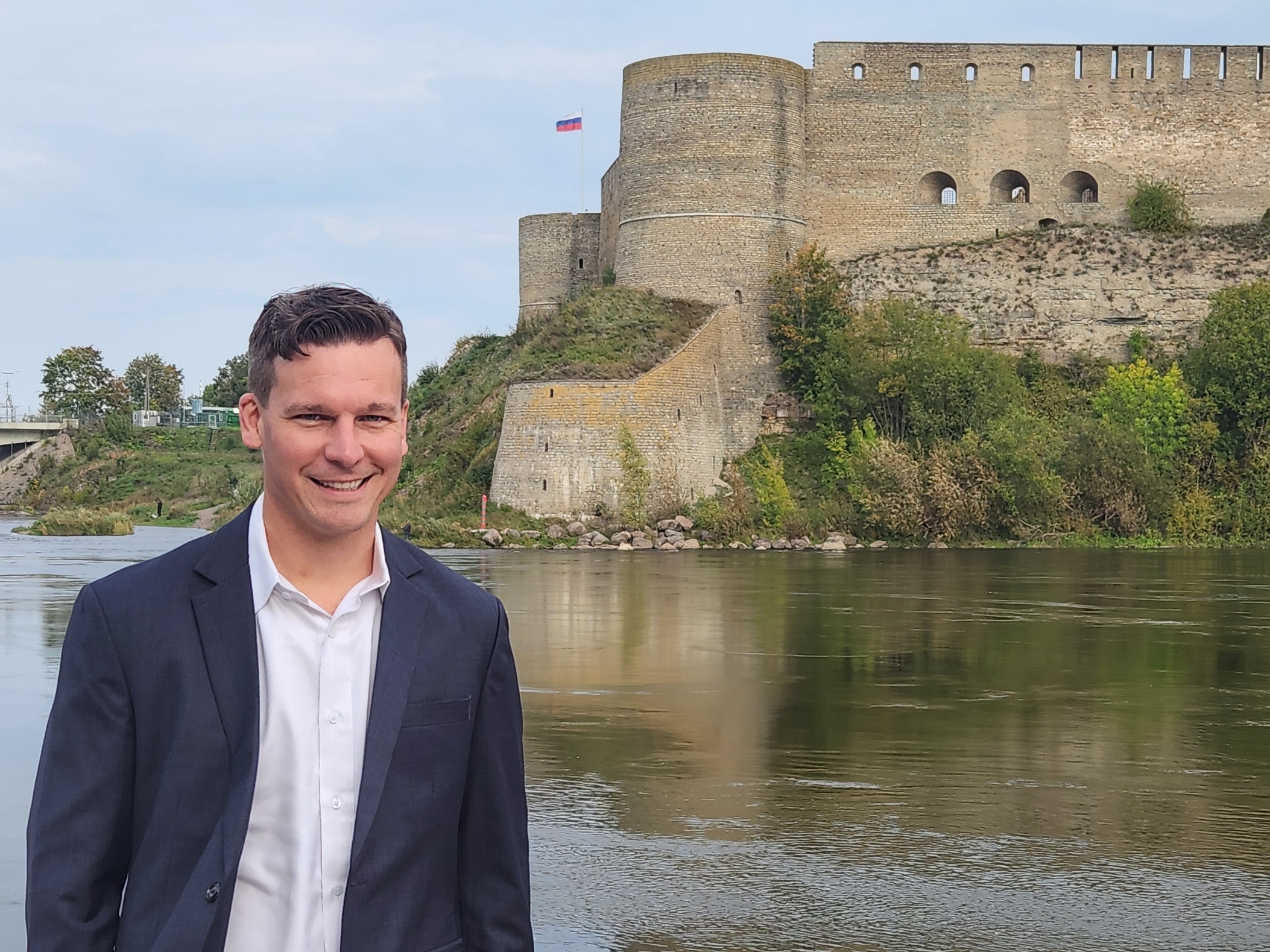
Estonia has gleaned my respect for sure. Not knowing much of anything about Estonia besides it geographic location, there was a certain angst in Kit about the fact that I was going to be on the Russian border as the collective wars in Israel, Ukraine, and Lebanon kick off, with the Russians back on their traditional side of wherever the Americans are not.
I assured Kit that Estonia was no more dangerous than Boston, given that her former boss had brought them into NATO 20 years ago. According to Article 5, any issues in Estonia would be no different to the US and our allies than a bomb dropped on Manhattan. I’m not sure that this was a wholly comforting pitch, but it was effective enough.
As I landed in Tallinn, I went for a quick walk around the Old Town before finding something to eat. I ended up eating in a bar carved out of a meters thick city wall (bear dumplings and pilsner.)
The next morning I was picked up by my handlers from Invest Estonia to head to the Russian border. That was about a 2.5 hour car ride, which gave me plenty of time to ask all of the questions that my curiosity demanded. Estonia is a country of 1.3MM people. The fact that it has a unique culture at all is a millennium old underdog story, as for all but about 45 years, it has been handed back and forth between the Swedes, Germans and Russians as a particularly sought after piece of continental Europe. The two windows of true Estonian independence were from the end of WW1 to the start of WW2, and then from the fall of the Soviet Empire through today. Throughout all those changes of ownership, the Estonians have been able to keep a distinct language and culture.

Being that only 1.3mm people are native speakers of Estonian, they have become flexible by necessity in their willingness to open up to the world. Over 77% of Estonian adults are bilingual, with many speaking as many as four languages. The post-Soviet era has made it one of the fastest growing EU economies, and they have a cultural willingness to look at the situation to find whatever narrow path of advantage that they can.
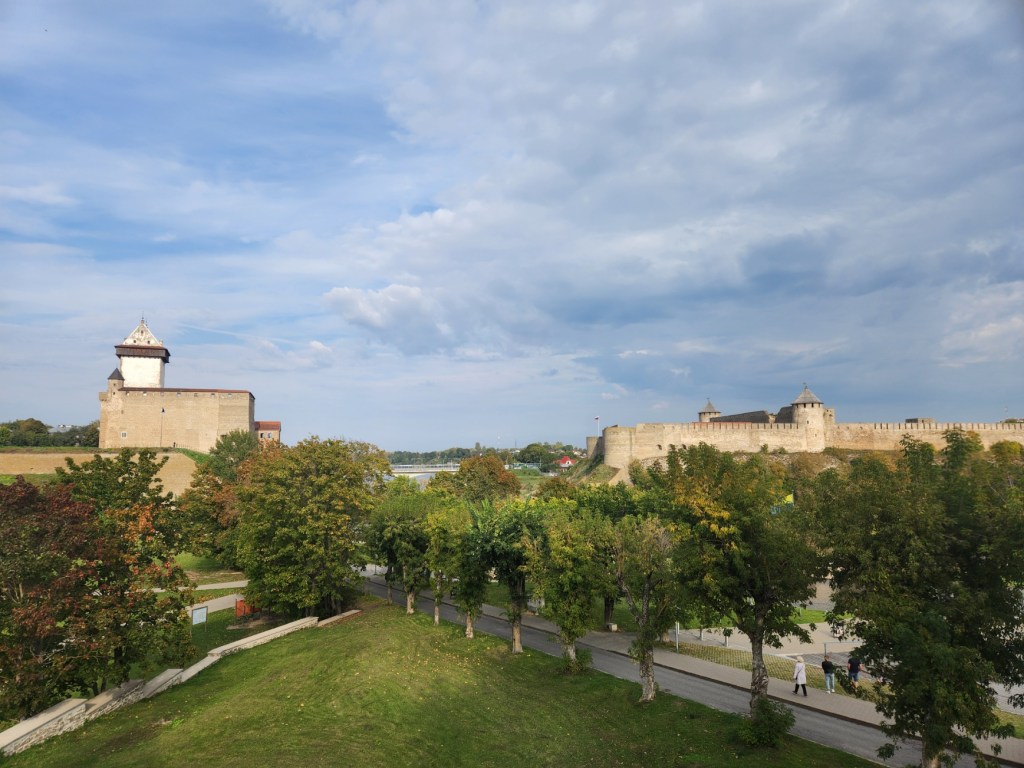
The two castles straddling the Russia/Estonia Border
Far from being culturally adjacent to Russia, they are much more a friendly Nordic country on the continent. Estonian language is closest to Finnish linguistically with plenty of shared words from German and Russian.
Ilmar and Toomas, my handlers, gave me a history lesson as well as an introduction to Estonian sauna culture. Let me say, as a lover of saunas, these folks have it down. On the beautiful coast of the Baltic Sea, we stayed at a spa/hotel which had no fewer than 7 different types of saunas. Dry, cool, hellfire, salt based, they had it all. They told me that the culture is such that this is a standard place to both have a communal sweat and get business done.
As Ilmar and I walked into the first sauna, there was a 20 something Estonian who could only be described as sturdy, beating guests wearing hats reminiscent of the 7 dwarves with bundles to oak branches, “to open up the skin!” This was followed by plunges in cold pools, introduction of juniper berry extract to the hot rocks, and no shortage of beer.
The competence of a culture that has always had to navigate between powers that were orders of magnitude larger than themselves was on display. These are folks that think through every possibility before deciding that there is a possible path to prosperity and going at it full tilt. Growing up in the warm embrace of the global preeminent power, wherein our errors are typically rooted in our overconfidence, it was a refreshing contrast.
Whether Luke Skywalker in Star Wars finding the one and only ventilation shaft that can bring down the Death Star or watching Purdue lose to double digit seeds in the NCAA tournament, I have grown to have a real respect for underdogs who carefully survey the situation, eliminating every potential path before betting the house on the one asymmetric bet that has a chance of coming in. Estonia is that underdog, and they’ve done remarkably well.
There were also some similarities between Estonia and Indiana that stuck out to me. The question of “What develops a cultural character?” has always been interesting to me. I have long posited that Indiana’s cultural character was forever changed by the Canal crisis of 1848. For those who have not found themselves immersed in Indiana history, I’ll give a brief synopsis.
In the middle 1800s, the success of the Erie Canal in opening up low cost logistics from the interior to the coast was looked at as a model for what is now the Midwest. Indiana, a young frontier state in its 30th year, made an all-in bet on the Mammoth Improvement Project, borrowing heavily to invest in canal infrastructure to help develop the state north of it’s Ohio River logistics chain. London bankers were courted, bonds were issued, and canals were dug from Delphi to Jeffersonville and all points in between.
Unfortunately, this all in bet happened roughly 10 minutes before interior canals were displaced by railroads. Indiana’s massive investment was stillborn, the state went bankrupt, and the lesson gleaned was not, “always search the horizon for the NEXT innovation” but instead, “never get too big for your britches.” Less than a decade later, Chicago became the hub of grain trading in the Midwest, and Indiana settled into a conservative, “don’t lose” mentality that made it a hub for manufacturing for the innovations of others. This might be a bit simplistic, but I don’t think anyone jumped on to read a detailed dissertation of Indiana’s place in mid 19th century bond markets.
Estonia’s cultural outlook was defined by the fact that it never looked to expand its borders, merely keep the next landlords from entering the fray. As Ilmar spoke about the cultures of the different Nordic countries, he reminded me that Sweden was the only Nordic country that had not been dominated or occupied by any others, and this gave them a certain Nordic swagger not seen by the Danes, Norwegians or Finns.
For all that I know about Swedes, swagger would not have been on the top of the cultural characteristics list by any means, but these are the kinds of things that one learns while wearing a dwarf hat in a sauna in Estonia.
European history is the story of how those characters were formed and reformed over centuries. Whether it was a minor German princess sitting as the Autocrat of the Russian Empire or Vikings(Normans) reigning as the masters of both Sicily and England, culture is a soup that takes on a bit of flavor from each random ingredient added, whether rulers or migrants or conflicts. Absent totalitarian eradication of a culture (which rarely works absolutely) a people will evolve alongside those characteristics that history has intertwined into their DNA (in both a genetic and abstract sense.)
Well the sun is rising and the tourists are starting to throng the square, so I’d better go find a bit more coffee and roust my beloved wife from bed. It is Saint Wenceslas’ feast day today, so I’d imagine that there’s going to be quite a hoopla that I’d hate to miss.
 The Moorman Conquest
You are a BEAST my man
Yahoo Mail: Search, Organize, Conquer
I was looking forward to pointing out it was his feast day today when I saw where you were, but of course you were already aware…Hope you and Kit have a lovely trip together. Would love to see some latest / greatest family photos with Betsy if you get a chance. Best,Nick
Absolutely love this! I am happy you and Kit and Betsy are living a wonderful life!